
Brazil's Mission Chocolate is Raising the Bar
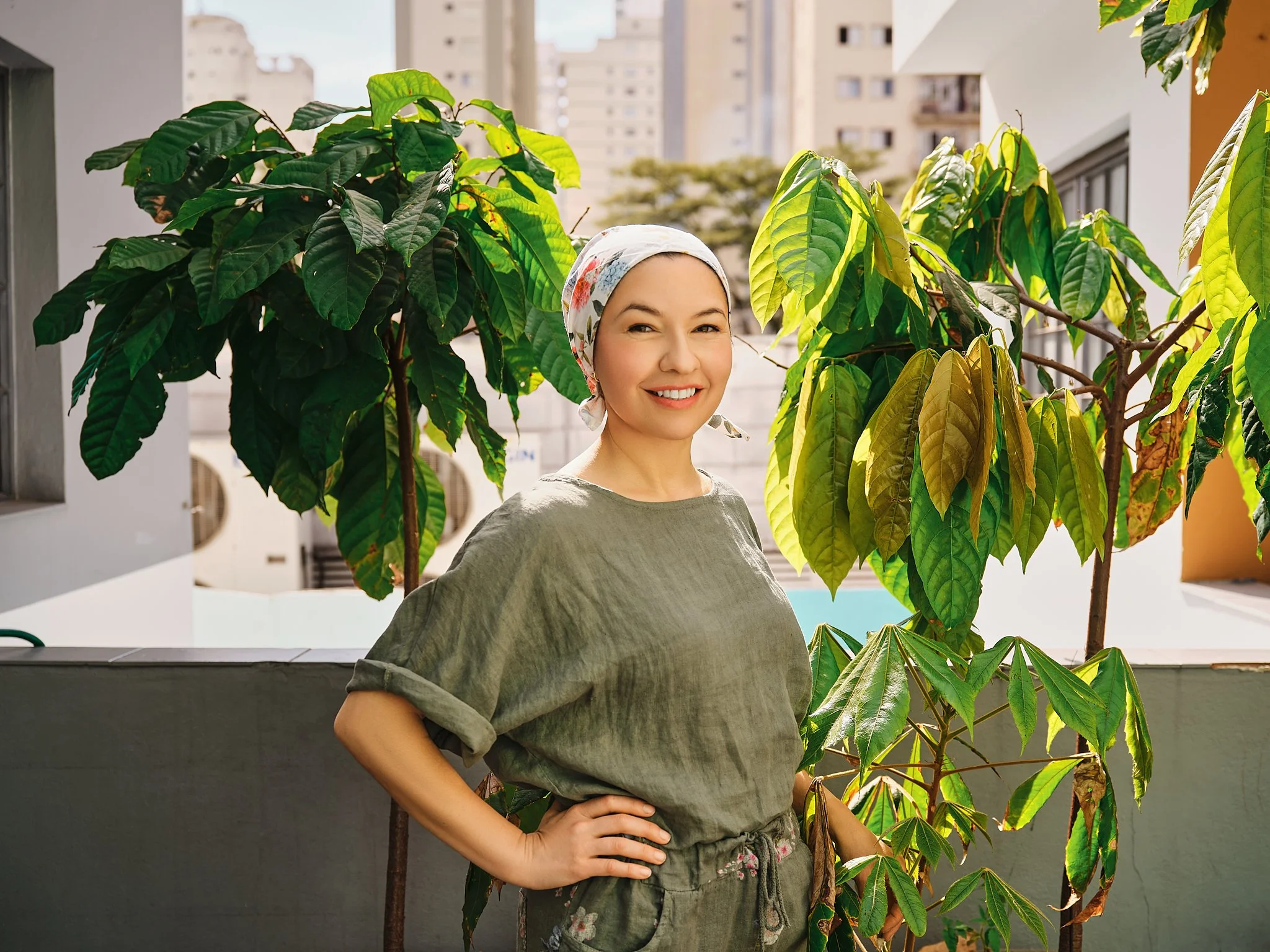
Arcelia Gallardo with cacao tree
It’s 1 pm on Saturday, the 4th of October, 2025, and – the founder of São Paulo’s Mission Chocolate – is on stage at the Northwest Chocolate Festival in Seattle. Her demonstration of how to make champurrado – a traditional Mexican hot chocolate made with cacao, corn, and spices – is the most attended event of the entire weekend, with every seat filled and an overflow of people standing around the auditorium. Downstairs, the Mission Chocolate booth has sold out of almost everything – just halfway through the first day of the festival. This is a moment 25 years in the making.
An Obsession with Chocolate
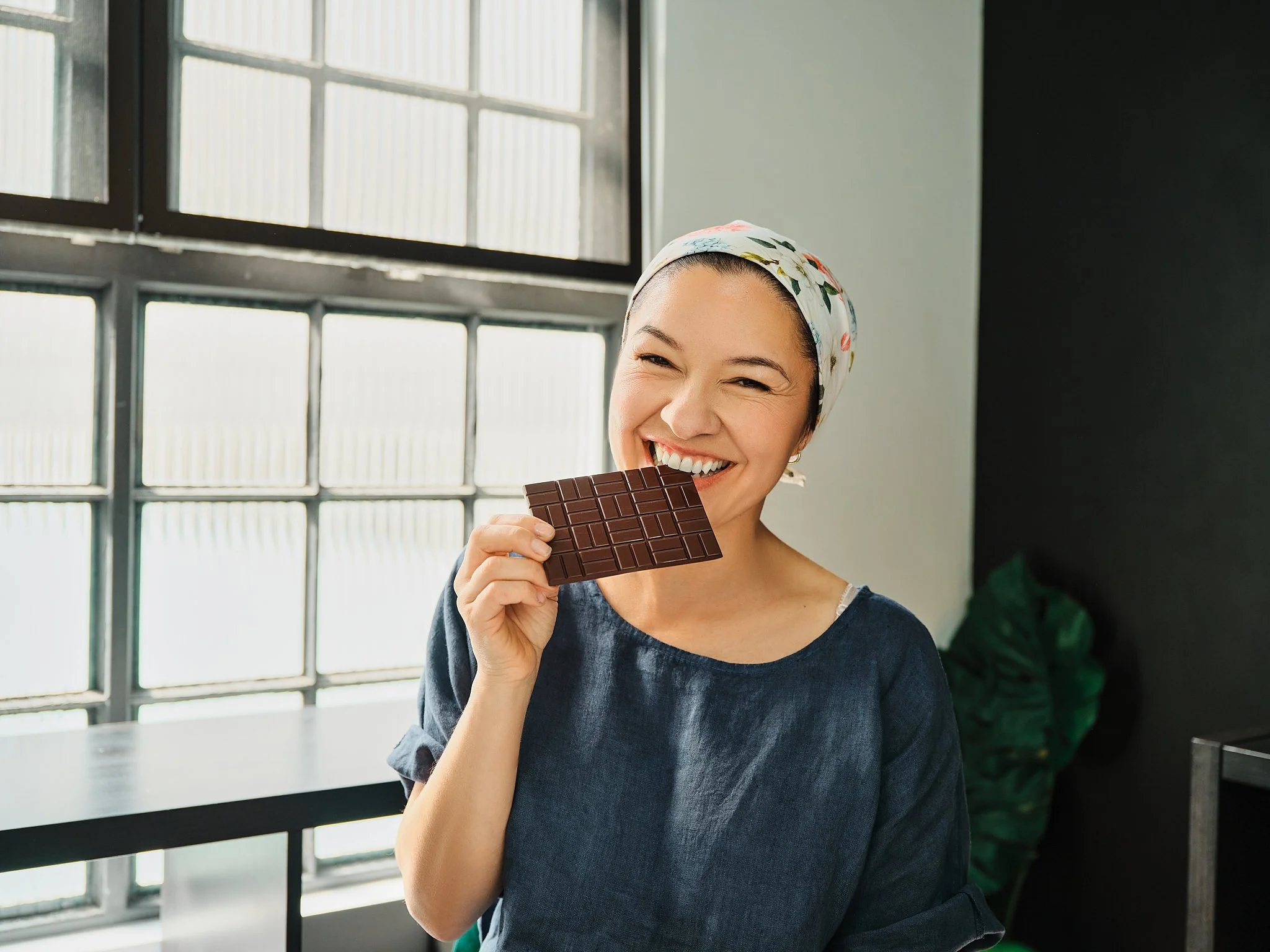
Arcelia’s chocolate career started in the early 2000s, when she was working in the marketing department of the Institute of Culinary Education in Los Angeles. Through that role, she learnt a lot about cooking and patisserie, and over time felt a strong pull towards the kitchen. “I was falling in love with it,” says Arcelia. “I was marketing the institute’s courses so well that I convinced myself it was where I needed to be!”
Over the next few years, Arcelia developed an obsession with chocolate, and she devoured every bit of chocolate knowledge she could find – talking with chocolatiers, reading endless books, and visiting chocolate factories in the U.S. and Europe. After successful experiments making chocolates for friends and family, she eventually opened her first chocolate shop in Berkeley, California, in 2012. A year later, she sold the shop and relocated to San Francisco’s Mission District, hence the name Mission Chocolate.
From Chocolatier and Retailer to Bean-to-Bar Maker
Like most chocolatiers, Arcelia started working with mass-produced couverture from companies like Barry Callebaut and Valrhona, but over time she became a lot more interested in creating the chocolate from scratch – especially as her customers became more demanding for details about her chocolate’s origin. “I didn’t have the answers, so that’s when I decided to sell the store. I couldn’t manufacture [bean-to-bar] chocolate there, and for me, that was the logical next step.”
Arcelia’s parents were Mexican farmers who emigrated to California and built a fruit-growing business. Her mother still runs the farm today, so it’s easy to see how Arcelia’s roots inspired her to seek out the source of chocolate – cacao. “It was very difficult for me to imagine making chocolate without seeing the tree… without understanding the fermentation process or meeting the families that grow it… I needed to understand what was happening at the source, in order to make a good product.”
Why Brazil?
After carefully researching cacao-growing regions, Arcelia chose to relocate to Brazil and build her bean-to-bar factory there. As a native Spanish speaker, she might have found it easier to work in other Latin American countries, but Brazil offered something rare: a globally celebrated culinary culture, consumers with adventurous and demanding palates, and – crucially – a domestic market willing to pay for high-end, luxury products.
In 2013, while waiting for her Brazilian visa, Arcelia started working at her neighbourhood chocolate factory, Dandelion Chocolate. It was meant to be just a few months, but it turned into a year-long stint – one in which she learned to craft world-class bean-to-bar chocolate using small-scale equipment and exceptional cacao. It was the perfect training for what came next.
Building Mission Chocolate
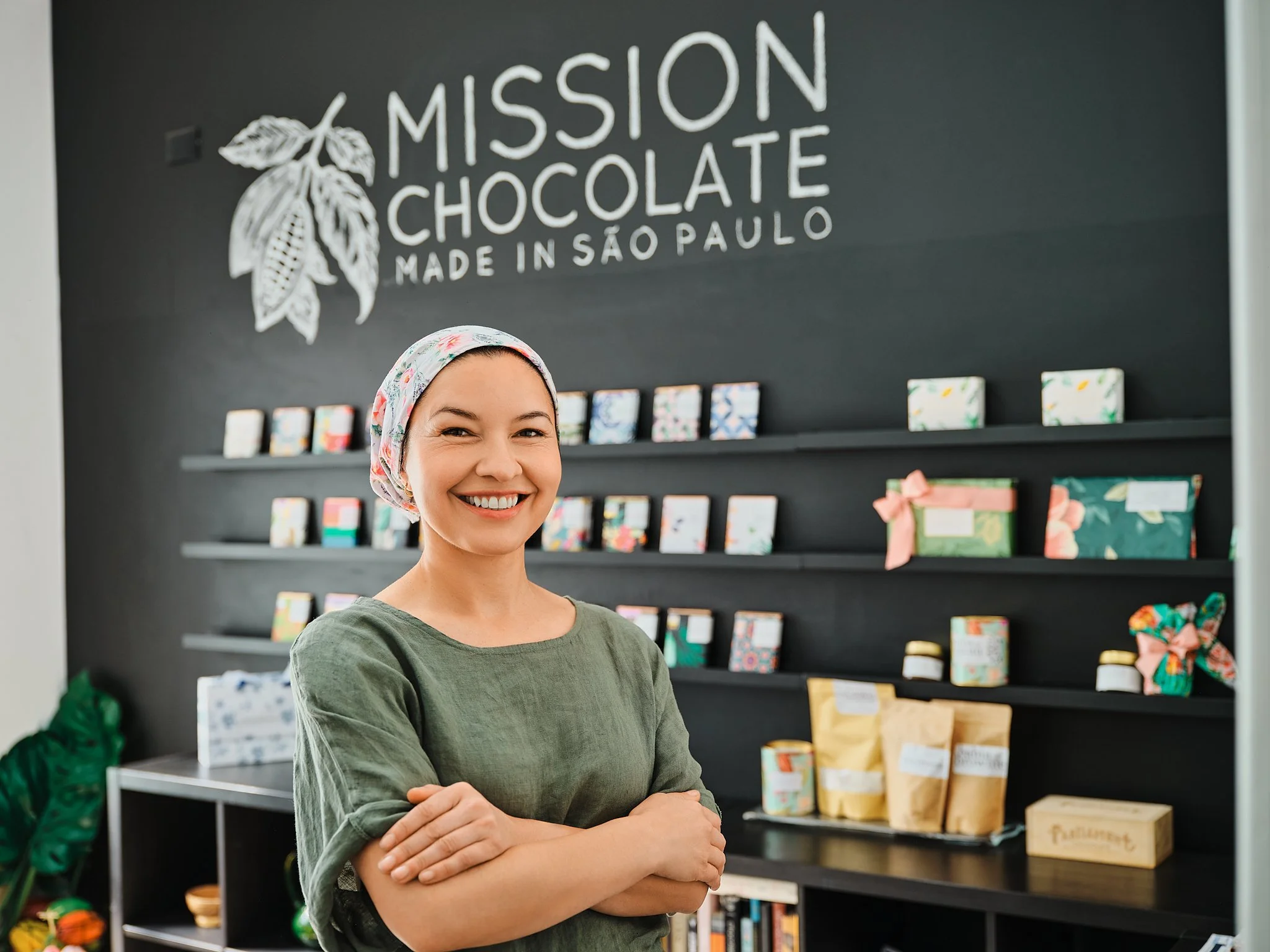
Arcelia Gallardo with her chocolate bars
After setting up a small chocolate factory in São Paulo and sourcing beans from different regions of Brazil, Arcelia released five single-origin 75% dark chocolate bars, inspired by Dandelion’s purist philosophy of focusing entirely on the flavor of cacao. However, she soon realised that Brazilians tend to have a very sweet tooth, and it would be difficult to sell such dark chocolate. “I decided that, if I wanted to make money doing this – or at least not lose money – I had to make some milk bars; some inclusion bars. I had to make white chocolate.”
Inspired by the locavore movement she’d experienced in San Francisco, Arcelia knew she wanted to use uniquely Brazilian flavors in her chocolate bars… “I love gastronomy, so I would go to all the restaurants that were known for being local and Brazilian, and I would taste everything on the menu… I wanted to translate that into a chocolate bar.”
Flavor innovator
Cheese chocolate
In a reinterpretation of the popular Brazilian conserve goiabada – an alternative to quince that’s made with guava – Mission Chocolate’s first inclusion bar was a 70% dark chocolate with pieces of candied guava. It was a big hit, and inspired Arcelia’s Brazilian Biomes Project – a series of bars featuring delicious ingredients that are native to Brazil and grow in the wild.
Today, Mission Chocolate has a multi-award-winning range of over 20 bars that represent Brazilian cuisine and celebrate native flavors. Highlights include the 70% chocolate with baru nuts, the 70% chocolate with cupuaçu (a cousin of cacao), Pão de Mel (honey cake) milk chocolate, and Arroz Doce – a spiced rice pudding white chocolate.
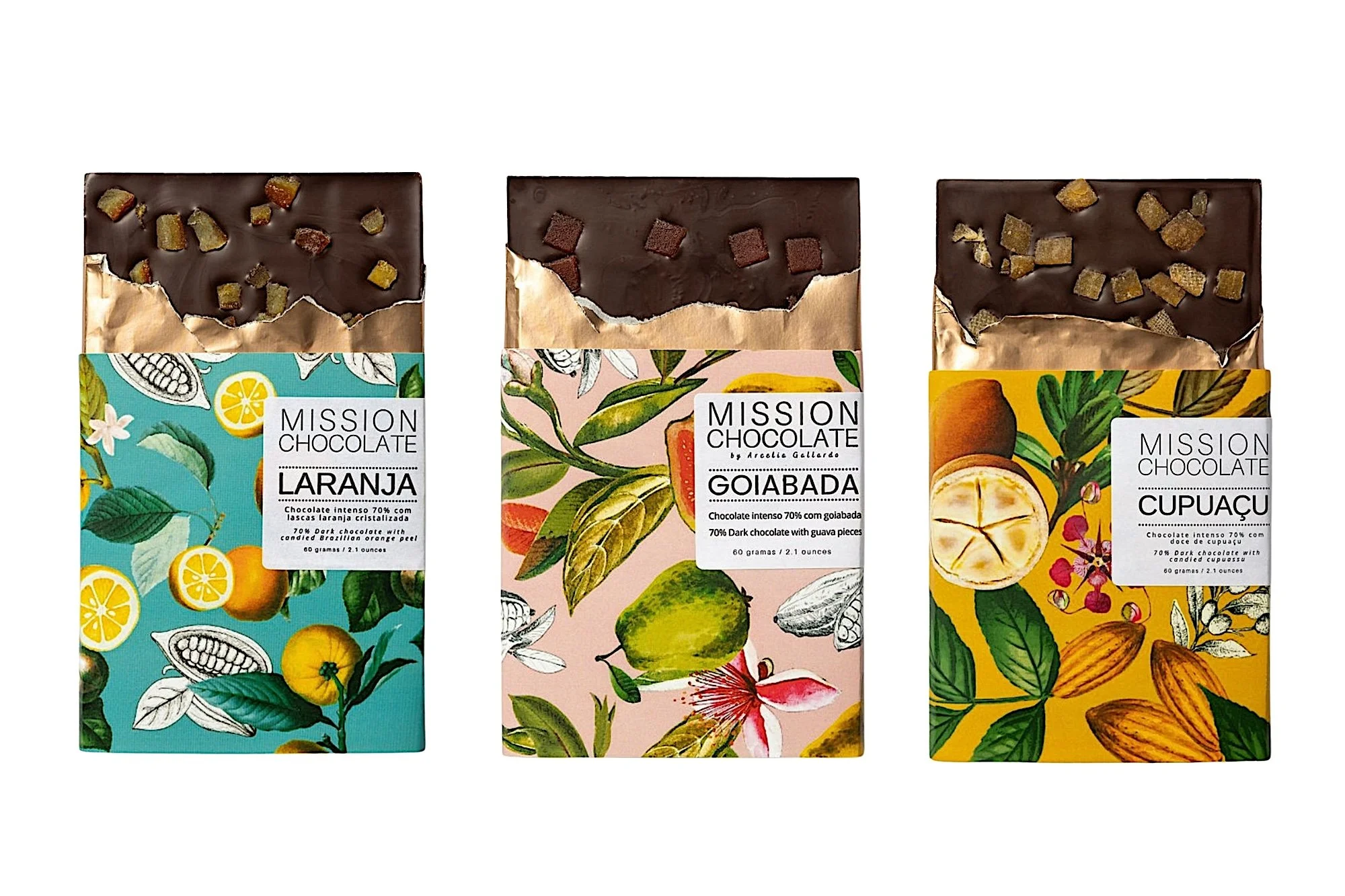
Mission chocolate bars with Brazilian flavors
The collection also features some extraordinary pure dark bars, including the 65% Wild Brazil bar, and ‘Two Rivers’ – a 70% bar divided into two distinct halves – one made from Bahia cacao, the other from Amazônia – with each side delivering its own colour and character.
Mission Chocolate’s bars have become very popular both at home and overseas (particularly in the U.S.) and Arcelia’s influence in the craft chocolate industry cannot be understated. While she wasn’t the first chocolate maker to use local flavors, she has done it with such panache and passion that it has inspired many other chocolate makers in cacao-growing countries to follow suit. At this year’s Northwest Chocolate Festival, there were several new guava bars from Latin American chocolate makers, alongside a mouthwatering variety of unfamiliar herbs, flowers, nuts and spices. Consumer palates are getting more adventurous, and chocolate makers working ‘at origin’ have something unique to offer.
Improving Cacao at the Source
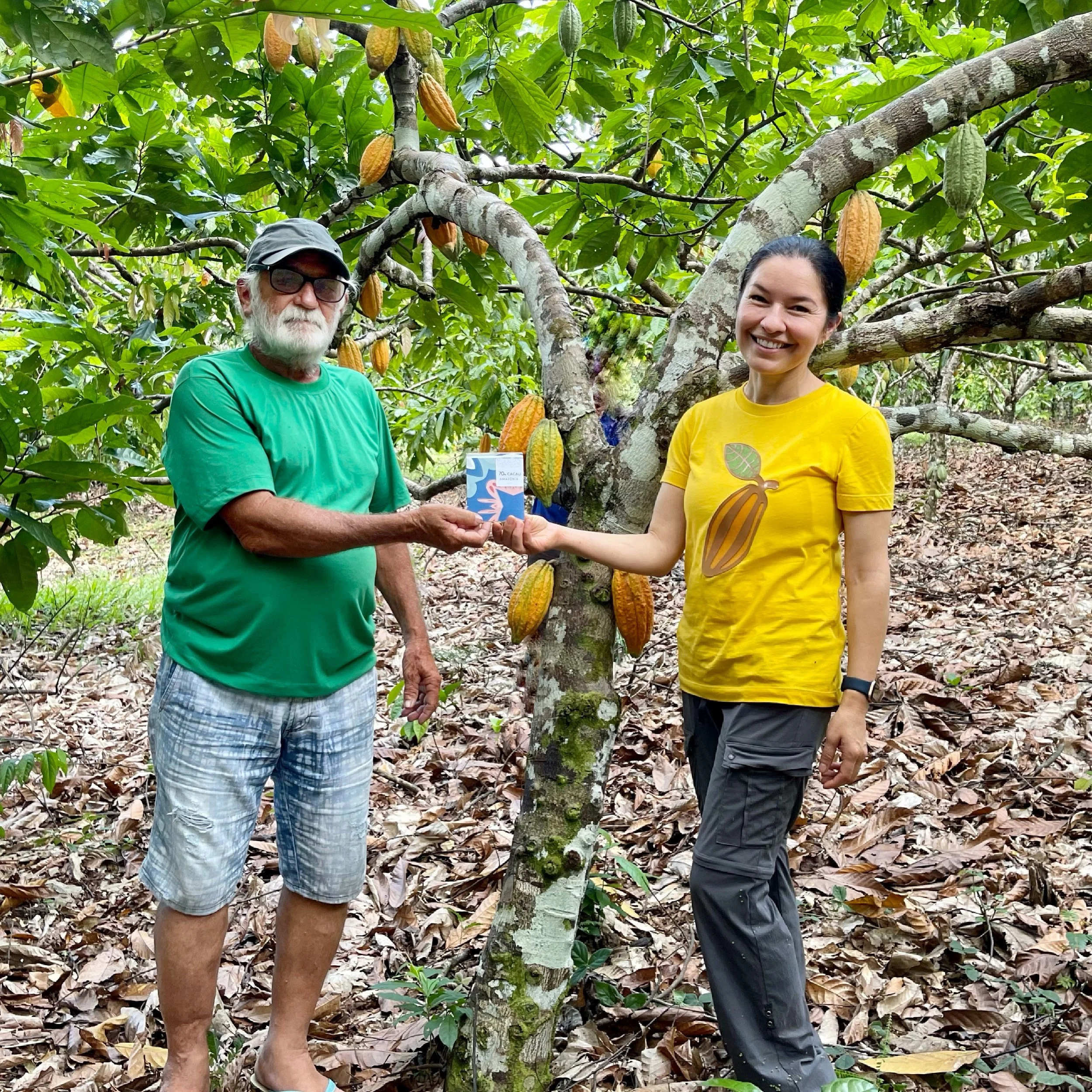
Arcelia Gallardo in the Amazon with a cacao farmer
While Mission Chocolate’s flavored bars may get the headlines, their single-origin bars are also highly regarded, thanks in part to Arcelia’s role in helping improve cacao quality in Brazil. After moving to São Paulo, she started hosting gatherings of Brazilian bean-to-bar chocolate makers at her apartment, which ultimately led to the formation of the Brazilian Bean to Bar Association, where she served as the first President. “Together, we decided that we had to work on the farms,” says Arcelia. “We had to figure out how to make good cocoa, because we cannot make good chocolate if the cocoa is bad.”
Brazil is the world’s seventh-largest cacao producer, harvesting around 300,000 tons each year. Yet just a decade ago, most of those beans were low quality and of poor flavor, forcing farmers to sell them at rock-bottom prices into the bulk chocolate market. It took the Brazilian Bean to Bar Association over five years of working with farmers – including talks, training and tastings – but now Brazil produces some exceptional cacao, and in turn the country’s best chocolate makers are becoming world-renowned.
Cultivating connection
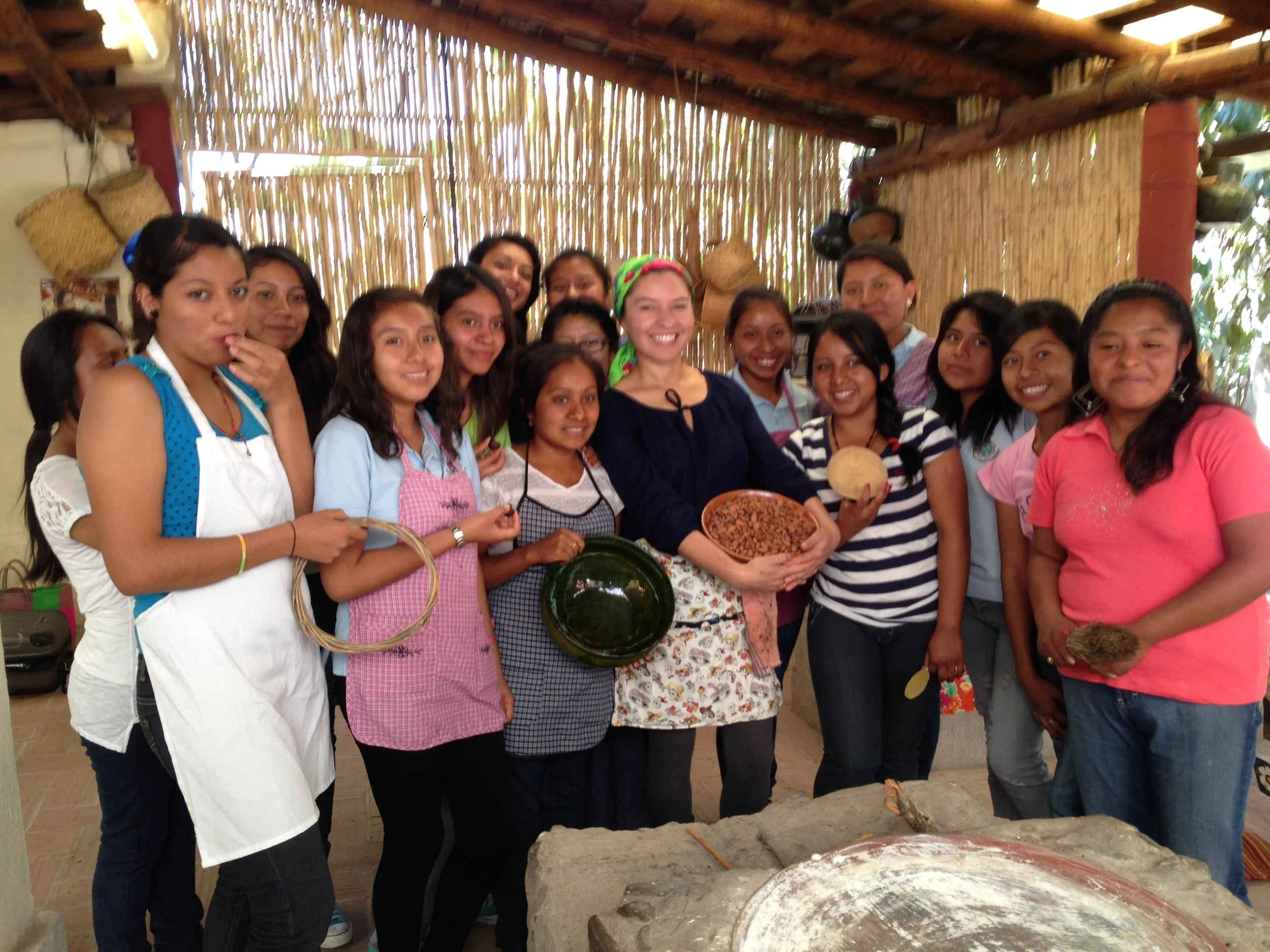
Arcelia Gallardo with Zapotec women in Oaxaca, Mexico
Alongside making her own chocolate and visiting the farmers she works with, Arcelia is dedicated to teaching indigenous women how to make chocolate. To date, she’s worked with Zapotec women in Oaxaca, Mayan women in Guatemala and Belize, Ngäbe women in Panama, and Inca women in Peru.
When talking with Arcelia, it’s clear that chocolate is far more than a delicious treat for her. She feels a deep connection to the people, places and cultures that comprise the rich tapestry of the craft chocolate movement. However, her passion for tasting incredible chocolate – the thing that initially attracted her to this world – will never fade… “The best part of making chocolate is when you sit down, put the chocolate in your mouth, and it’s like ‘wow, this is good, this is nice, this is different. This really represents something.’”
At the end of Arcelia’s champurrado demonstration, she shared one of those ‘wow’ moments with the audience. After some funny and heartwarming stories about her mother’s champurrado and the family gatherings it’s made for, it was finally time for everyone to taste this remarkable drink. During the hour presentation, she’d crafted a batch with corn masa (nixtamalized corn dough) and her 100% dark chocolate. Little paper cups of the thick hot chocolate were handed out, and slowly a collective smile spread through the room.
There was so much more than chocolate in that cup – it was a taste of Arcelia’s heritage, her curiosity, and her vision for what chocolate could be. From the farms to the festivals, her chocolate acts as a bridge between lands, people and generations – a mission that ripples far beyond chocolate bars and far beyond Brazil. And after 25 years, she’s only just getting started.