
Meet 4 Great Japanese Chocolatiers in Paris
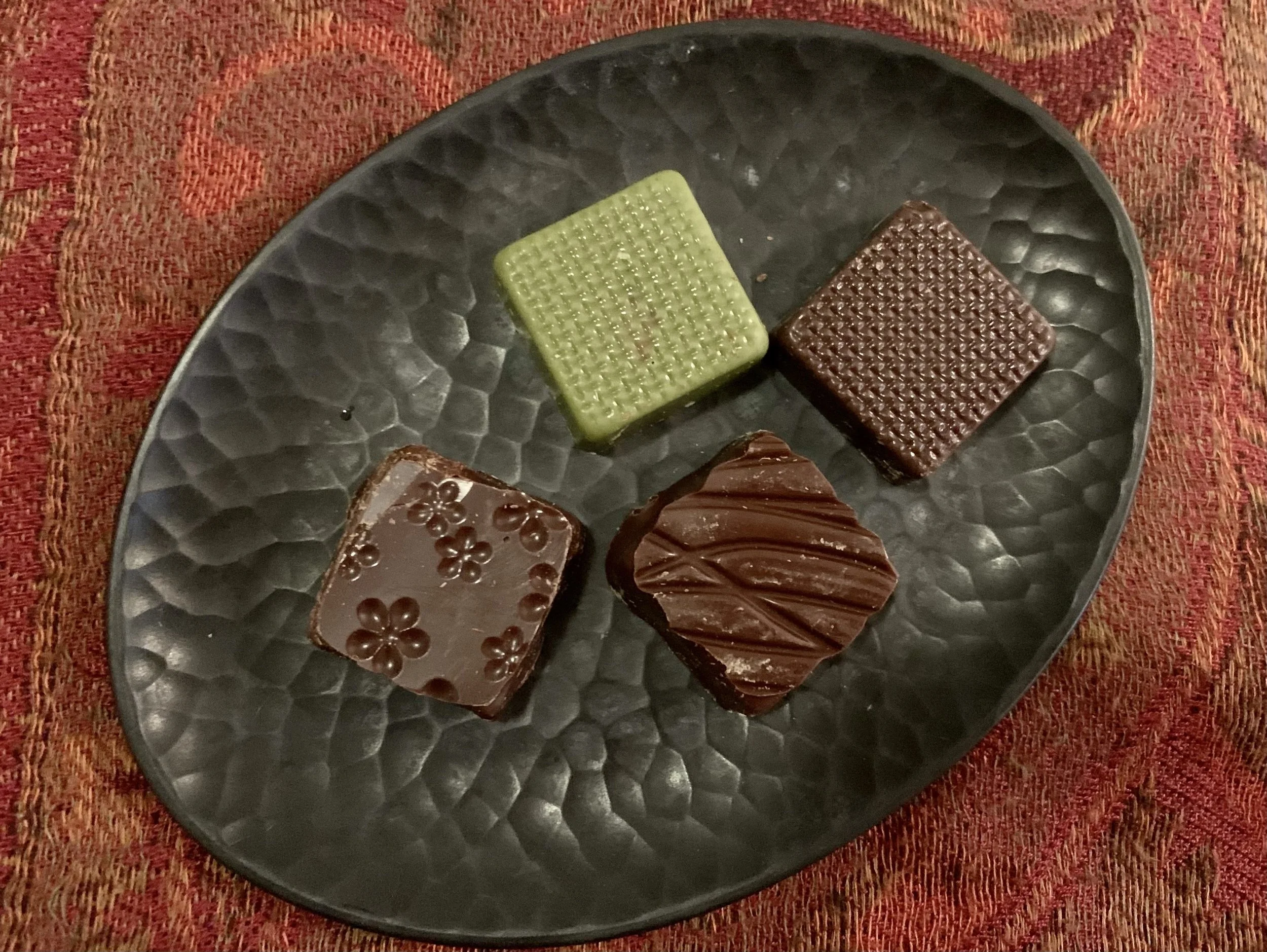
Mitsuha chocolates photo Anna Mindess
Like lovers with an abiding attraction to the exotic “other,” Japan and France are two very different cultures that enjoy an enduring mutual attraction in the world of fine cooking.
There are French chefs, like the acclaimed Joël Robuchon, who have restaurants in Japan. And in Paris, a handful of Japanese chocolatiers are taking cherished flavors from their culture and, with love and respect, incorporating them into the perfection of French confections.
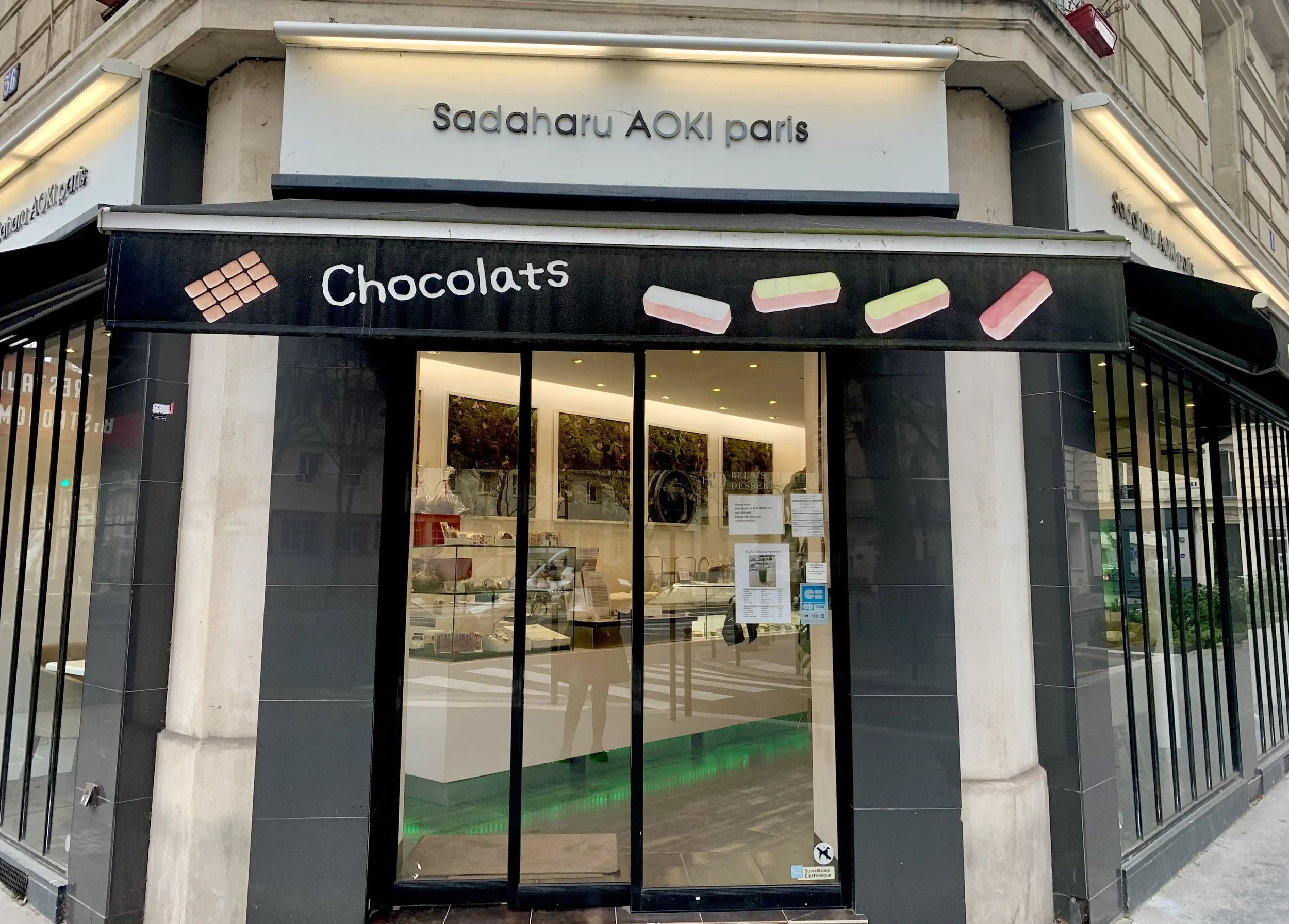
Sadaharu Aoki shop photo Anna Mindess
What drives this shared affinity? “The Japanese have always had a lot of respect for French craftsmanship,” says Jean Charles Rochoux, the renowned French chocolatier with one shop in Paris and one in Tokyo. When it comes to pastry and chocolates, Irène Lurçat, author of Paris Gourmandises, adds, “Both Japanese and French chefs like perfection and precision, as well as a refined and geometric aesthetic.”
You can take your taste buds on an impossible journey to both Tokyo and Paris at the same time. Here's where to do it.
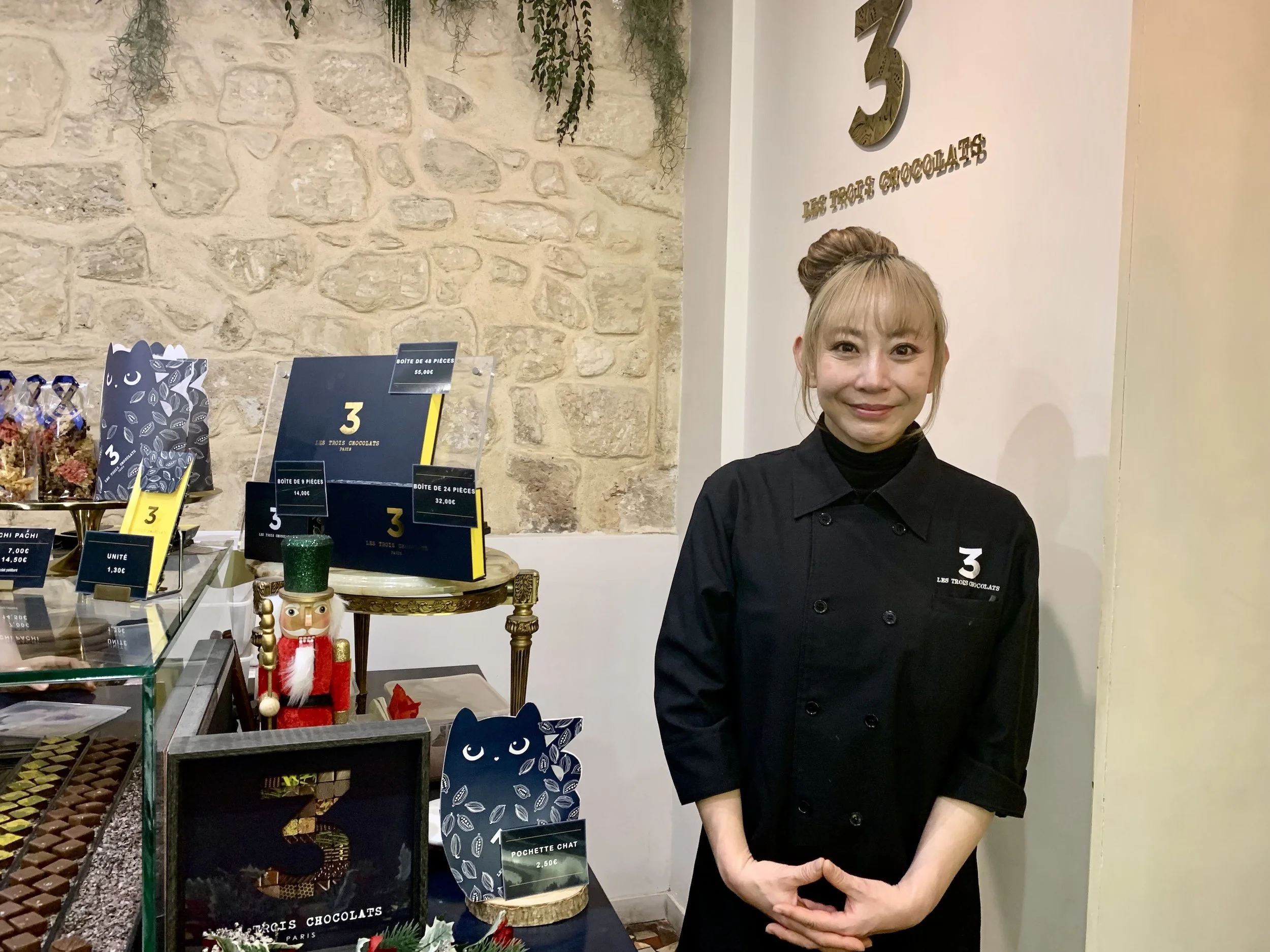
Emiko Sano of Les Trois Chocolates photo Anna Mindess
The name of Emiko Sano’s cozy shop, Les Trois Chocolats, honors the three generations of chocolatiers in her family. Her grandfather Gensaku Sano, who was born in 1902, and worked as a cook on a ship that traveled the world before WW1. When he met a Russian cook who specialized in French cooking and gave him a French truffle to taste, it changed his life. In Japan, at that time, there was chocolate but only in bar form. Normally, Gensaku would have made a stopover in Marseille for two or three days, Emiko told me, but once he landed in France, he felt compelled to leave his job on the ship to learn how to make such exquisite sweets. Eventually, he started a chocolate shop in Hakata, Japan, that his son, Emiko’s father Takashi Sano, took over to bring their chocolates to the next level.
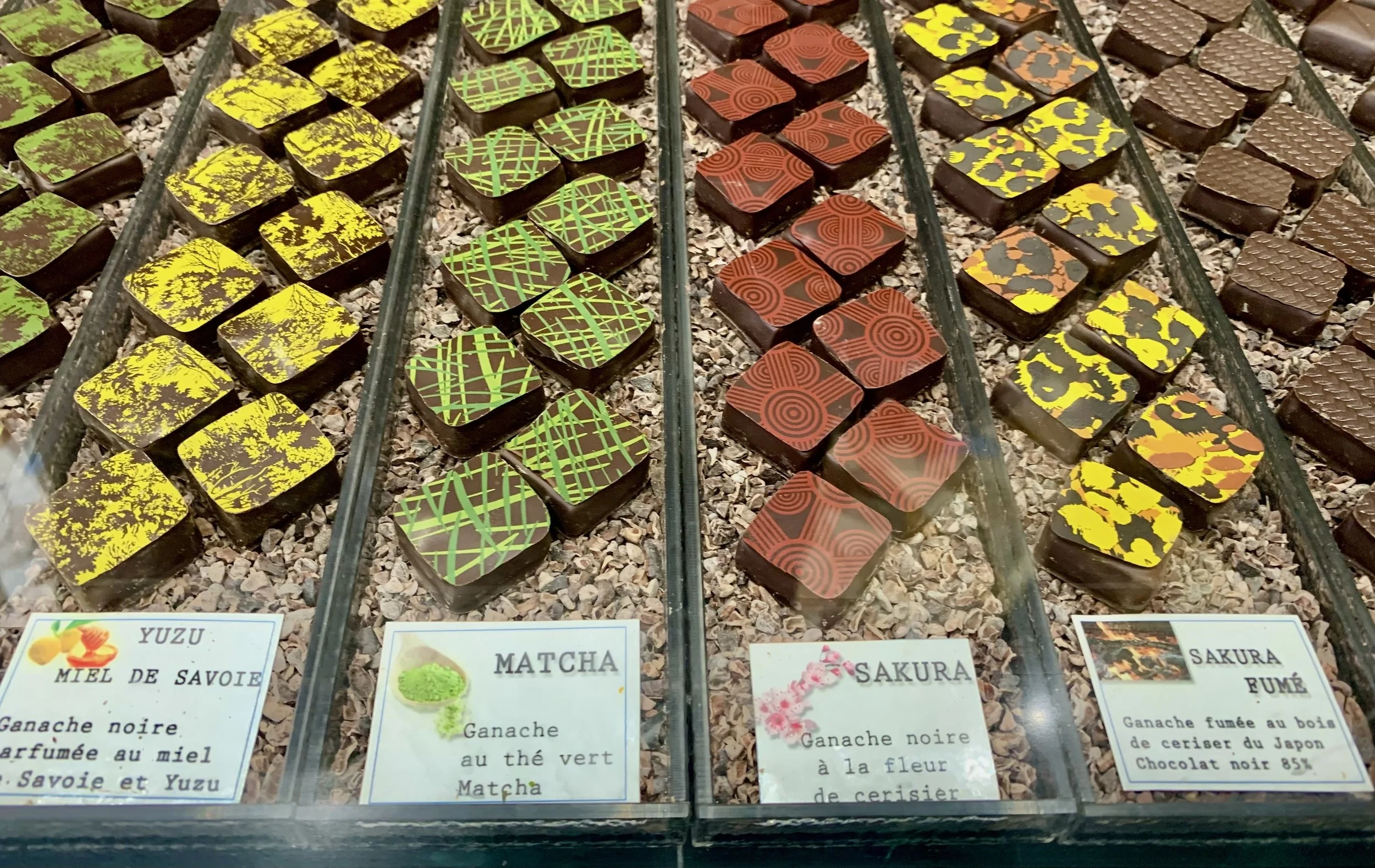
Les Trois Chocolates treats photo Anna Mindess
In 2008, Emiko started working in chocolate in France and opened her shop in 2017.Not only do many of her petite squares include a classic flavor from Japan, such as yuzu, mirin or sakura, they feature miniature paintings as well. The yuzu miel de savoie depicts a cat under a tree and the hojicha fleur d’oranger shows a burst of colorful blossoms.
“I want French people to appreciate Japanese flavors,” she told me. Then she gave me a petite square but didn’t tell me what it was. I sensed a familiar taste but couldn’t put my finger on it. “It’s wasabi,” Emiko said, smiling. “People think it has to be spicy, but it pairs very well with black chocolate.” Ahh, I thought, just a whisper of wasabi in an unexpected context. Lovely!
In 2015, after the horrific attacks in Paris, she was inspired by her French neighbors to continue making them confections. “In Japan, if a traumatic thing happened, like an earthquake,” Emiko told me, “Everyone stays inside because they are scared and want to be safe, but in Paris, after the attacks, people were out on the street, at cafes having a coffee. I asked a woman, ‘Aren’t you afraid?’ She said, no this is my habit. I was very surprised. The French were very strong.”
While you are visiting Les Trois Chocolates, be sure to try some of the exquisite pastries by Emiko’s husband, Sho Kimura. His heavenly, seasonal creations often feature ingredients such as matcha and black sesame.
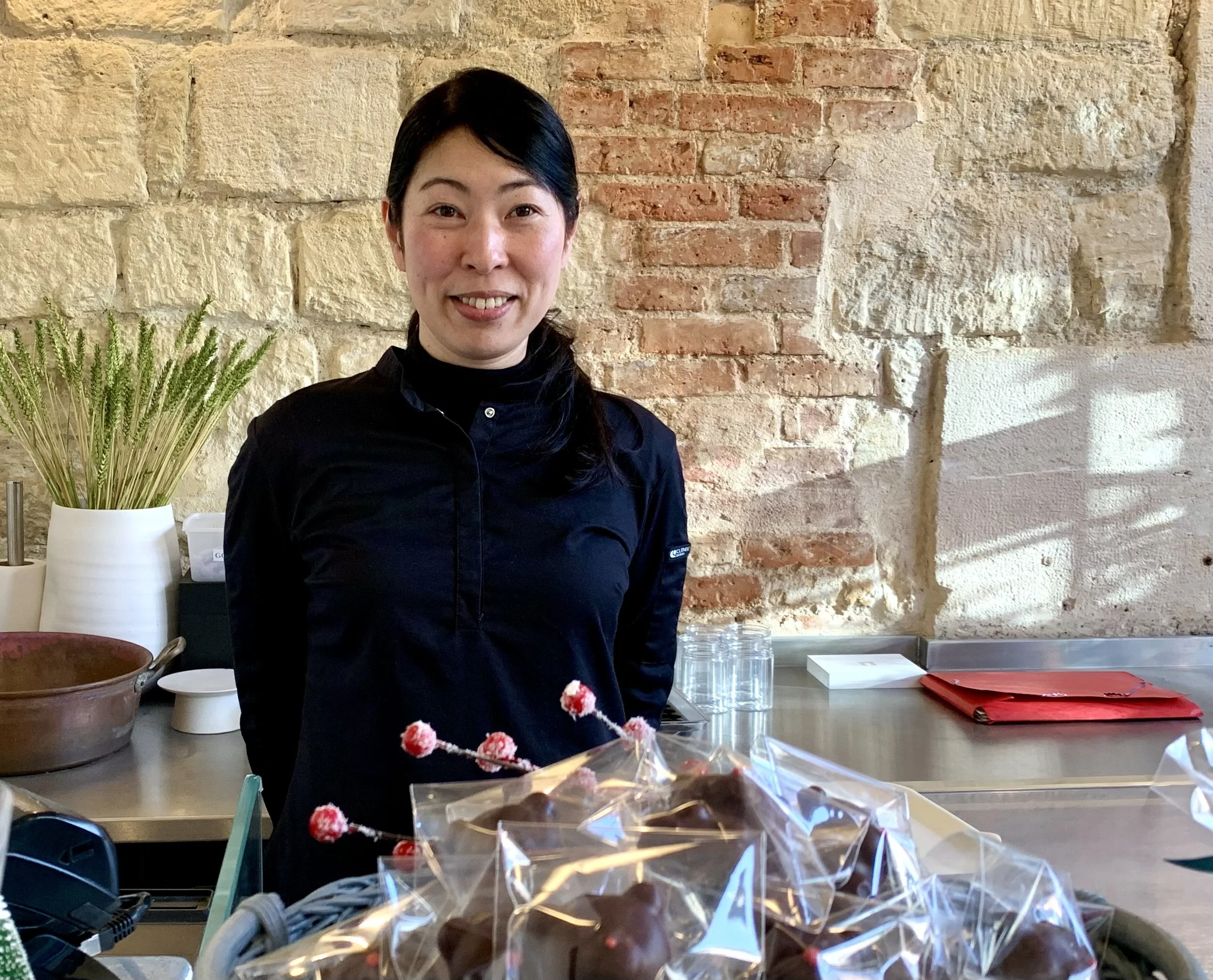
Naoko Oishi-Teshima of Atelier Pages photo Anna Mindess
For chocolate maker Naoko Oishi-Teshima of Atelier Pages, the integrity of her Japanese ingredients makes all the difference. While matcha lattes, smoothies and all manner of matcha-flavored pastries are now popular across Paris, “We use a special matcha from Japan,” she told me. Because her husband, chef Ryuji Teshima’s restaurant Pages, was awarded a Michelin star, he can get the best matcha directly from a single producer in Kyushu. “Good quality matcha is hard to find,” said Naoko. “Sometimes it is mixed with matcha from other countries, and you wouldn’t know it.” She also uses matcha from Uji, which has a particularly good climate for matcha. “Matcha from the south of Japan is the best,” Naoko says. “The color is different. Poor quality matcha is not very green. And the smell is bad. But the smell of very good matcha is explosive.”
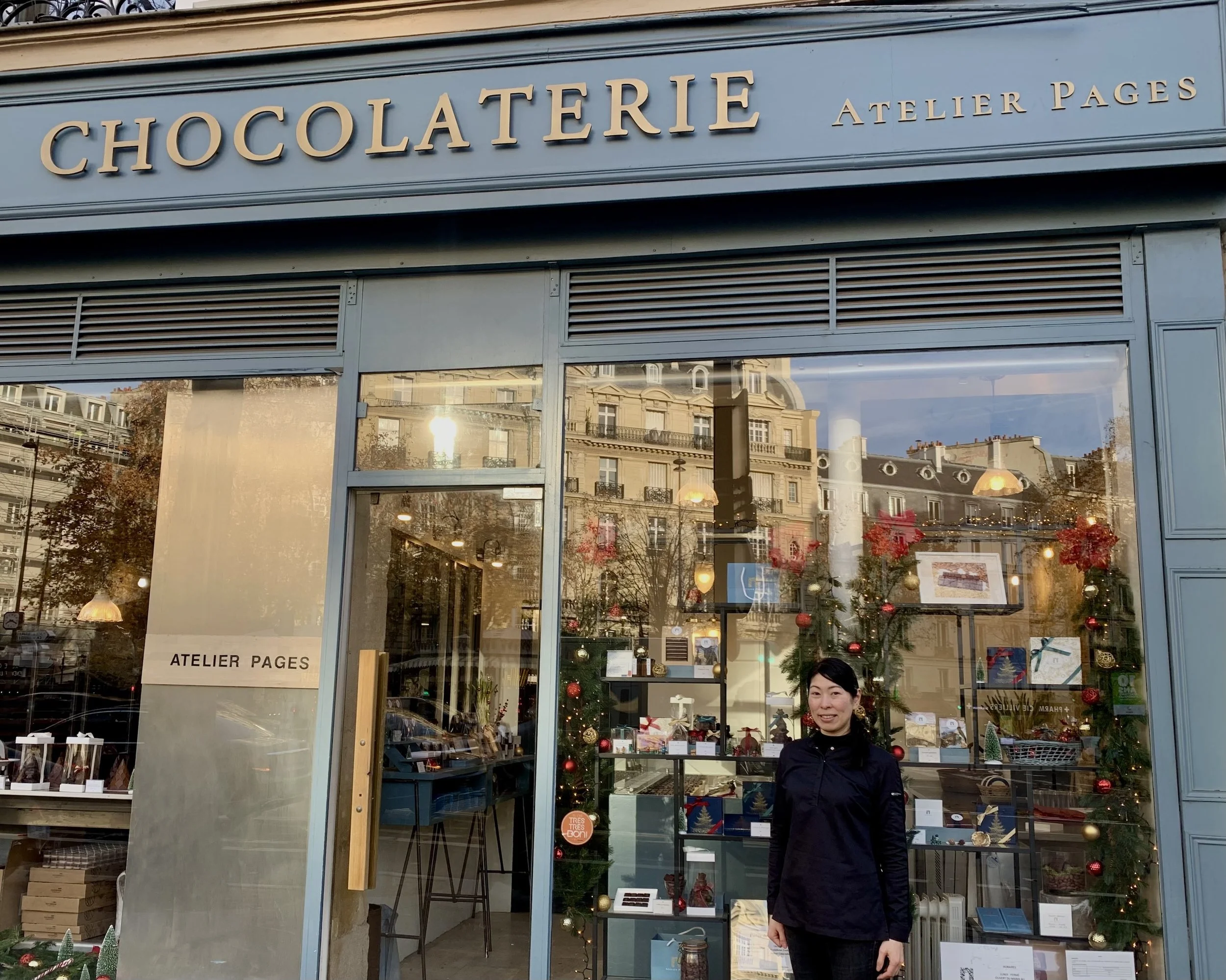
Atelier Pages shop photo Anna Mindess
Other Japanese flavors she uses in her chocolates include hojicha, which is grilled green tea. Again, they get theirs from a single small producer in Kyoto they trust, who dries and broils it. “Cheap hojicha is bitter, she tells me, “But our producer grills it slowly, so it is not too strong.” She also likes kyobancha, a specific kind of smoked tea. “I think chocolate goes very well with a smoked taste and smell,” she tells me. At Atelier Pages, you can purchase a bar made with their matcha from Kyoto or chocolate bites with flavors such as akazake (rice wine), matcha mint, lychee/blackberry, or jasmine blossom.
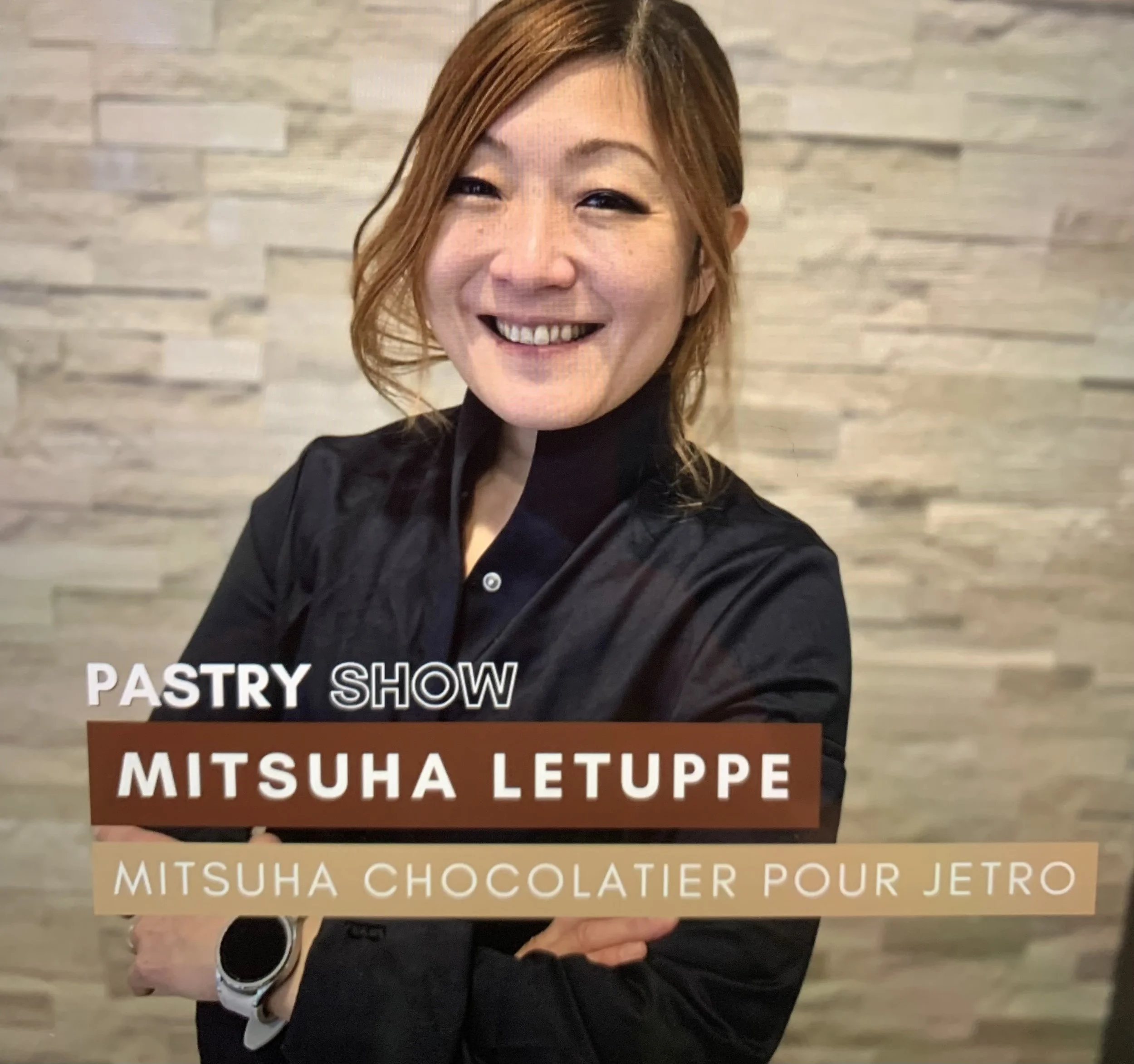
Mitsuha Letuppe photo from Facebook
After arriving in France in 2000, Mitsuha Letuppe worked with chocolate masters, refining her craft. She opened her own boutique in 2014. In 2019, she was named one of the top 100 chocolatiers of the decade. She now has two shops, just outside of Paris proper, in Montrouge and Bourg-la-Reine, and offers a range of Franco-Japanese treats, including matcha sweets and yuzu-flavored items. Her pralines include goma (sesame) and riz soufflé (puffed rice with hazelnuts). You can also try her yuzu flavored macaroons and black sesame ice cream.
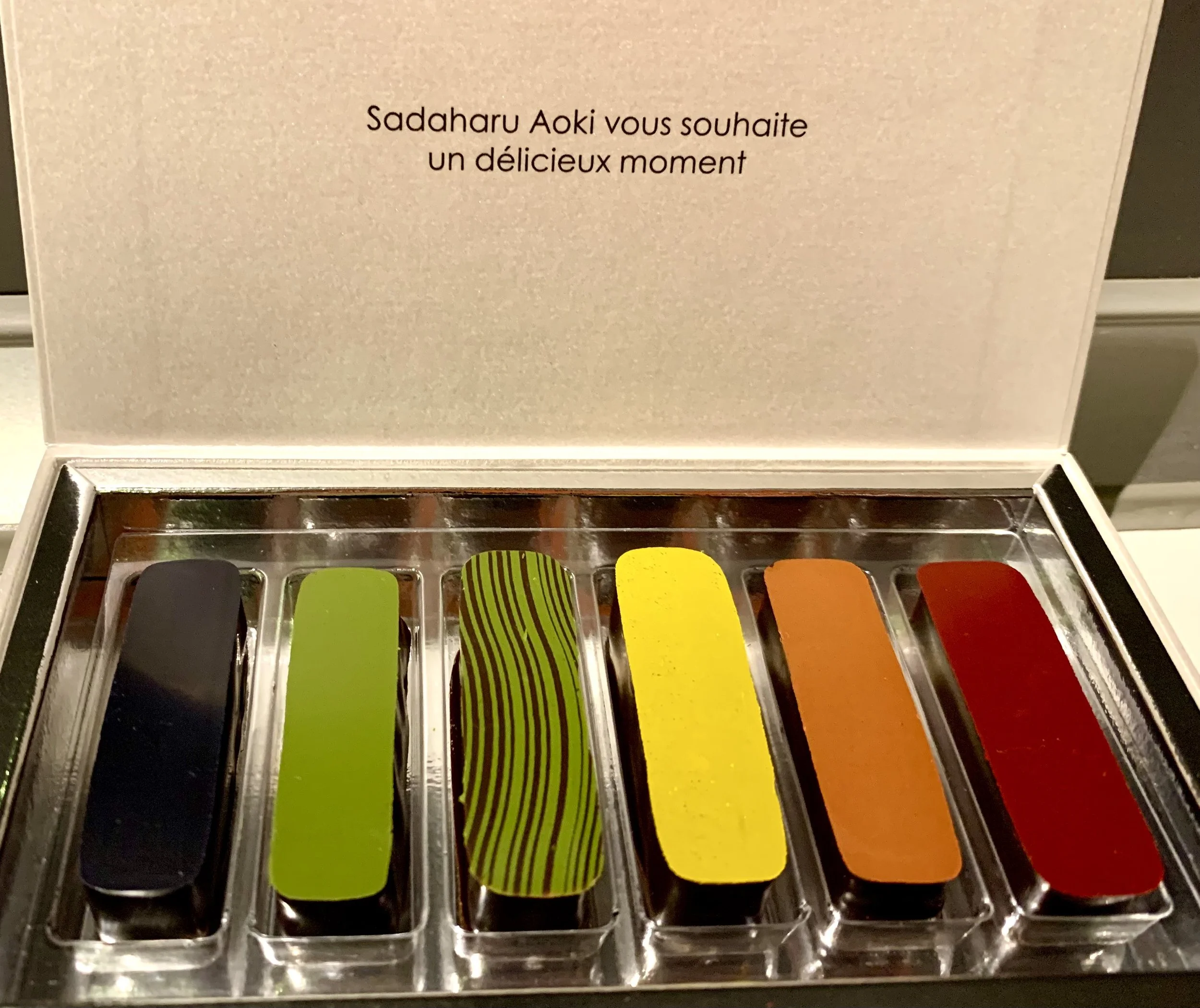
Sadaharu Aoki's paintbox chocolates. photo Anna Mindess
Sadaharu Aoki is a multi-award-winning pastry chef, who has four shops throughout Paris, plus two in Japan. For over 20 years, he has been mostly creating classic French pastries that incorporate Japanese flavors, such as matcha, azuki and yuzu. But he has one chocolate creation that stands out: his chocolate paintbox, which features a dozen brilliant hues and tastes, including sesame, wasabi, bamboo and yuzu.