
Hacienda Jeanmarie and Puerto Rico’s Cacao Revival
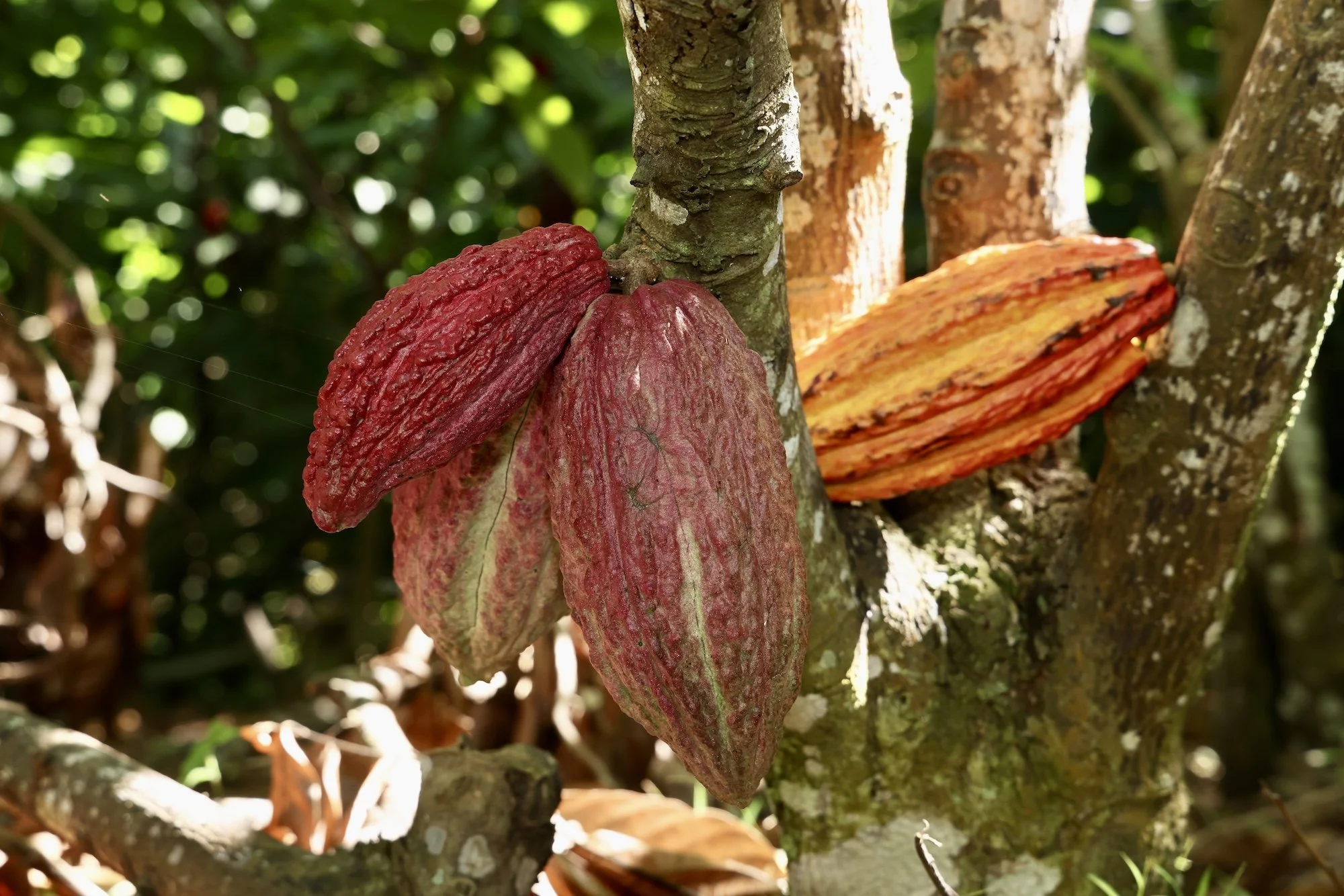
Cacao fruit at Hacienda Jeanmarie. Photo credit Jeanmarie Chocolat
In the world of craft chocolate, new cacao origins emerge every year – and in 2025, it was Puerto Rico. Suddenly, an abundance of the best North American chocolate makers released exceptional new single-origin bars, all bearing the name “Hacienda Jeanmarie.” This was a moment over 15 years in the making, and the man behind it all was Juan Echevarría, whose vision and determination have regenerated an entire industry.
Cacao was introduced to Puerto Rico by Spanish colonists in the 16th and 17th centuries, and for a brief time the island supplied beans to the European chocolate elite. However, by the 1800s, most farms had transitioned to tobacco, sugarcane, coffee, and citrus – crops that proved more lucrative – and the Puerto Rican cacao industry slowly disappeared. By the start of the 21st century, cacao was all but forgotten.
One Farmer’s Idea
In 2009, Echevarría had an idea that changed his life and sparked a nationwide resurgence in cacao farming. He’d been through a rough patch – in 2008 his used car dealership went under, and shortly afterwards his wife had to leave her teaching role due to illness. They owned a 2.5-acre piece of land, and he decided he wanted to go into farming, despite having no previous experience and with the awareness that there would be many challenges.
“Farming is not easy. Not many people farm on the island,” says Echevarría. “We import about 85% of the food we consume.”
After researching different crops – and looking for something both profitable and exportable – Echevarría kept returning to cacao, a crop with deep historical roots on the island and significant potential. As well as having the multibillion-dollar United States chocolate industry on its doorstep, Puerto Rico imports roughly $100 million of chocolate every year. There was clearly a big demand for cacao, as well as the opportunity to start making chocolate locally.
In 2010, Echevarría began volunteering with the Tropical Agricultural Research Station, a center run by the US Department of Agriculture (USDA) not far from where Hacienda Jeanmarie is located today. In his five years there, Echevarría learned everything he needed to know about growing cacao while also developing new cacao clones through grafting and propagation. Drawing on the research station’s vast library of varietals from around the world, he identified desirable traits – including flavor, disease resistance, yield, and bean size – and went on to create around 40 clones that were (and remain) unique to Puerto Rico.
Rebuilding an Industry
In 2015, Echevarría started running cacao farming workshops and convincing local farmers that cacao could offer significant income. Since then, he has helped distribute seedlings to hundreds of farmers, establishing more than 1 million cacao trees across the island. The aim is to plant another 1.5 million in the coming years. “The market is not a problem,” says Echevarría. “The challenge is to grow more.”
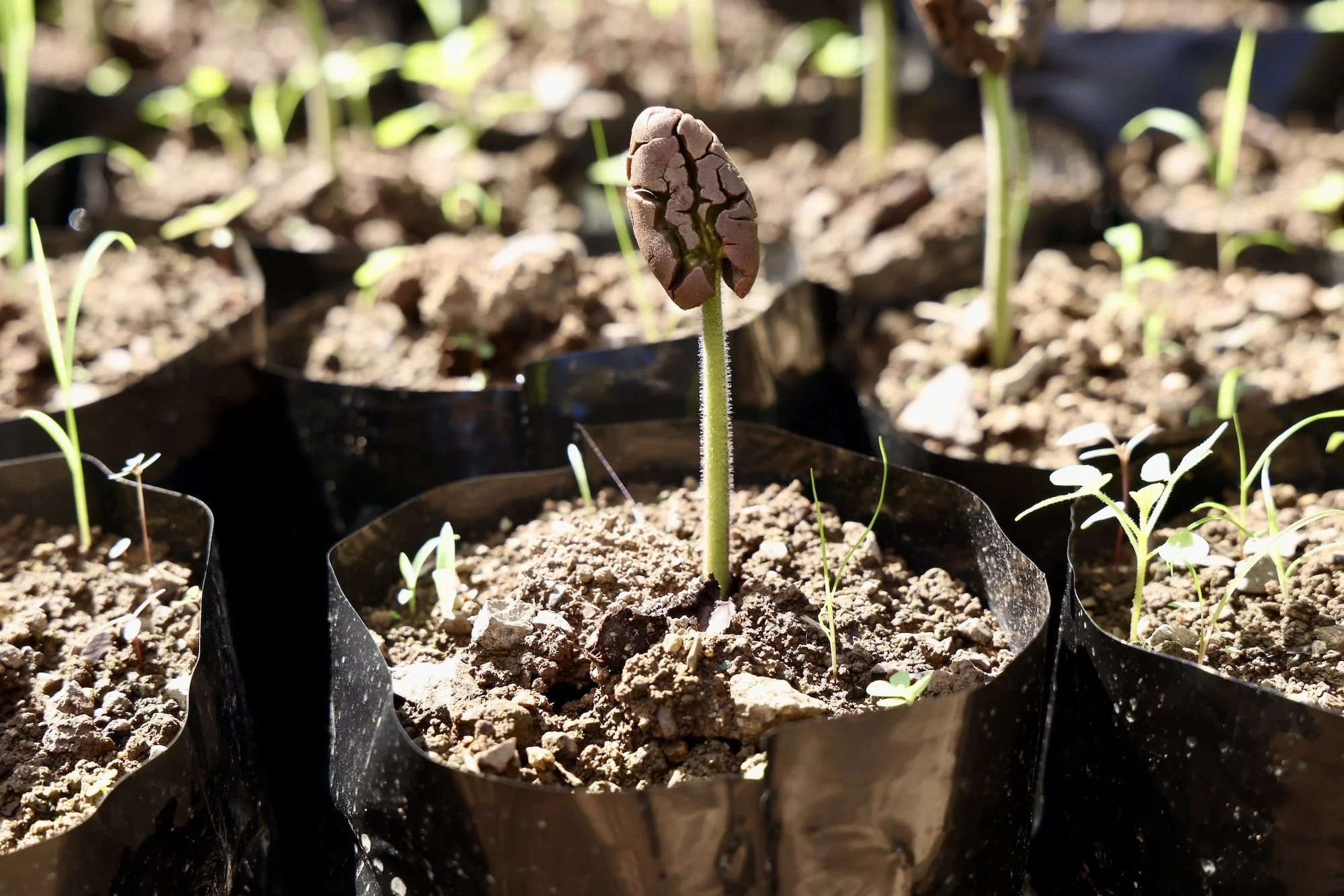
Sprouting cacao at Hacienda Jeanmarie. Photo credit Jeanmarie Chocolat
Today, Hacienda Jeanmarie sources beans from over 100 small-scale farmers, alongside cacao grown on its own 70-acre farm. Most of the farms practice permaculture and agroforestry, interplanting cacao with guava, soursop, pineapple, bananas, papaya, and other crops. Echevarría and his team collect, sort, ferment, and dry the beans before shipping a portion to the US, where they are currently distributed by Uncommon Cacao.
As Puerto Rico is a US territory, the beans Echevarría exports undergo rigorous inspection by the USDA before they leave the island. The major benefit of this is that they don’t need to be sprayed or fumigated when they arrive, unlike imports from other countries, making them some of the cleanest and freshest beans you can buy in North America.
From Farm to Bar
Hacienda Jeanmarie beans are currently used by some of the most celebrated craft chocolate makers in the US, including the likes of Fruition Chocolate, Spinnaker Chocolate, and Castronovo Chocolate. These bars offer diverse and delectable flavor notes, from coffee and raspberry to date and chocolate fudge.
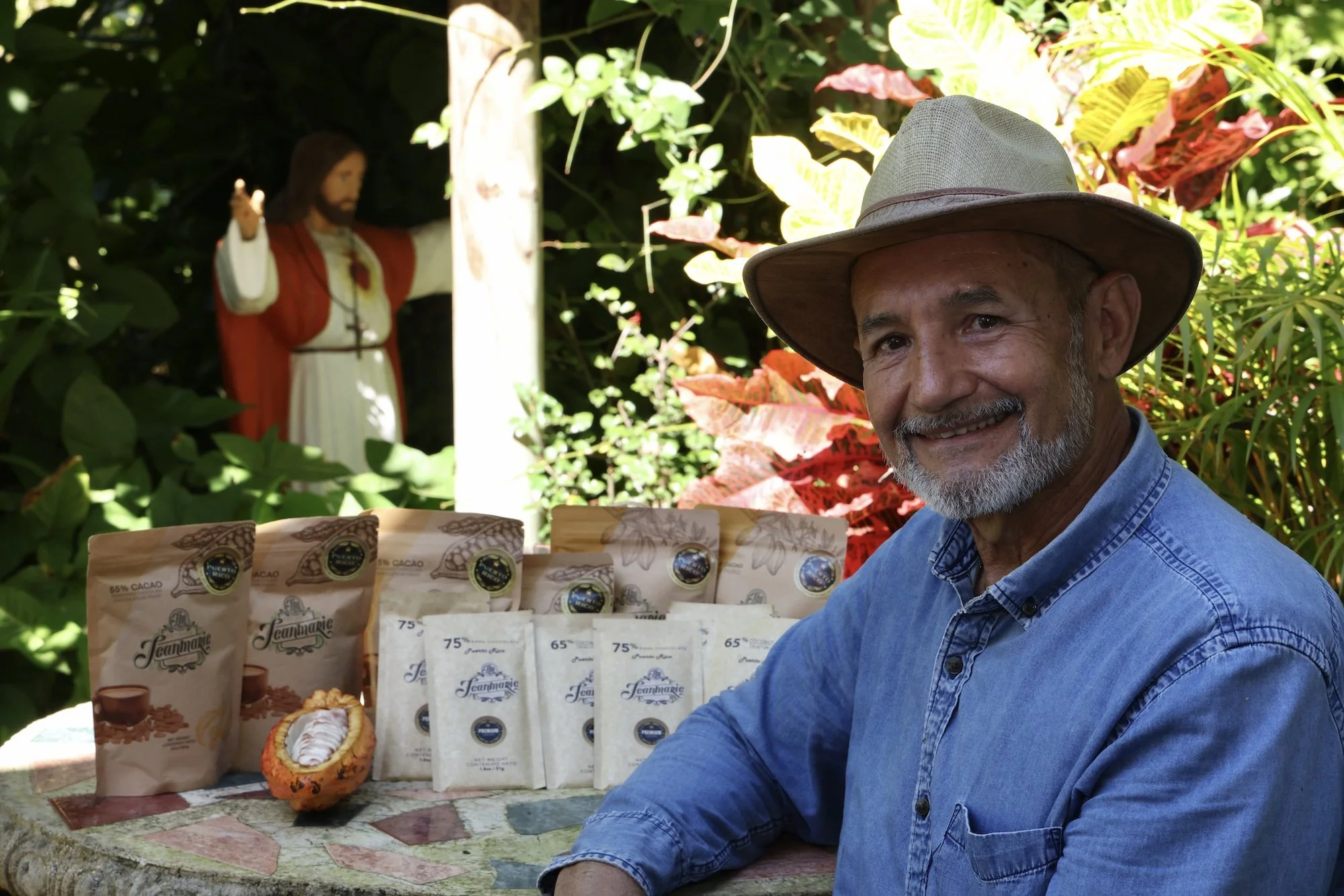
Juan Echevarría also founded Jeanmarie Chocolat. Photo credit Jeanmarie Chocolat
The cost of Hacienda Jeanmarie beans is relatively high, reflecting both exceptional quality and the higher cost of operating in US territory. However, with rising global cacao prices and the introduction of import tariffs – from which Puerto Rico is exempt – it can now compete with established cacao suppliers from other countries.
In 2022, Echevarría built his own chocolate factory and founded Jeanmarie Chocolat. While the vast majority of chocolate consumed in Puerto Rico remains cheap, overly sweet, and imported, his locally made bars and cacao powder are now available in many supermarkets, offering an exceptional alternative to mainstream chocolate. Other local farmers have also started making chocolate, and slowly but surely, a boutique tree-to-bar industry is beginning to blossom.
With a growing domestic market, increasing demand in the States, and dreams of exporting to Europe, the future of Hacienda Jeanmarie – and the entire Puerto Rican cacao industry – looks bright. Says Echevarría, “There’s a huge opportunity here for the island. Every day we’re encouraging people to be part of this movement – to grow as much as possible, as soon as possible.”
Puerto Rico may be the new origin on the block, but with Echevarría’s passion and dedication behind it, it’s undoubtedly here to stay.