
The Search for Papua New Guinea’s Finest Cacao
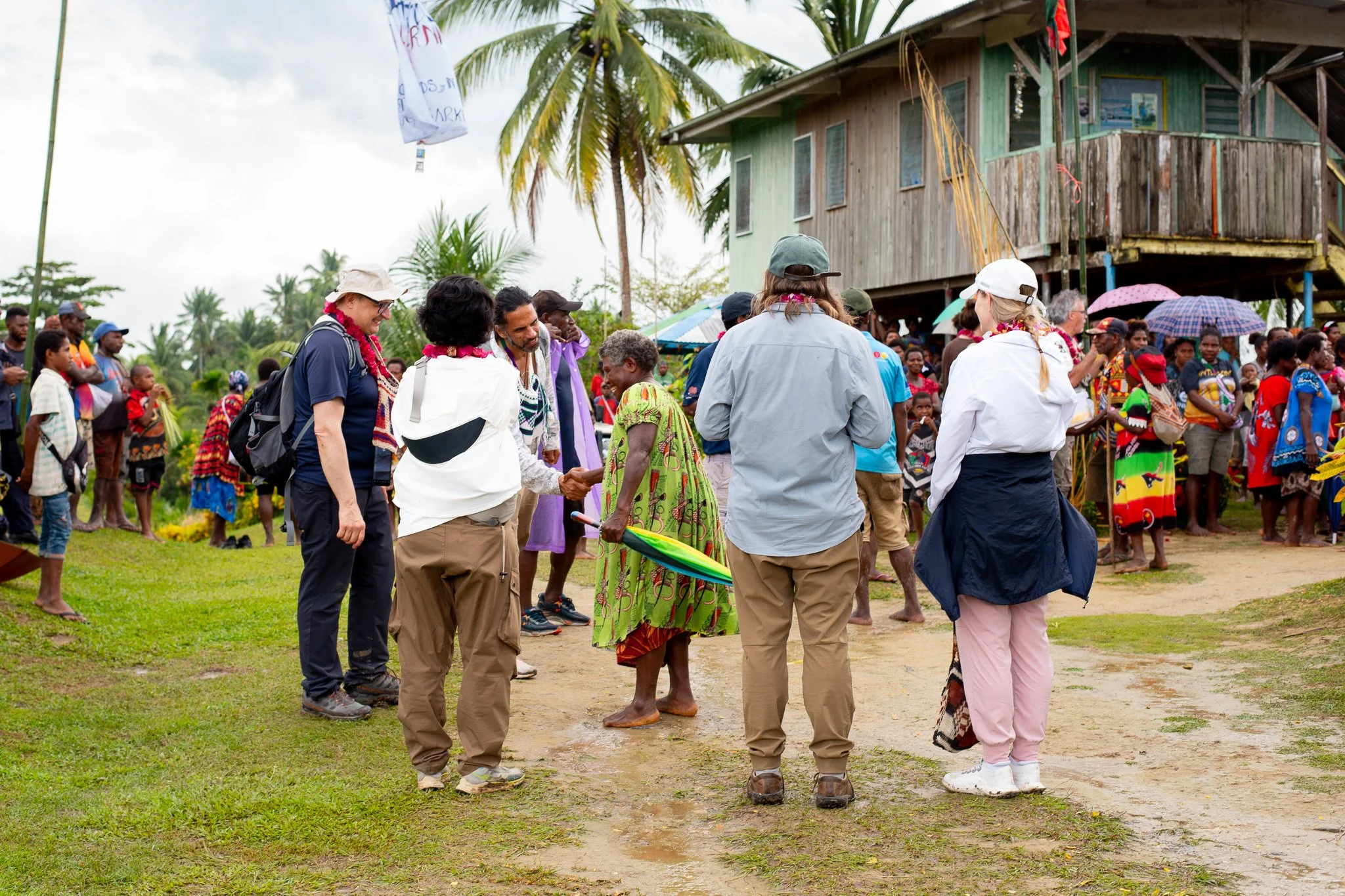
On a Monday afternoon in April, a group of 15 international chocolate makers and cacao experts were picking their way up a steep muddy slope in Muhain – a very remote village in the East Sepik Province of Papua New Guinea (PNG). While visiting a hilltop cacao-growing settlement and speaking with hundreds of farmers, an immense rainstorm broke out, making the boggy return path almost impassable. While hordes of villagers spent over an hour pulling vehicles out of the mud, the group of chocolate professionals learned local songs and dances at the top of the hill. This is all in a day’s work in the search for PNG’s finest cacao.
A Land of Extraordinary Diversity
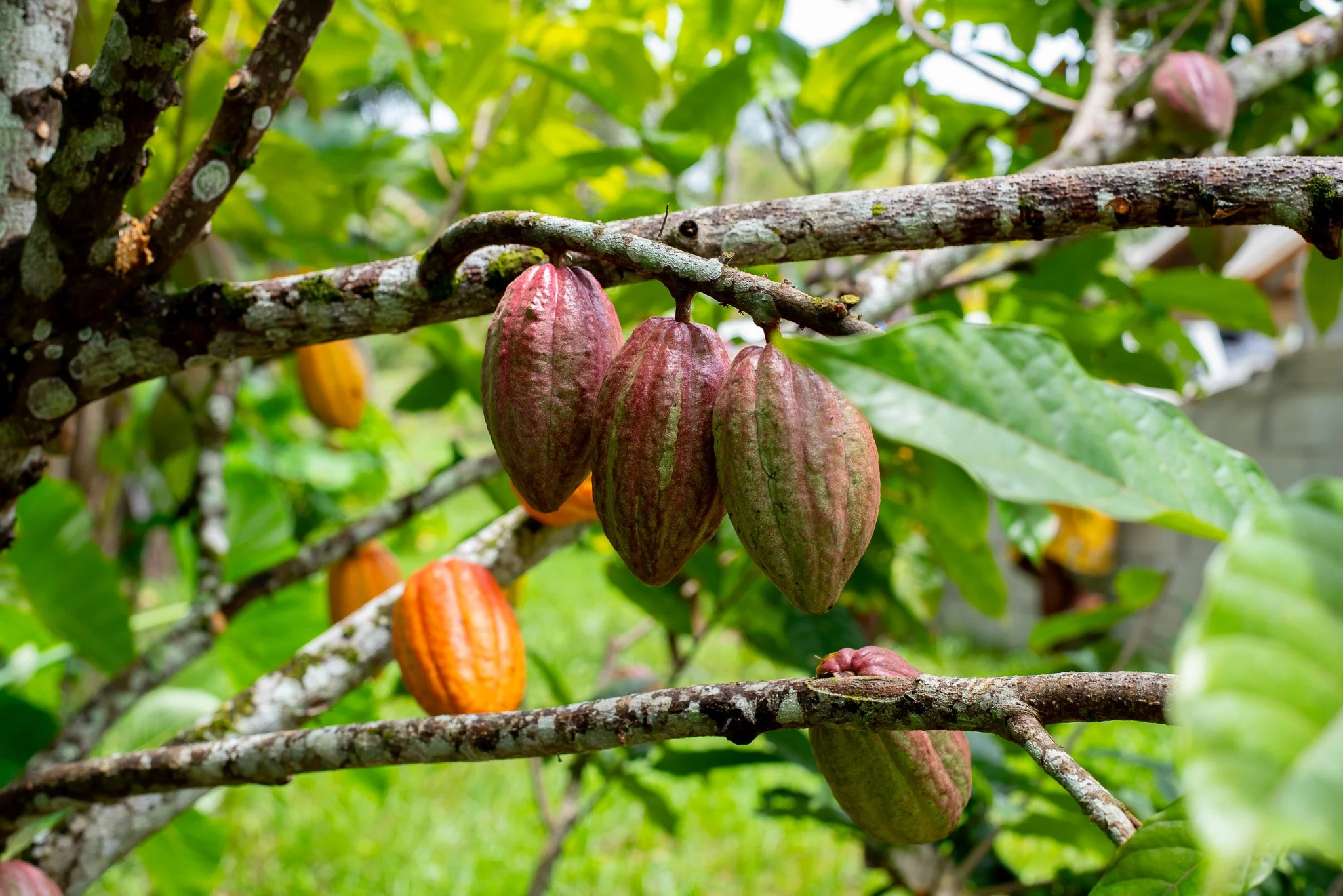
Cacao pods on the tree in Papua New Guinea
Papua New Guinea is one of the most extraordinary and diverse places on Earth. Situated in the southwestern Pacific, just north of Australia, it occupies the eastern half of the island of New Guinea, alongside roughly 600 smaller islands, making it the third-largest island country in the world. With 840 living languages, it has more linguistic diversity than any other country. The island of New Guinea is also the world's most floristically diverse, comprising around 5% of the world's biodiversity. Its population of around 11 million people is spread across rugged highlands, remote river valleys and dense tropical rainforest – communities that remain profoundly connected to the land and to traditions that stretch back thousands of years.
Cacao was introduced to PNG in the early 1900s by German colonists, and over the century that followed it became deeply woven into the country's agricultural and economic fabric. Today, cacao is grown in 14 of the country's 22 provinces, with East Sepik, Bougainville, Madang and East New Britain among the major growing regions. Over two million people in PNG farm cacao – the vast majority as smallholder subsistence farmers. The country produces more than 40,000 tonnes of cacao per year – around 1% of global supply – with almost all of it sold for a very low price to the bulk market.
From Bulk to Boutique
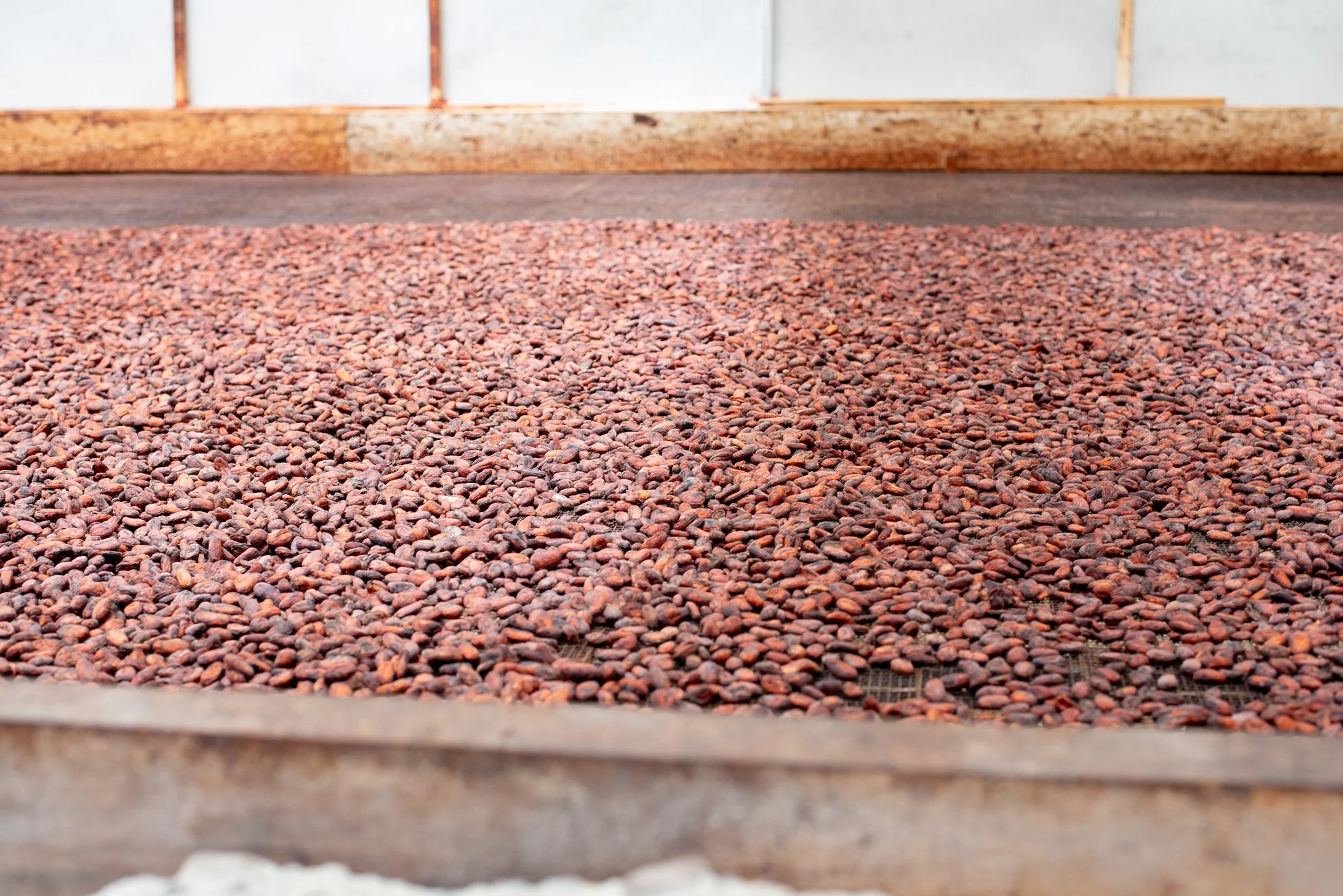
Cacao drying in Papua New Guinea
There’s now a growing movement to help PNG farmers transition from supplying the bulk market to the specialty craft market. Oonagh Browne of The Cacao Ambassador and Ū Cacao Charitable Trust has been working with farming communities there for the last five years. “The bulk market’s all about price and volume,” says Oonagh. “It has no relationship with the farmers behind the beans – nor any interest in what a sustainable livelihood actually looks like in the communities where cacao grows.”
There are many difficulties in transitioning into the higher-quality boutique industry, such as improving cacao processing facilities, increasing education and training for farmers, and overcoming major infrastructure and logistical challenges. However, a huge amount of work is being done by the PNG Cocoa Board, EU-STREIT, and several other organisations, and more world-class beans are now hitting the world stage. “The boutique market provides connection, pride, and consistent pricing,” says Oonagh. “As communities rise the whole country rises; breaking down the barrier to the boutique market is essential.”
The Smoke Clears
For years, PNG cacao suffered from an unfortunate – and inaccurate – reputation for being smoke-flavored. This is not an inherent flavor of the beans themselves, but a result of poor drying practices: broken pipes, inadequate ventilation, and smoke seeping into the drying rooms – tainting what was otherwise exceptional raw material. Smoke taint is a processing problem, and it obscured the true potential of these beans for decades. That is now changing rapidly. As drying techniques improve – a focus of much of the training and knowledge-sharing happening in communities across the country – the world is beginning to discover what this cacao is truly capable of. The finest bars made with PNG beans can showcase notes of raspberries and cherries, honey and malt, nutty depth, delicate florals – a complexity and vividness that can stand alongside the most celebrated origins in the world.
Bean Meets Bar
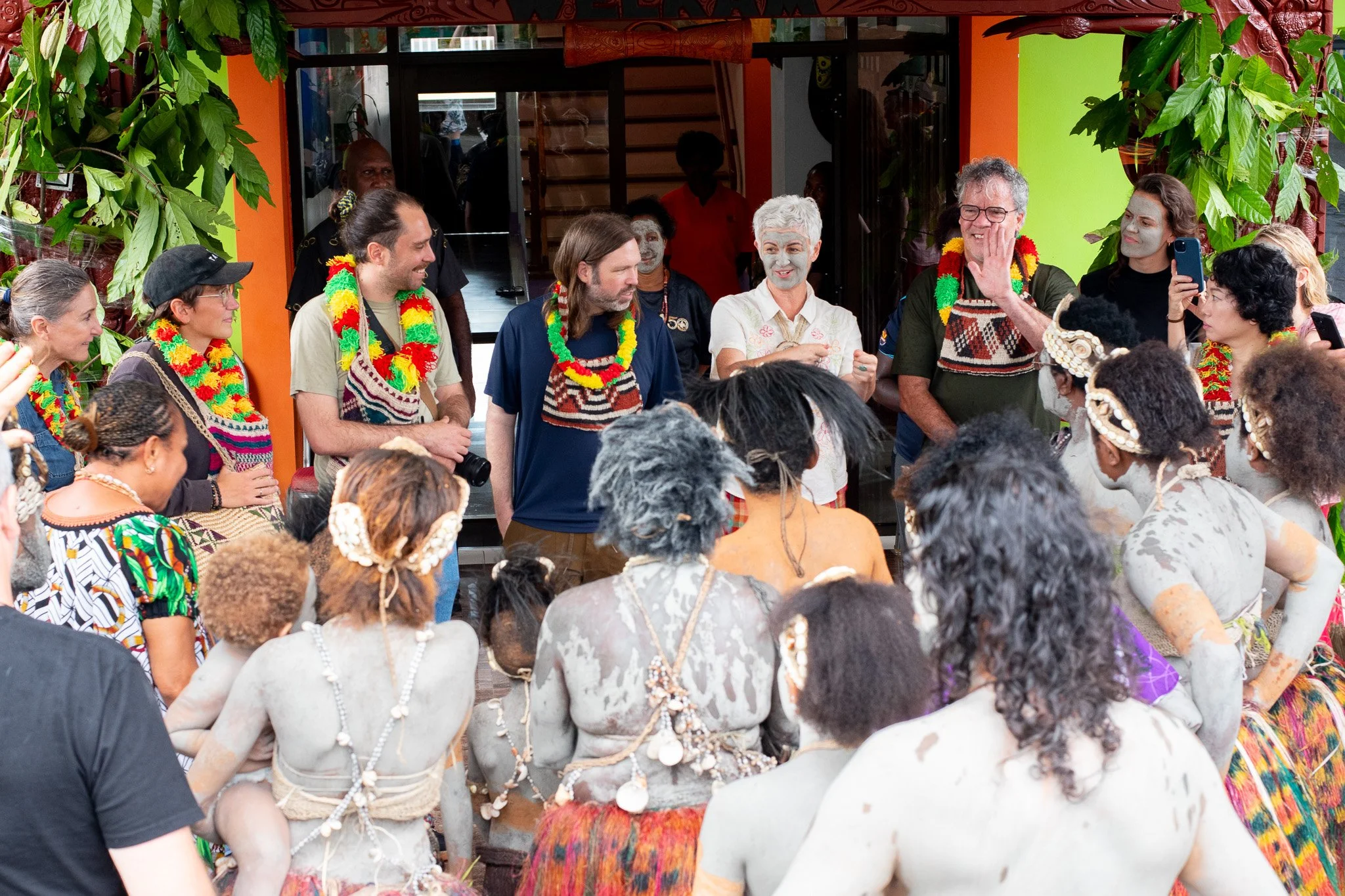
Group welcome at The Village Inn hotel in Wewak
The three-day Greater Sepik Cocoa of Excellence and Trade Expo took place in Wewak in April. The expo drew thousands of visitors and hundreds of stalls – the vast majority of them cacao farmers from across PNG, proudly displaying their beans. A local hot chocolate competition showcased the creativity and pride of the community, while a cacao budding competition – in which farmers demonstrated precision grafting techniques – celebrated the technical skill that these growers bring to their craft. The highlight for many was a live cooking demo by Kiwi celebrity chef Peter Gordon and pastry chef Victorine Basquin – who took to a makeshift stage in front of hundreds of cacao farmers and cooked with local ingredients: fresh coconut cream, papaya, Sepik-grown vanilla, and cacao pulp straight from the pod.
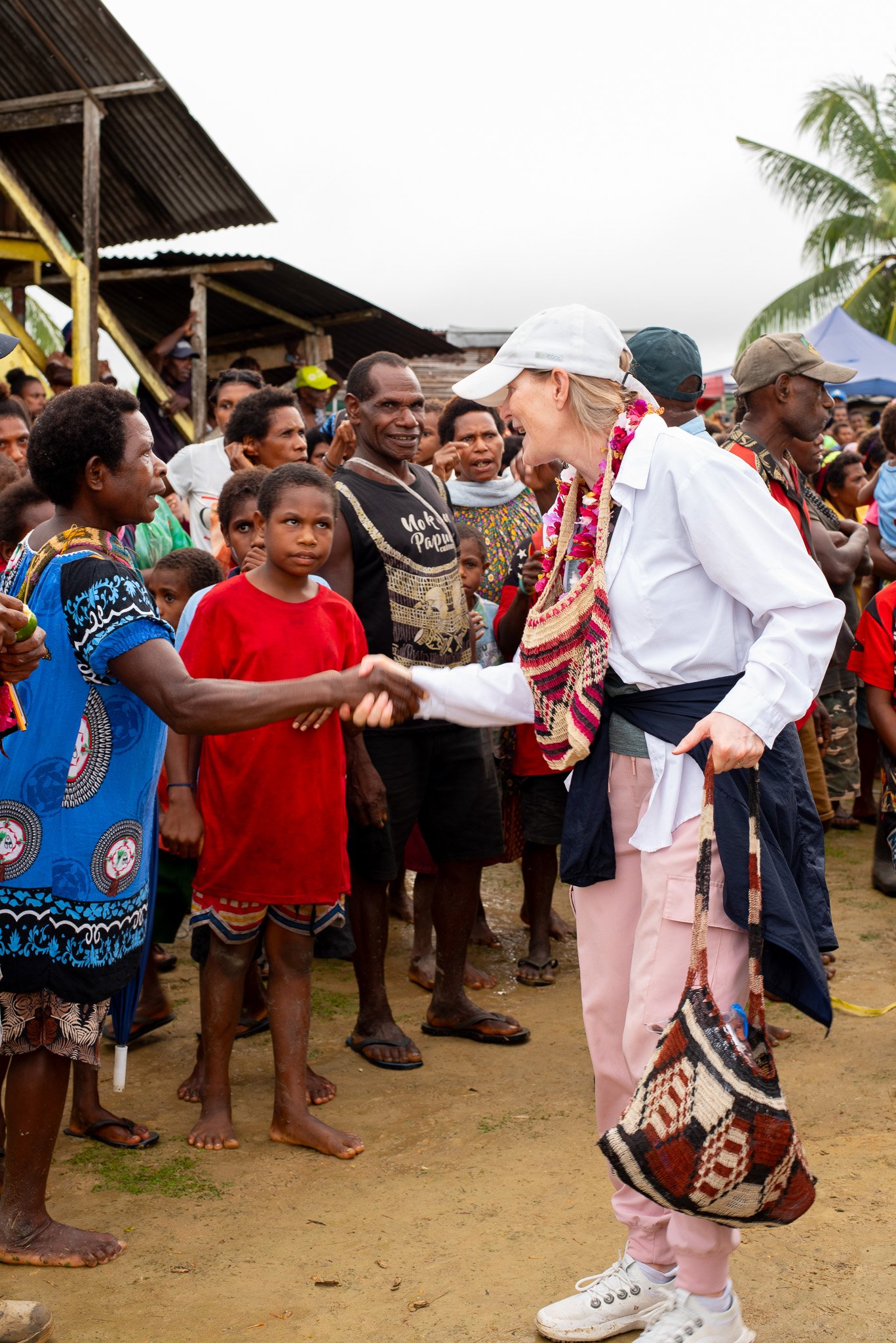
Elaine Wherry of Dandelion Chocolate greeting locals
At the expo, the group of 15 international chocolate makers and cacao experts chatted with farmers, gave presentations, and shared their expertise. Among the group were husband and wife co-founders of Dandelion Chocolate (one of the most respected craft chocolate makers in the world and a pioneer of the bean-to-bar movement) Elaine Wherry and Todd Masonis. “The first thing [farmers] wanted to do was hand you their beans and ask for feedback – that’s such an honor,” says Wherry. “We do a lot to develop the flavor of beans, but when you see the years and years of hard work, skill and expertise that farmers put into it, it’s a different level.”
Cocoa of Excellence
The centerpiece of the expo was the Cocoa of Excellence Awards, in which cacao samples from the country’s top 59 farms were judged by an international panel. Three gold awards were presented, with the winners receiving a micro-export license and a contract with Cacao Latitudes – a life-changing reward that enables market access and a direct pathway into the specialty chocolate world. The gold winners were Jude Jalowa of Sasivi Cooperative in East Sepik, coincidentally the region that hosted the event, and Paul Esiron and David Peko, both from Milne Bay on the opposite side of the country.
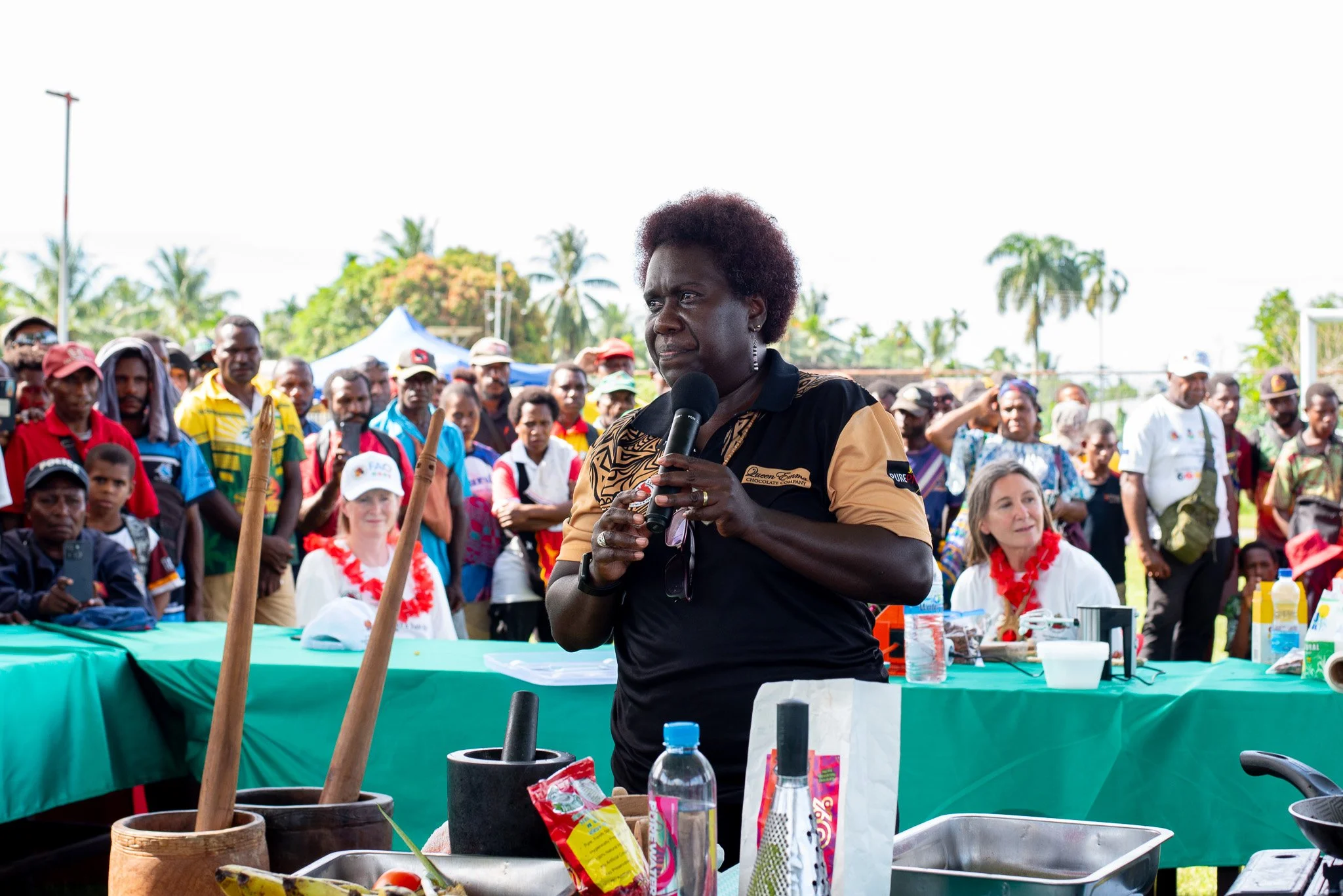
Karina Makori, the General Manager of Queen Emma Chocolate
Karina Makori, the General Manager of Queen Emma Chocolate in Port Moresby was part of the judging panel. Having also tasted entries in the 2024 awards, she found a significant improvement this year, with far less smoke-tainted samples, better fermentation, and an overall increase in consistency. Makori believes the quality will be even higher in future awards, as a result of this event: “The impact was really motivational – it really psyched up all the farmers. It got them to see that if they put in the extra effort, there are real rewards. It also gave them pride in their hard work, and helped them understand what the market is asking for.”
PNG Pioneers
A handful of chocolate makers are already proving the potential of PNG beans. Ao Cacao in New Zealand, Luisa's Vegan Chocolates in the UK, Mirzam in Dubai and Fresco in the US are among those working with them. But this is still a relatively small group, and the task of building reliable supply chains from remote communities to international buyers is considerable. However, The Cacao Latitudes contracts awarded to the three gold winners are a significant step towards the country’s finest beans reaching the global specialty market. If these kinds of direct relationships between farmers and international buyers can be built and sustained – and there is every reason to believe they can – we may be approaching a moment when PNG cacao finally gains the reputation it deserves.
A Different Future
On the hillside in Muhain, while vehicles were being hauled out of the mud below, village children darted between the cacao trees, posing for photos, excited to meet international visitors for the first time. Standing in a place like that, it’s hard not to think about what the future might hold for these children. The work being done by the PNG Cocoa Board, EU-STREIT, the chocolate makers and cacao buyers, and the farmers themselves is gaining real momentum. If they can gain more access to the specialty market, if the prices improve and the connections hold, the cacao growing around those children could mean something very different for their lives than it has for previous generations. Not just a subsistence crop sold cheap to the bulk market, but a source of pride, stable income, and global recognition.
The best chocolate doesn't come easily. Spending time with cacao growers in PNG gives you a rare and humbling window into what it actually takes: the weeks of processing beans, the months of transport and logistics, the years of developing flavour and infrastructure, and the generations of knowledge passed down through farming communities. Once you know all this, tasting that piece of chocolate in your hands will never be the same again.