
East Meets Sweet: 6 Great Asian Inspired Chocolatiers
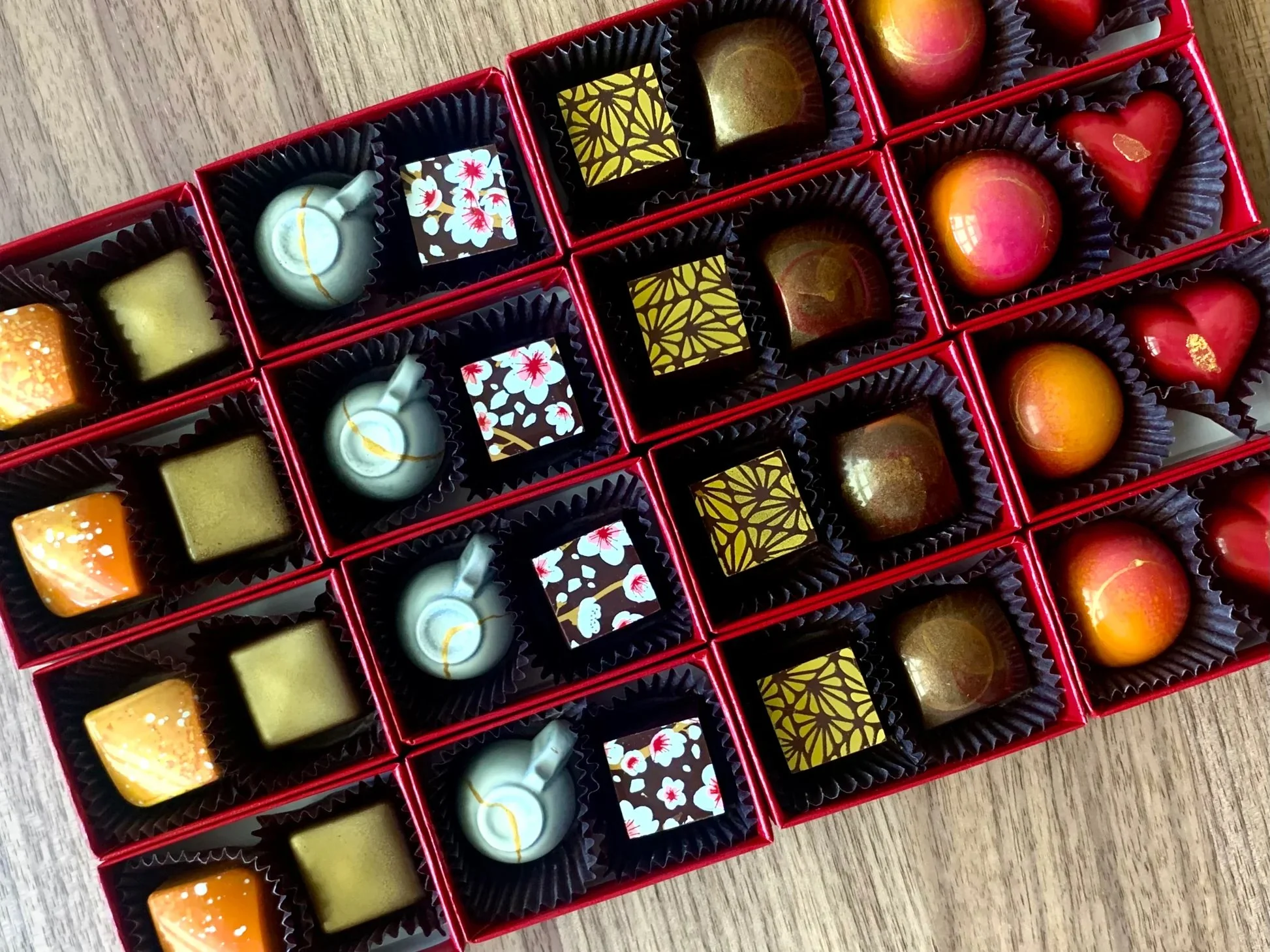
Wedding chocolates photo credit Formosa
Great chocolate provides a tasty foundation for accent flavors, from spicy chiles or tart citrus to creamy caramel or cooling peppermint. Yet, for many fans, tasting chocolate infused with Asian-inspired accent flavors is a relatively new concept. That may be changing, as increasing numbers of U.S., chocolate makers and chocolatiers honor their Asian culinary and cultural heritage. They’re crafting inventive confections flavored with ingredients such as cardamom, passionfruit, tea, or black sesame. Here are six companies that offer delicious, Asian-inspired chocolates.
Cacao & Cardamom Houston
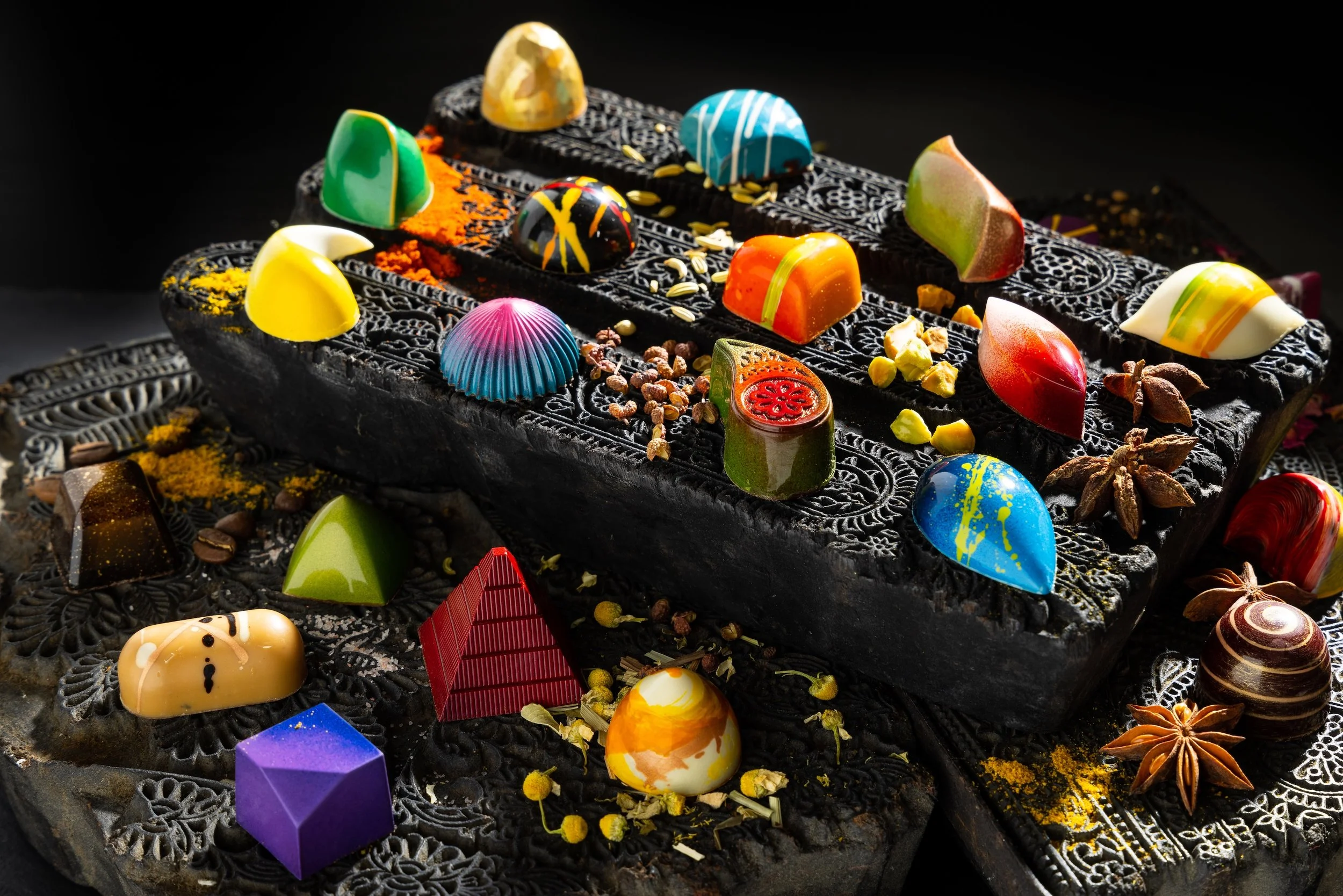
Chocolate & spice vignette from Cacao & Cardamom
Born and raised in the United States, Annie Rupani spent six months in Pakistan after graduating from college and before law school. During that time, she heavily researched chocolate and took a Malaysian chocolate-making class. Back in the States, making chocolate was a stress reliever from law studies. And she appreciated the healthfulness of dark chocolate.
Since Rupani opened Cacao & Cardamom in 2014, she has flavored bean-to-bar Valrhona chocolate with tastes and spices reflecting her Pakistani heritage and extensive travels, including in Europe.
“I started really delving into food when I went to school in Boston and one of the first shops that ignited my interest in chocolate was L.A. Burdick’s,” Rupani says. She did taste tests in the evening and started to experience food differently in general. For instance, guava and tamarind, in Hawaii, inspired one chocolate.
“Chocolate is an incredible medium for carrying various flavors and we have so much to play with in chocolates,” Rupani says. “We’re pushing the boundaries of flavor profiles and creating experiences that really make you think about what you’re eating.”
Top-selling Asian flavor profiles include Cardamom Rose, Passionfruit, or Raspberry Pistachio. Colored cocoa butter decorates each exquisite confection, with beautiful packaging such as a tall, black multi-tier box.
“Cacao has a ton of complexity,” Rupani says. “We get to play the game of getting chocolate from different single origins, which pair well with other flavors, such as cardamom with Madagascar cacao. People now realize we are a chocolate company making beautiful bonbons with unique flavors so now they expect it.”

Daniel Corpuz Chocolatier - Bon Bon Box 12
New York City-based Daniel Joseph Corpuz is a pastry chef and chocolatier who worked in several local fine dining restaurants before pivoting to work primarily with chocolate, during the pandemic.
Corpuz also honed his skills with world-renowned Pastry Chef Amaury Guichon and as Netflix’s ‘School of Chocolate’ breakout chocolatier, before launching his company. Daniel Corpuz Chocolatier incorporates Filipino and Asian flavors.
“We’re a small-batch artisan chocolate shop that produces chocolates and confections inspired by Filipino or Asian flavors,” he says. “Growing up, I was surrounded by a culinary-rich household, with Filipino-centered ingredients, which are so ubiquitously central to [this cuisine]. Chocolate is a great medium with which to introduce people to new flavors.”
Several of Corpuz’s Asian-forward ingredients include ube (a purple yam that originated in the Philippines), yuzu (a small, bumpy, yellow citrus fruit that originated in China but is grown in Japan) and calamansi (a citrus hybrid predominantly from the Philippines).
Nine out of ten times, these flavors also find their way into Corpuz’s cookies, pastries, cakes and desserts, “And I work with the Philippine Consulate to source real ingredients, rather than extracts from an Asian food store,” he says.
Corpuz also wants to turn the tables on current cacao sources. “Since 2023 I have traveled across Southeast Asia, seeking cacao,” he says. “We are so used to having it come from South America and Africa. But Taiwan can produce high quality chocolate that can fill in a part of the supply chain, too.”
Deux Cranes Los Gatos, CA
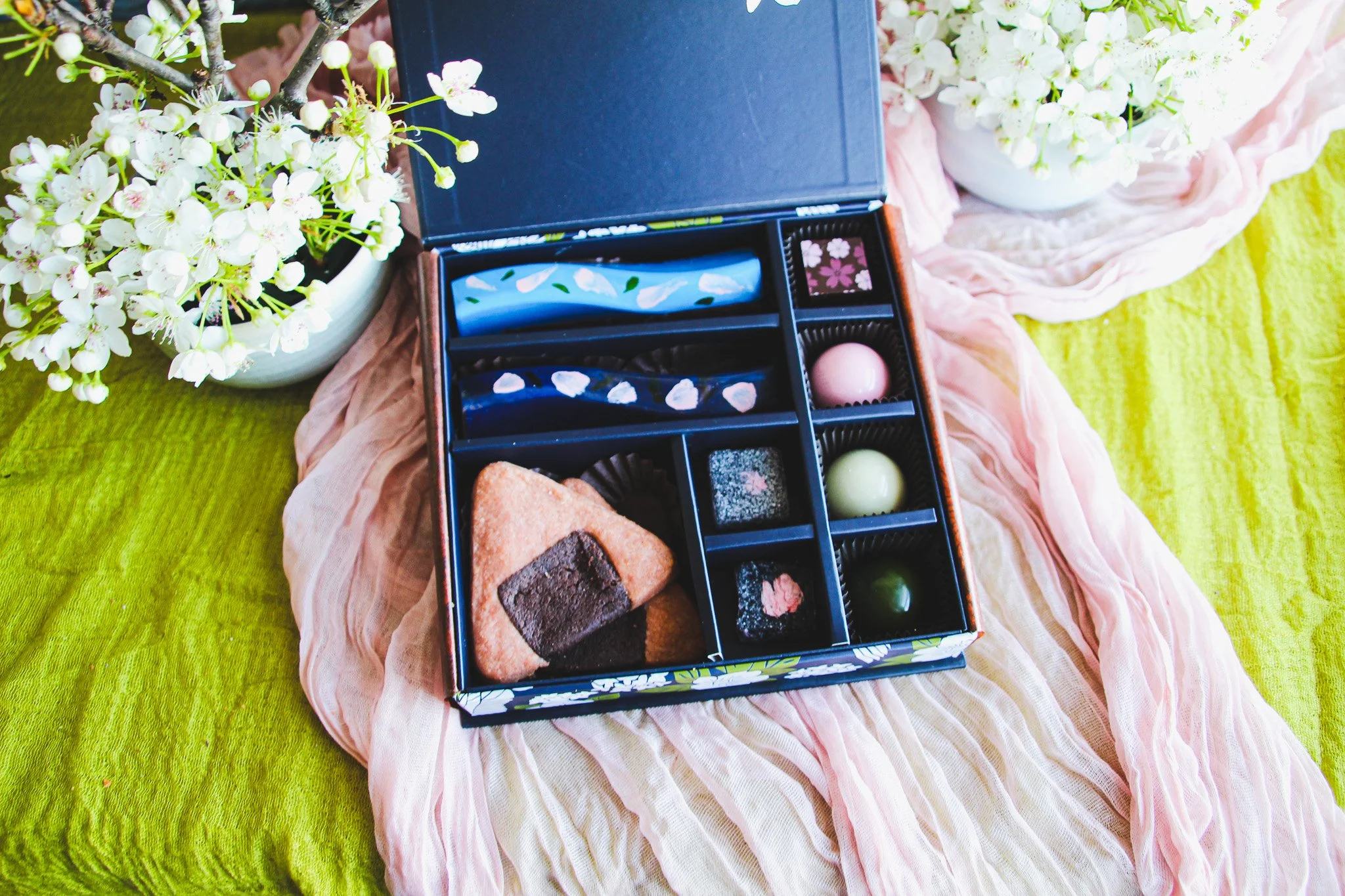
Deux Cranes chocolate collection photo credit Michiko Marron-Kibbey
With top selling Asian-inspired items that include a matcha with sesame bar, a hojicha chocolate bar, and Michiko Marron-Kibby’s personal favorite – dark chocolate w/miso almonds – her Deux Cranes chocolate company merges Japanese flavors and aesthetics with French chocolate tradition. And the ‘deux’ (French for two) in Deux Cranes also correlates with peace and long life in Japanese culture.
“I usually tell people that we are Japanese and French-inspired,” says head chocolatier and owner, Marron-Kibbey. “I studied pastry in France, and we marry it with Japanese design sensibility as well as some of the flavors I grew up with. I want to celebrate savory and sweet ingredients and flavors that aren’t as popular [in the U.S.]. My Mom is Japanese American, and I grew up in Japan from age five, with access to different and regional [flavors].”
Bonbons to shortbreads and caramels at this California shop incorporate delicious Valrhona chocolate alongside stone-ground Asian flavors such as kinako (roasted soy powder), goma (black sesame), and hōjicha (roasted Japanese green tea).
“These flavors are very earthy and well-rounded, with bitterness and natural sweetness,” Marron-Kibby says. “It’s about enhancing the chocolate that we work with – celebrating natural flavors in the cocoa but also enhancing these earthy flavors.
“We live in a highly Asian area in Silicon Valley. I grew up with these flavors and I think customers will love them, too. I’m most happy that people want to try this unique combination of things with me.”
Formosa Chocolates San Rafael, CA
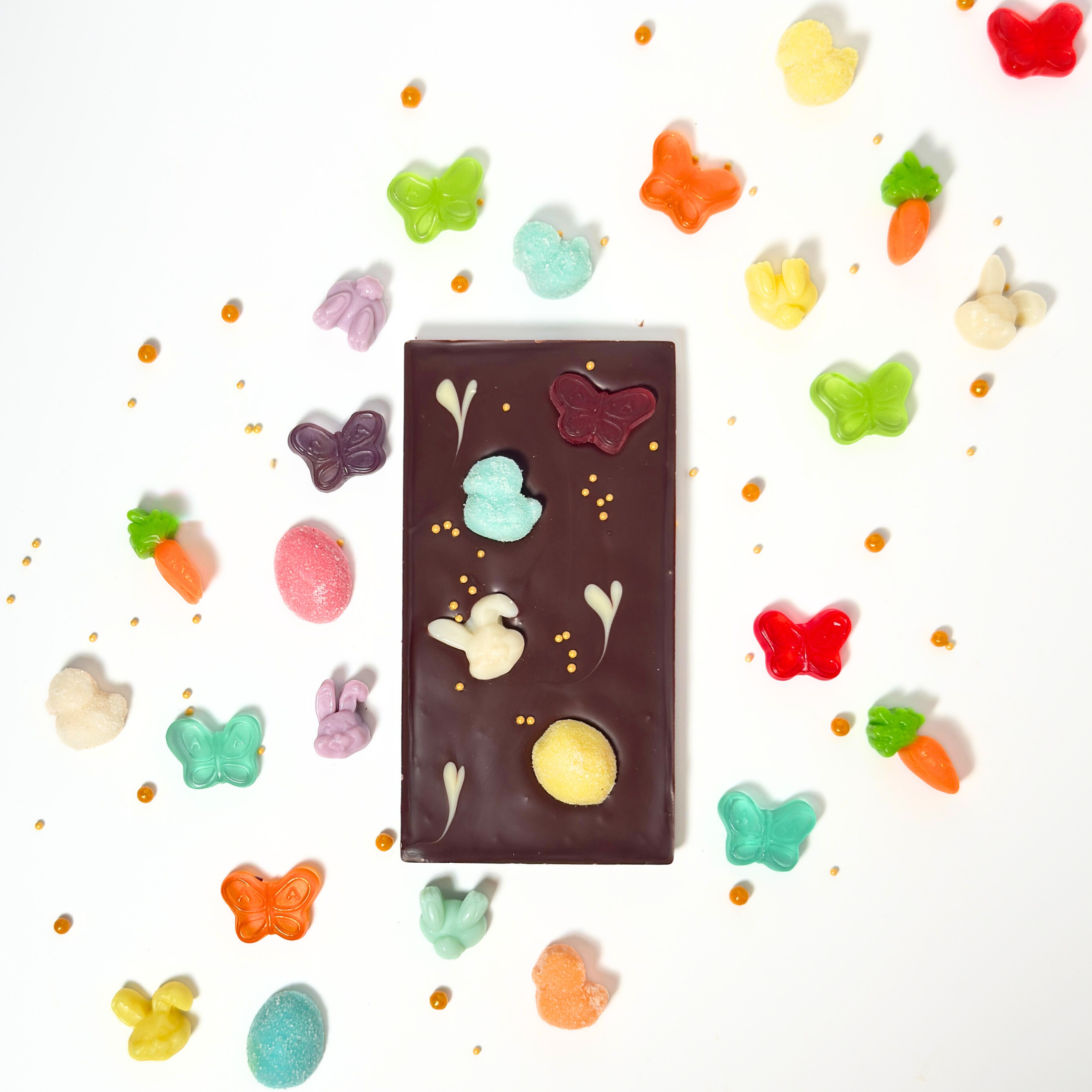
Spring Fling bar photo credit Formosa Chocolate
Formosa Chocolates offers bars, bonbons, and confections that incorporate multiple Taiwanese ingredients, including Pingtung (dark chocolate ganache made with chocolate from southern Taiwan), Formosa coffee, Nantou oolong, dried longan, Kavalan whisky, green mango, and many others. Taiwanese (chocolate covered) Pearl Guava, sesame praline, and sour plum licorice flavor are other confections.
A bar with GABA oolong tea from Taiwan has sold out four times. And a modified family recipe for Taiwanese pineapple cake now fills a small bonbon. “In part, [our] flavors were created because I wanted to see them on the market!” says owner and chocolatier, Kimberly Yang. “I figured if they didn’t sell, at least my friends and I would enjoy them.”
She primarily uses dark chocolate. “Not too sweet” is the greatest compliment in many Asian cultures when it comes to desserts,” she says. A spin on a favorite childhood treat, her “Asian Twix,” features miso caramel with a black sesame shortbread crust.
“Our menu also includes flavors that would appeal to a wider American audience such as peanut butter, coffee, raspberry, etc.,” Yang says. She learned to cook throughout medical school and a psychiatric residency, during culinary vacations to Italy, plus chocolate bootcamp at New York’s International Culinary Center and Ecole Chocolat in Belgium. Her hobby eventually became her business.
Yang has been pleasantly surprised by her customers’ diversity. “Growing up, it would have been unusual for a classmate to also enjoy black sesame, for instance. And it’s delightful to see young children of all ethnicities at our popups, happily enjoying black sesame bon bons.”
KESSHō Craft Chocolate Austin, TX
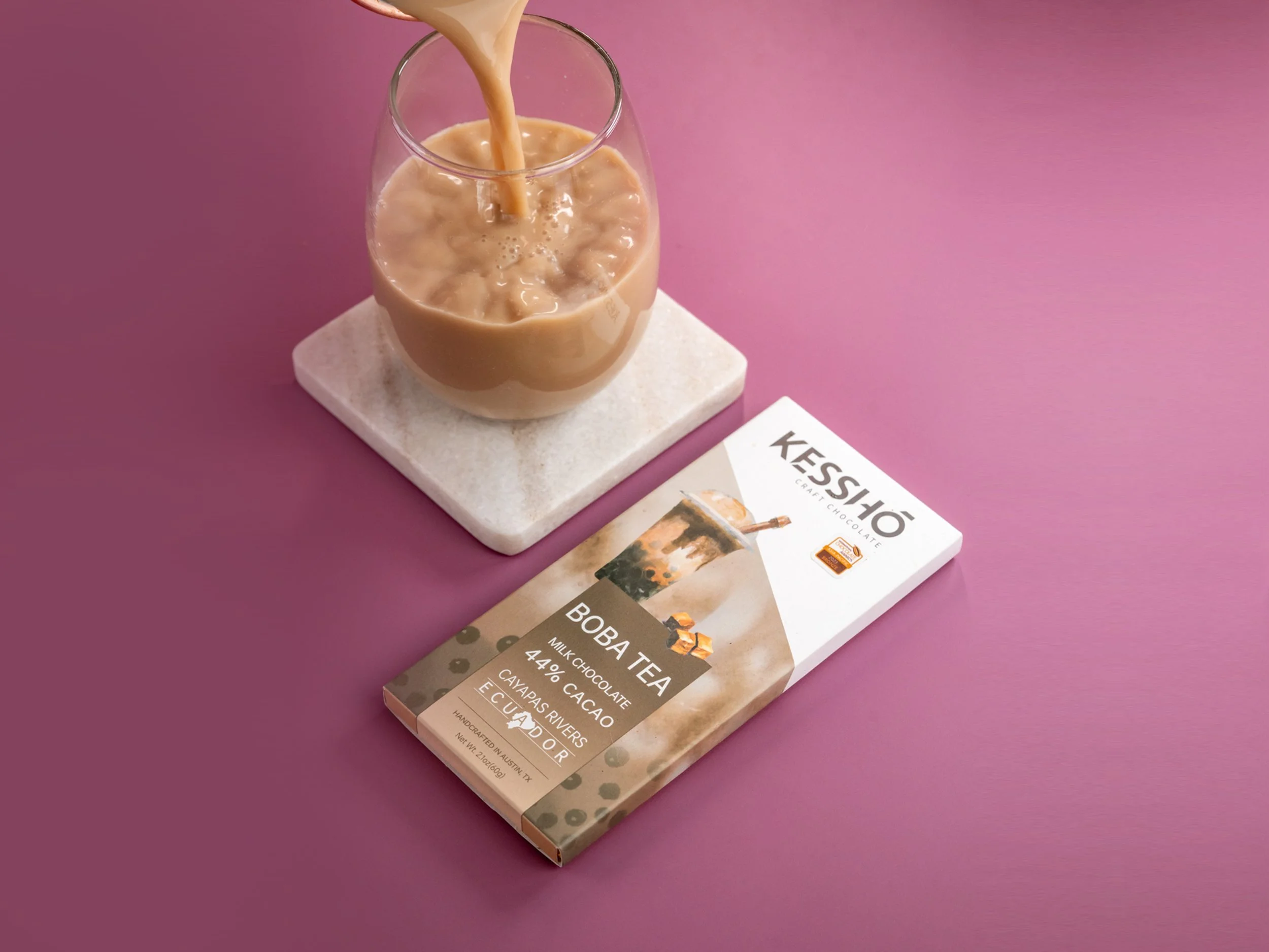
Kesshō boba tea chocolate photo credit Kesshō Chocolate
When co-founders, Liang Wang and Mark Huetsch, christened their chocolate company – Kesshō Craft Chocolate – they chose a name that translates to ‘crystal,’ in Japanese. Born and raised in Beijing, Wang, and her partner, Huetsch, now have multiple U.S. locations.
They got their sweet start during 2009, with their Beijing bakery, Pantry’s Best. As the pair crafted Western-style desserts featuring Asian ingredients, chocolate grabbed their attention.
They create craft bean-to-bar chocolate using organic cacao. “Working from the bean, itself – and knowing how farmers are paid – really connects me to our product,” Wang says. “When we receive different cacao beans, we may also change recipes to complement the cacao.”
Flavor profiles include Black Sesame, Lychee Rose, and Lamb Skewer, which incorporates goat milk seasoned with cumin and chili peppers. Guava Lime, Genmaicha (white chocolate) and Porcini Dark Milk are newer flavors.
For dark and milk chocolate Wang and Huetsch take flavor notes from those beans and decide what ingredients have the best chance of complementing those flavors. Genmaicha chocolate highlights the flavor inclusion itself, such as actual loose leaf tea.
Packaging reflects watercolor style and traditional Chinese painting techniques. “Enjoying a chocolate from when you receive it to when you open it, I consider to be a full journey,” Wang says. “We work with independent female artists – and 90% of our chocolate makers are female too.”
“I think our chocolate is a portal for people interested in Asian culture and cuisine,” Wang says. “Some people who think [certain] flavors seem very adventurous are happily surprised it’s a very good combination.”
Stay Sweet SF San Francisco
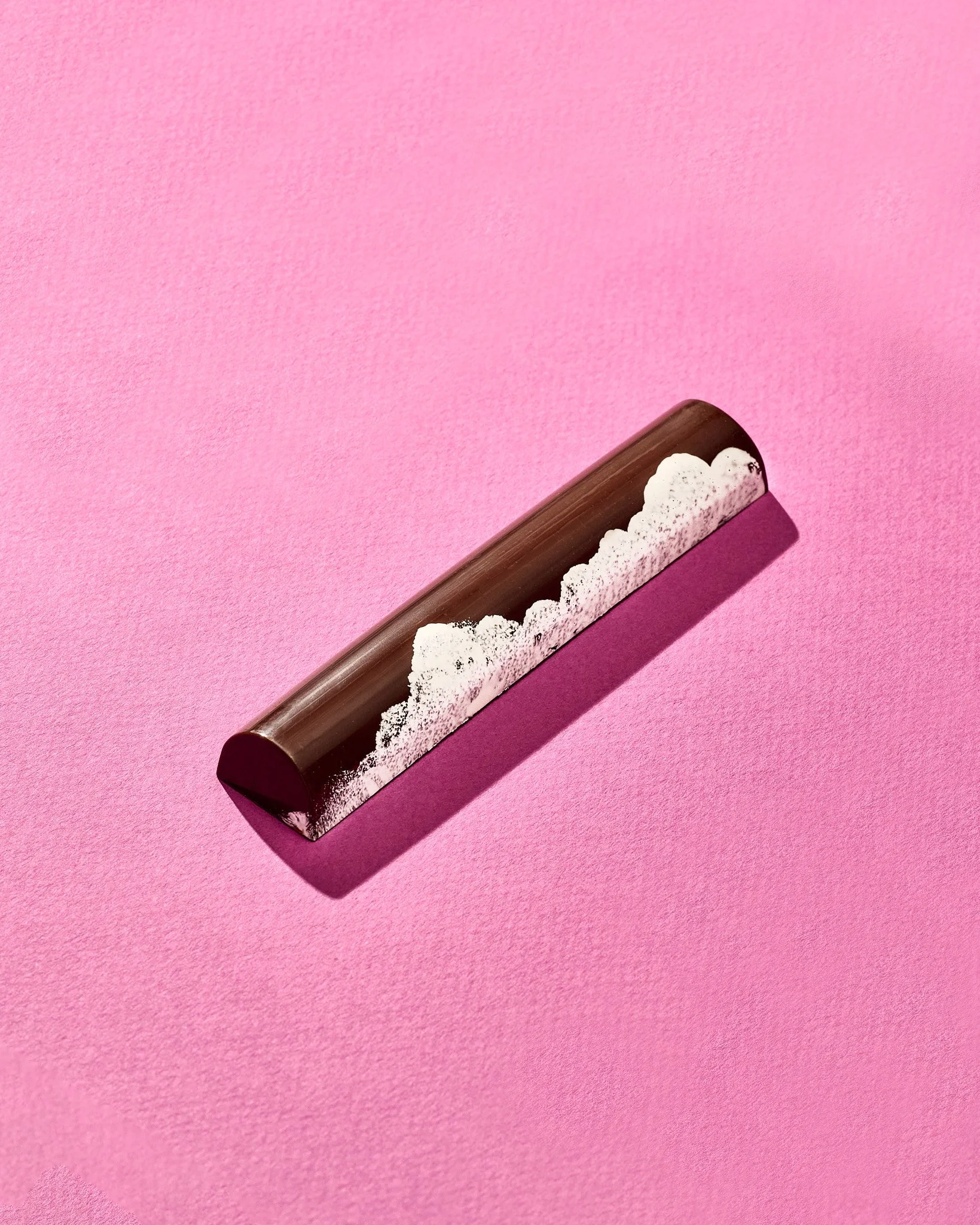
Stay Sweet SF's Karl the Fog photo credit Joseph Weaver
After 12 years at local restaurants, Michelin-star pastry chef Mark Lieuw opened his Stay Sweet SF chocolate company in December, 2024. The owner and chocolatier emphasizes creative use of local ingredients and Asian flavors, in his handcrafted confections. He also brought an all Asian-flavored lineup to East Bay, to celebrate AAPI Heritage Month.
Some items from public gatherings will likely become part of his regular offerings, including ‘Karl the Fog’ – referencing San Francisco’s famous fog, and a riff on London Fog flavors with black tea-infused caramel and dark chocolate coffee ganache. It’s also inspired by a Hong Kong drink of milk tea mixed with coffee.
“I always gravitated more towards chocolate [than pastries],” Lieuw says. “I think chocolate is a blank canvas. The sky is the limit.”
As Lieuw started the business he wanted to lean into his Asian heritage and beyond his Cantonese background. “I like to make chocolates that are different from what everyone is doing – things people don’t always find. Asian flavors speak to me in every way, and I want to push the envelope a little.”
That means incorporating ingredients such as matcha, shiitake, mandarin, and lychee flavors. Lieuw also creates salted duck egg yolk ganache, plus a Black Sesame Rice Krispie bar, and a shiitake mushroom caramel bar.
“When you taste the caramel itself, you taste the mushroom, but when you incorporate the chocolate, it almost accentuates the flavor even more,” Lieuw says. His confections are as beautiful as they are delicious.