
When Smoke Gets in Your Chocolate
Smoke is one of the most evocative smells in the world, awakening a primal recognition within us from deep in our human past. It can be alarming or reassuring, acrid or appetizing, but it’s almost always impossible to ignore.
While it’s quite common to find smoke flavors in spirits, foods like barbecue, and even beer, we don’t typically expect to find it in chocolate. We often turn to chocolate for familiar comforts, but many craft chocolate makers are looking for opportunities to challenge and provoke as well, helping us think about our favorite treats differently. Smoke is one way of doing that.
Craft chocolate makers are using an array of smoke flavors to create truly unique tasting experiences. Of course, there is no one smell that is smoke. There is a colorful world of these aromas and flavors out there, and chocolate makers are using that palette to paint beautiful culinary pictures in smoke.
BBQ Smoking Cacao Beans
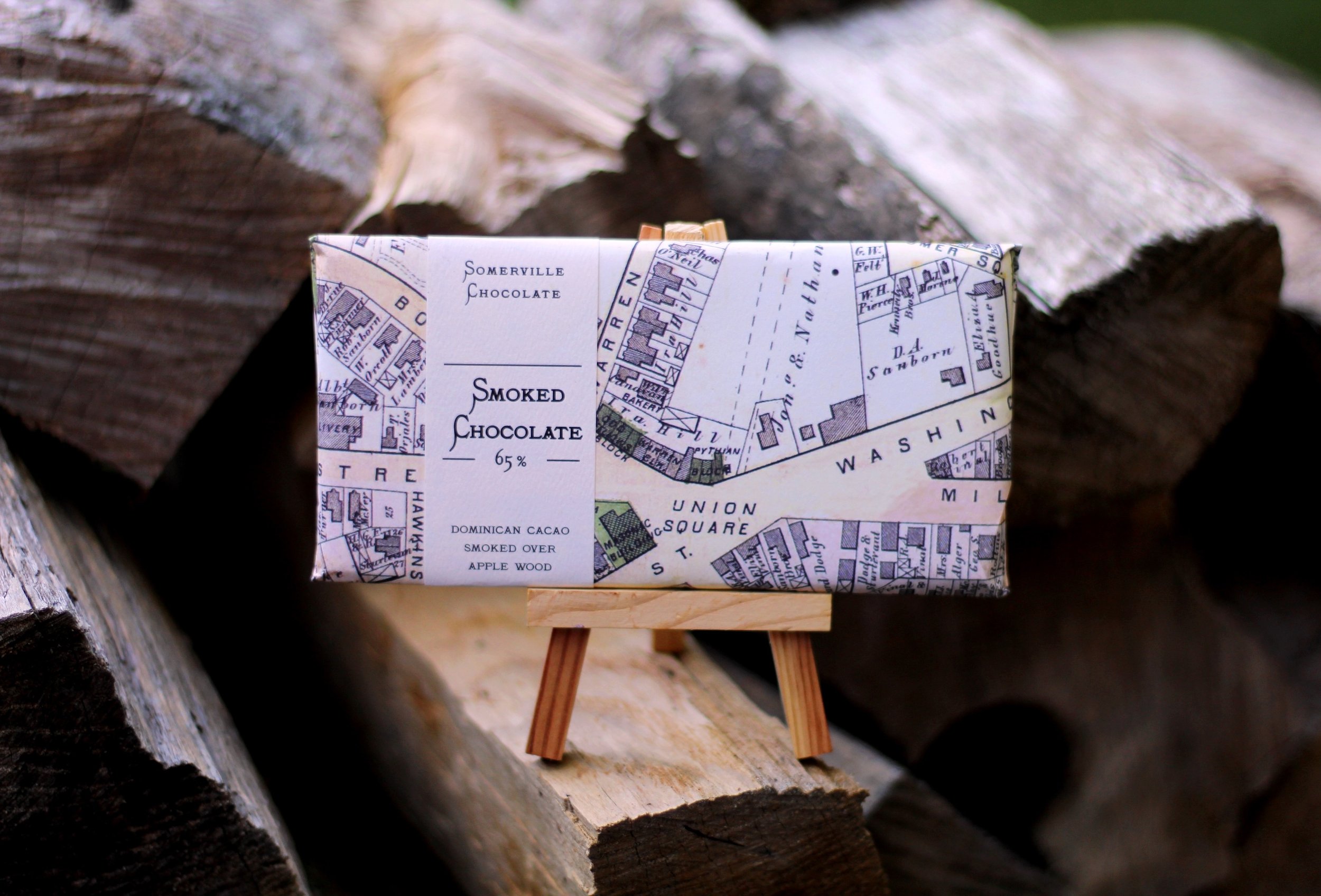
Sommerville Smoked Chocolate 65%
At Somerville Chocolate just outside Boston, Eric Parkes makes a range of interesting inclusion bars. Somerville operates out of a building shared with Aeronaut Brewing, which has allowed for an ongoing creative exchange and has led to bars using beer, hops, and barrel-aging. He makes some of his most unexpected bars, however, with smoked cacao.
Parkes has long been a fan of barbecued food, and has his own “big green egg” for slow-smoking meat. One day, he decided to see what would happen if he did the same thing with cacao beans. Since then, he’s made bars with cacao smoked over apple, cherry, mesquite, Pacific alder, hickory, and pecan wood. Several years back, he released a sampler pack with 4 different 65% dark chocolate bars made with the same Dominican Republic cacao, each smoked over a different type of wood. He says the differences were subtle, but tasting them side by side did allow for nuances to come forward.
While a classic “chocolatey” origin like Ghana might allow more smoke character to shine, Parkes likes to provide complementary and contrasting flavors in the origin of beans he uses in these bars.
“I like fruitier origins with it, the contrast of sweet and fruity with the smoke,” he explains, “I’ve always leaned toward Dominican cacaos. More recently, I’ve been using beans from northern Ecuador.”
While Parkes’s original idea was to roast the cacao beans directly over fire, the big green egg allows much more control over the process. After roasting his beans, he cracks and winnows them and then puts the nibs in the smoker. He then smokes them on the colder side, between 100-140° F. He smokes just a few pounds at a time, for 10-15 minutes per batch.
“The problem is that it’s hard to be consistent with it,” says Parkes, adding that he’s learned to embrace the variations between batches. “You have to be kind of light with it.”
To control the intensity of the smoke character in the chocolate and to iron out some of these inconsistencies, he now makes the bars from a blend of smoked and unsmoked nibs. By adjusting the amount of smoked cacao in each blend, he can achieve a more palatable and predictable result. Typically the mix has been about 50-50 between the two, but he’s recently switched to only using about one-third smoked cacao, but smoking these nibs more heavily.
Parkes says the most common response when customers visit his shop and taste the smoked bars is that they find it interesting, but might not want it all the time. These bars serve to get people’s attention, but they are more likely to purchase single origin bar or other more approachable inclusion bars. His unique location however does mean he has some dedicated fans who know to come to him for unusual offerings.
He’s now pressing his own cocoa butter as well, and would like to develop a smoked soft-serve ice cream with cocoa butter and bourbon.
While few makers have done as much experimenting with smoked cacao beans as Somerville, several others make bars that celebrate the flavors of wood smoke. Crow & Moss in Michigan has an excellent Vanilla Smoke bar made with hickory-smoked beans, and Qantu Chocolat in Montreal offers a bar made with Palo Santo smoke. Xocolatl in Atlanta combines applewood-smoked cacao with raspberries and blood orange-infused olive oil in their unique Ripple Effect bar.
Sauna Smoking Cacao Beans

Domantas Uzpalis of Chocolate Naive
Across the ocean from Somerville, Chocolate Naive in Lithuania is similarly known for their esoteric inclusion bars. Domantas Uzpalis is something of a chocolate mad scientist, creating whimsical and unexpected inclusion chocolates with ingredients like mushrooms or dry-aged beef. These bars that challenge our perceptions of what chocolate can taste like while still being delicious.
One of his most unusual bars is Black Sauna, which is intended to evoke the full sensory experience of Lithuanian sauna bathing.
“I’m a big sauna lover myself,” says Uzpalis. “There’s a sauna revival right now in Lithuania. It’s not only for bathing, but for cleaning and cleansing.”
In a traditional Lithuanian sauna, a room is heated with an open fire, filling the space with smoke. When the room is hot enough, the smoke is ventilated out and bathers enter the dark, hot room. Water is thrown on rocks heated by the fire, and smoke and fog fill the air. Later steps in the process involve salt rubs, aroma therapy with juniper, whisking with birch or oak twigs, water bathing, and folk singing.
“There's a lot of sensory information inside [the sauna] which opens up your mind, nostrils, and consciousness,” explains Uzpalis. “One day I was lying in the sauna and contemplating that it'd be nice to have this experience, but in chocolate, not just to combine these two somehow through flavor, but maybe give away some of that sensory experience.”

Smoking Black Sauna photo credit Chocolate Naive
Uzpalis gave cacao beans to a friend who runs a sauna, which were then spread on a cloth in the main smoke room for several hours at a time, and were typically smoked at least twice. He uses Venezuelan beans for this, which he says are best because they’re subtle and elegant and don’t have too much acidity or bitterness that might come across as harsh when combined with the smoke. Just like at Somerville, Naive blends in unsmoked cacao to get a consistent and palatable profile.
To further evoke the complexity of the sensory experience of the sauna, Naive used to use wormwood to add flavor to the Black Sauna bar, but this proved to be too intense. Now, juniper and fir needles add more foresty aromatics.
“The aim is to make it more palatable, more soft, more delicate,” says Uzpalis. “Juniper is a bit easier in that sense. It’s a little bit more forgiving.”
To preserve this complexity and avoid losing the delicate aromatics, Naive doesn’t conch the chocolate for this bar.
Adding Smoky Inclusions
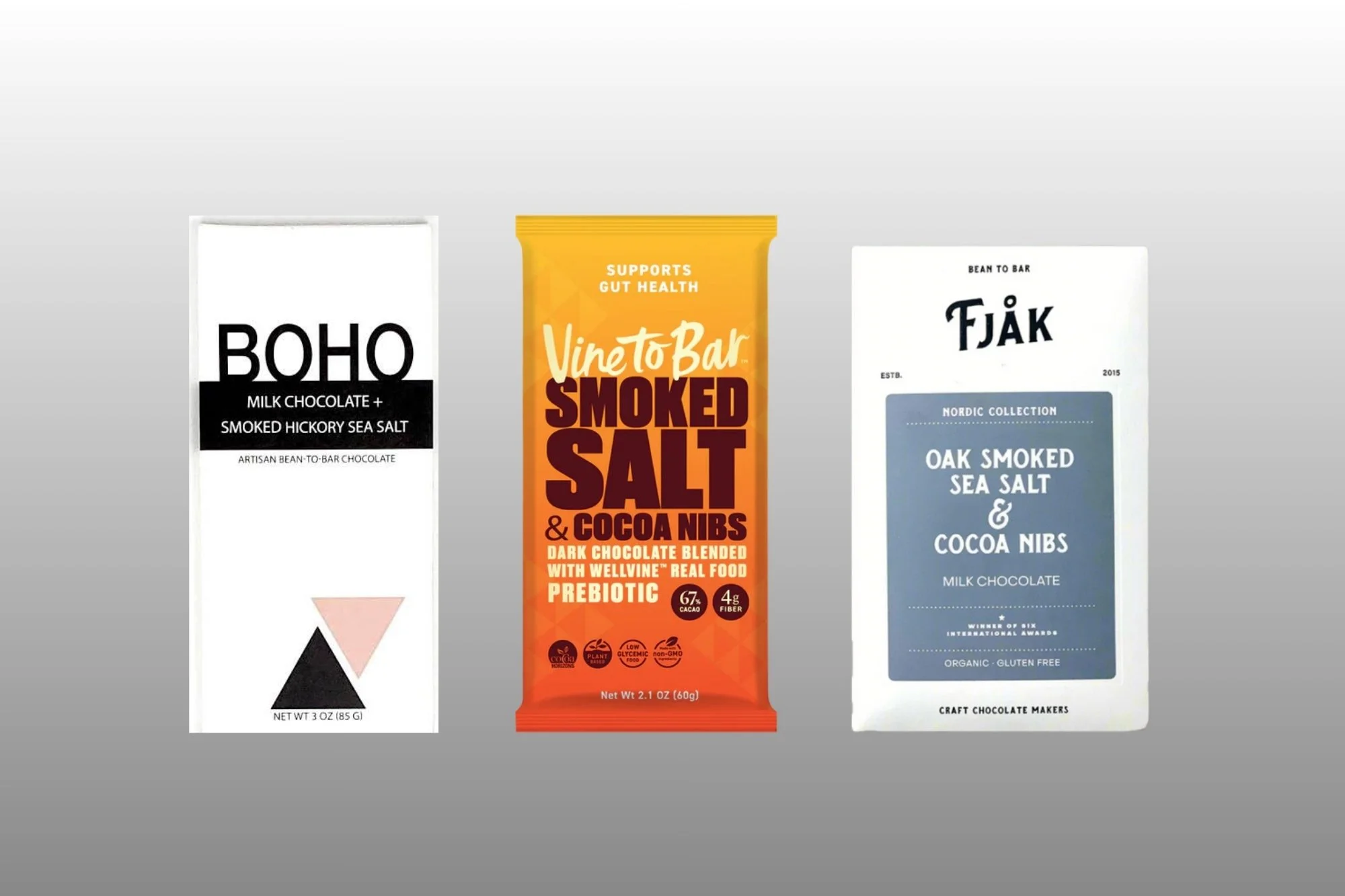
Salt smoked chocolate bars
While smoked beans or nibs offer the most intense and evocative option for smoked flavor in chocolate, makers have also had luck using smoked inclusions. Several makers, including Dormouse, Fjak, and Chocolate Spiel, have used smoked salt for a more subtle, savory influence. At erstwhile Map Chocolate, Mackenzie Rivers used smoked paprika in conjunction with other inclusions in her seasonal Party Like It’s 1999 bar.
Bars made with spirits infusions such as bourbon or rum have gotten more popular in recent years, and some makers are using spirits with smoke character, like Scotch or mezcal, to bring a unique angle to smoked chocolate as well.
Smoked chocolate isn’t for everyone, but it can challenge our expectations of what craft chocolate can taste like, and present beautiful nuances for us to explore.