
Why Chocolate Makers Love Tonka Bean
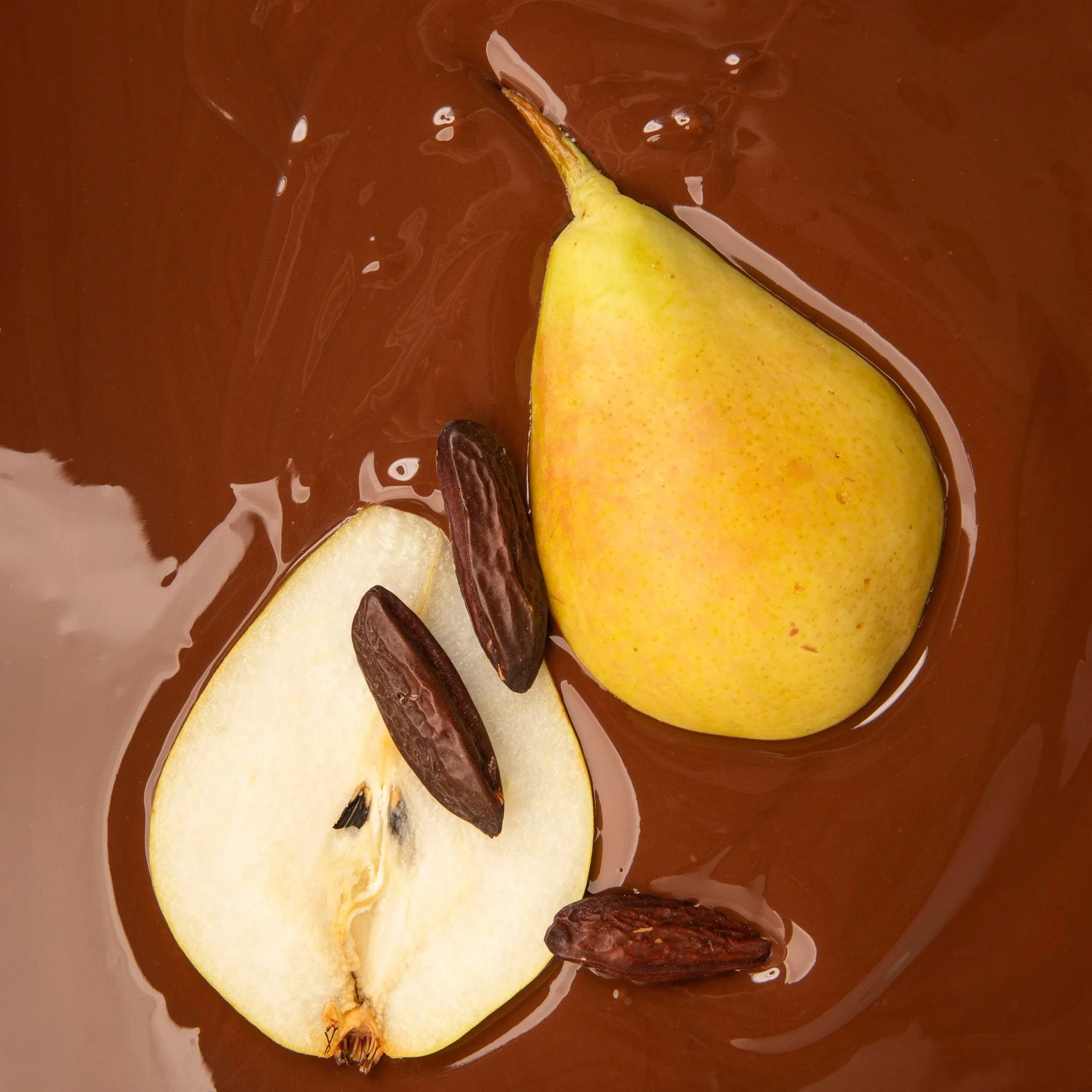
Chocolate, pear and tonka beans
In the world of fine chocolate, the hunt for exciting new flavors never stops, and few ingredients have caused as much of a stir as tonka beans. Native to South America and often described as vanilla's more complex cousin, tonka has steadily built a following in chocolate and pâtisserie over the past 20 years, particularly in France and Germany. American makers, meanwhile, are officially locked out of the trend – tonka has been banned for culinary use in the U.S. since 1954 and was even the subject of an FDA raid on one restaurant's kitchen. That forbidden status hasn't slowed tonka down. If anything, it's part of the appeal.
What Is a Tonka Bean?
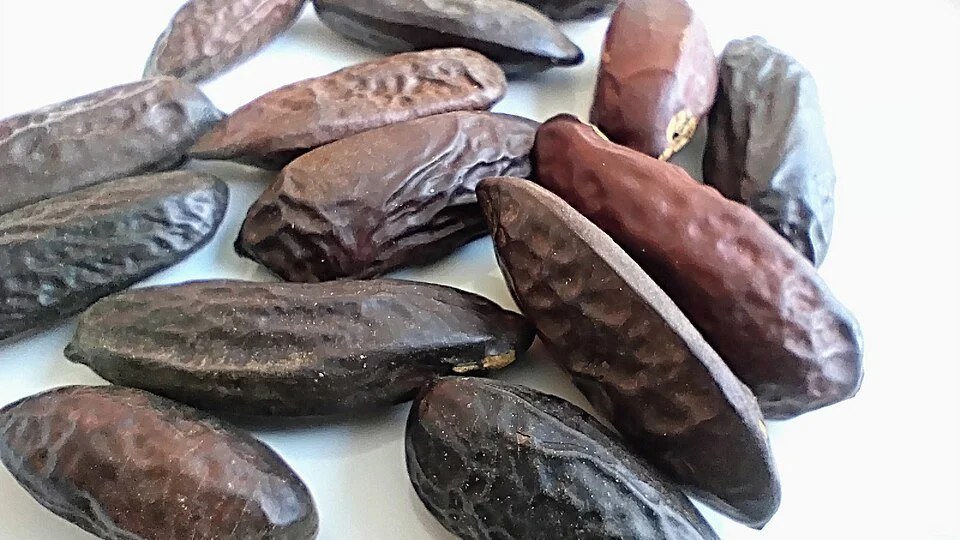
Tonka beans. Carlo Brescia, CC BY-SA 4.0, via Wikimedia Commons
Tonka is the seed of Dipteryx odorata, a towering legume tree that grows wild across the rainforests of northern South America. Its fruit is a hard, woody pod about the size of a mango, and inside sits a single black, wrinkled bean carrying an intense aroma. It's known locally as cumaru in Brazil and sarrapia in Venezuela, the two countries that supply most of the world's tonka, much of it hand-harvested from wild trees, rather than grown on plantations.
The Sarrapia Trade: Tonka Before Chocolate
Long before pastry chefs took an interest, tonka was already a global commodity, just not a culinary one. Export of the beans from Venezuela's Ciudad Bolívar began as early as 1847, in a trade that had nothing to do with food. Coumarin, the compound responsible for tonka's scent, was isolated in 1820 and prized by European perfumers, as well as becoming a popular flavour for pipe tobacco. That trade peaked in the early 1940s, before collapsing within a couple of decades – first due to the U.S. food ban in 1954, and then by the rise of cheaper synthetic coumarin in the 1950s and 60s. However, the tree itself never lost its value – Dipteryx odorata produces one of the hardest, most durable timbers in the world, and today it's logged for construction and flooring on a far larger scale than it's ever been harvested for its beans.
The Ban That Made Tonka Infamous
The U.S. ban, which classified tonka beans as an 'adulterant', points to animal studies linking coumarin – tonka's key aromatic compound – with liver damage. The ban's infamous moment came in 2006, when the FDA raided the kitchen at Grant Achatz's Chicago restaurant Alinea after word got out that tonka was on the menu – an episode that helped cement the bean's reputation as an ingredient worth breaking the rules for.
Belgium enforces a similar prohibition, making it the only EU member state to ban the bean outright. The rest of the EU takes a more moderate approach – rather than banning tonka, it sets maximum coumarin limits for food, based on the European Food Safety Authority's assessment of a safe daily intake, raising the question of whether the U.S. and Belgium's outright ban are due for reassessment.
Is Tonka Actually Dangerous?
Coumarin isn't unique to tonka – it occurs naturally in cinnamon (particularly the cheaper cassia variety), lavender, and licorice, none of which carry anything close to the same restrictions. Also, the amount of tonka needed to cause harm is far higher than the amount typically used in a kitchen. Most estimates suggest it would take around 30 whole tonka beans to reach a harmful amount of coumarin, but in a chocolate bar, tonka is usually well under 1% of the ingredients – meaning you'd need to eat dozens of bars in one sitting to get anywhere close to a harmful dose.
From Paris Kitchens to Chocolate Bars
Tonka's rise in chocolate owes a lot to vanilla's fall from grace. Once the definitive flavour of good chocolate, vanilla has become a victim of its own ubiquity – overused to the point that ‘vanilla’ has (unfairly) become shorthand for boring, safe, and unremarkable. The proliferation of fake ‘vanilla’ flavour in mass-market products doesn't help the case either, bearing little relation to the real bean.
Tonka pairs with chocolate just as naturally as vanilla, but brings a far more complex flavour profile, offering notes of vanilla and sweet almond with hints of cinnamon, clove, cherry and freshly cut hay. France led its culinary uptake, with tonka moving from the perfume counter into pâtisserie kitchens as early as the 1990s, then into the mainstream via televised cooking competitions.
5 Must-try Tonka Bars
Between craft chocolate's growing experimentation with unusual flavours and tonka's rising popularity, the two were destined to meet. Below are five must-try bars – from New Zealand to Hungary – that show how different makers are weaving tonka into their chocolate.
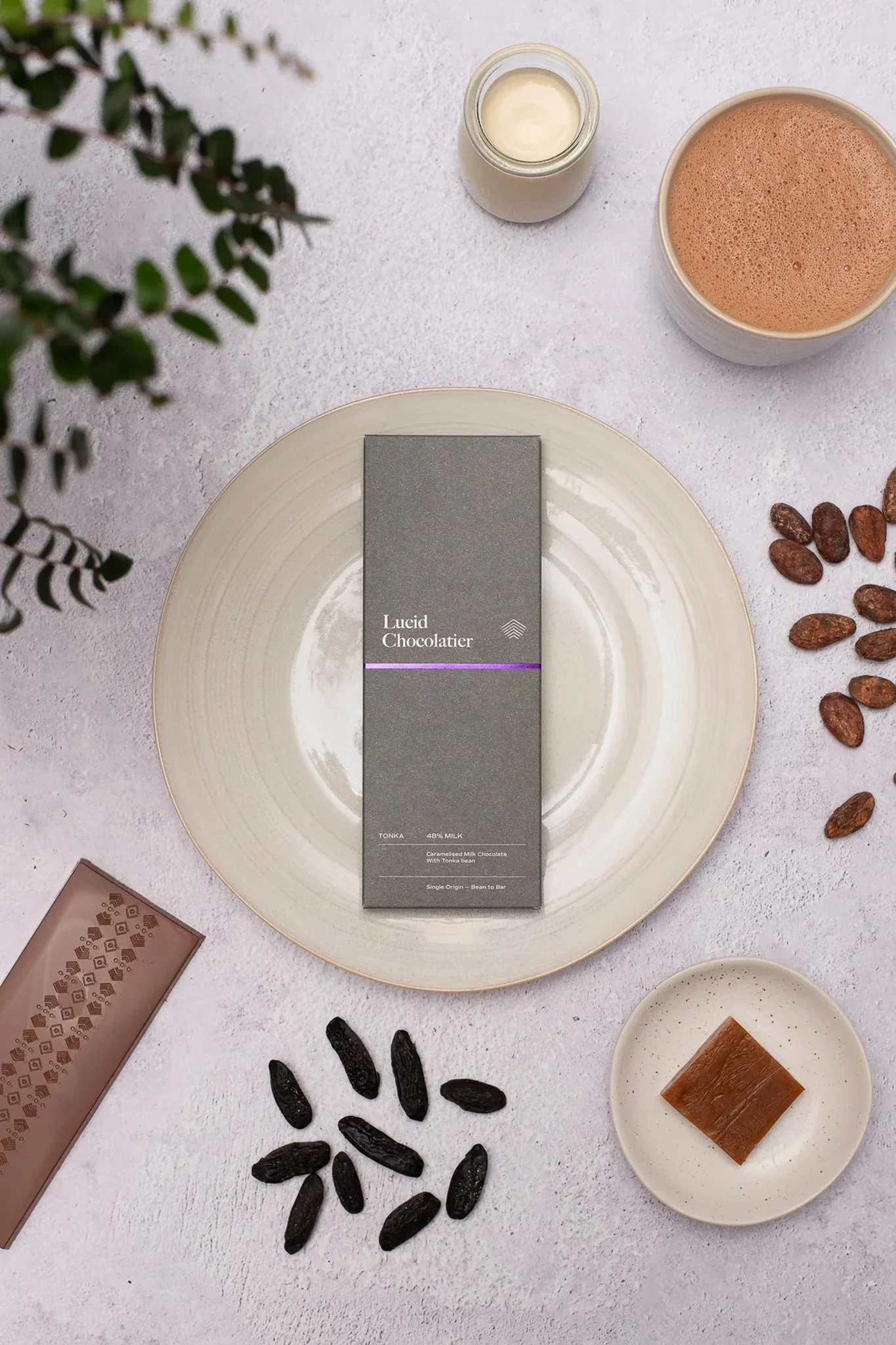
Lucid Chocolatier Tonka
New Zealand's Lucid Chocolatier is a family affair – founder Johnty Tatham makes chocolate exclusively from Peruvian cacao on his family's sheep and beef farm on the Wairarapa coast. This 48% milk bar, made with cacao from Cajamarca in the Marañón region, puts tonka at centre stage. Tatham adds caramelised milk powder during the conching process for a roasted, milky richness with brownie notes, complemented by tonka's fragrant complexity. The result is more reminiscent of burnt-butter caramel than standard milk chocolate, with tonka threading through sweet almond and spice aromatics.
Lucid Chocolatier bars are now available in the U.S. but you won’t find the Tonka bar due to the aforementioned ban.
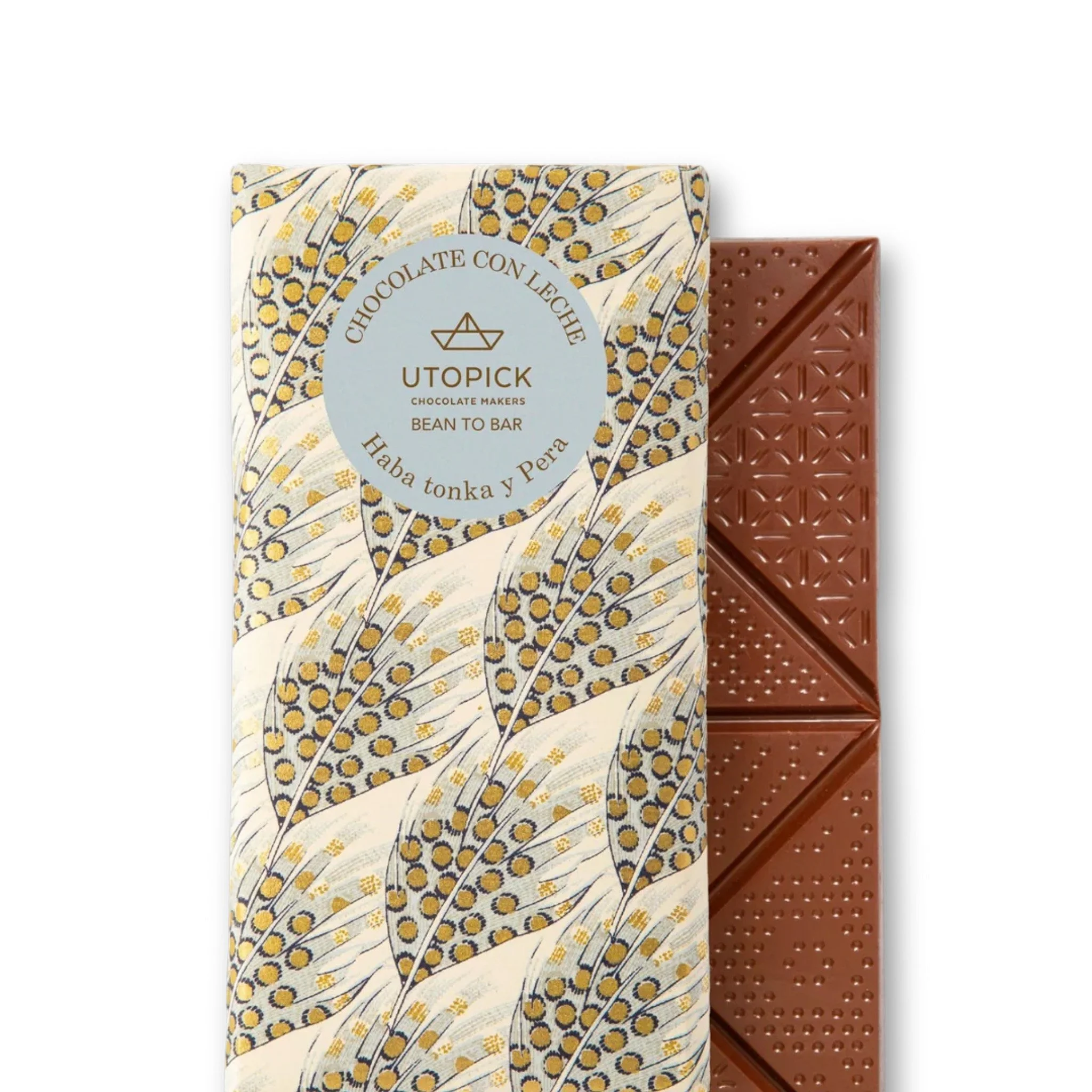
Utopick Tonka Bean & Pear 56%
Utopick is a bean-to-bar chocolate maker in Valencia, founded by master chocolatier Paco Llopis, who grew up in his family's patisserie near the city. His wife Juana Rojas, a Colombian-born designer, joined him after they met on a trip to Colombia in 2007 – the journey that set them on the path of direct-trade sourcing of cacao, predominantly from Latin American growers.
This particular bar uses Tanzanian cacao from Kokoa Kamili, paired with Brazilian tonka bean and candied Spanish pears. The tonka's vanilla-cinnamon-almond depth threads through the milk chocolate, while the pear brings a gentle, jammy sweetness that’s nostalgic and comforting. It's an internationally award-winning bar, and a highlight among Utopick's experimental and playful releases.

ChocoCard 74% Tanzanian Dark Chocolate with Cherry and Tonka Bean
This bar is also made with Kokoa Kamili beans from Tanzania, this time taken to 74% and paired with sour cherry powder and tonka bean. The cacao's bright berry and citrus character finds an obvious match in the tart cherry, while the tonka brings a warm, spiced balance to the tartness. The packaging carries the same small-batch spirit as the chocolate itself – the woven paper is handmade, using cacao bean husks as part of the fibre.
ChocoCard is the work of Izabella Foki and Zoltán Koncos, who run their tiny manufactory in the Hungarian village of Albertkázmérpuszta, near the Austrian border. They started in 2011 working with ready-made couverture, then switched to grinding their own chocolate from cacao beans in 2015.
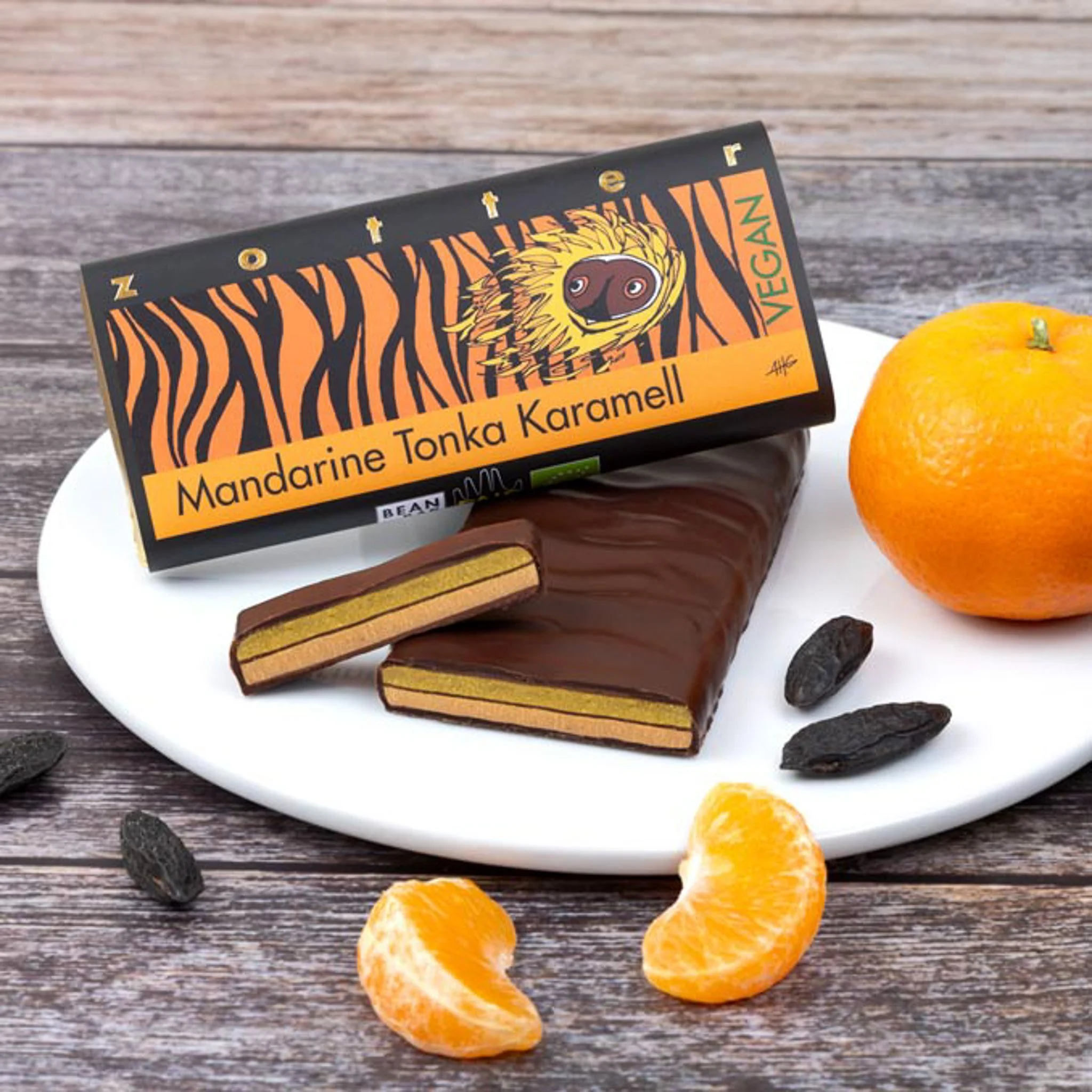
Zotter Chocolate Tangerine Tonka Caramel
Part of Zotter’s ‘hand-scooped’ collection, this bar builds its layers around a soft vegan caramel made with baked white rice couverture, tucked alongside coconut, a touch of almond praline, tingly Timut pepper, and tonka bean. Underneath sits a wafer-thin dark chocolate layer over fruity tangerine marzipan, with the whole bar coated in 70% dark chocolate. Tonka ties the citrus and caramel together, in the kind of unlikely and fun combination that Zotter has built a reputation on.
Zotter's founder, Josef Zotter, coined the term "hand-scooped" – from the German handgeschöpft – for a technique he developed over 30 years ago at his factory in Riegersburg, Austria. Instead of pouring one filling into a mould, up to six layers are hand-poured onto long tracks one after another, then coated all the way round in chocolate.
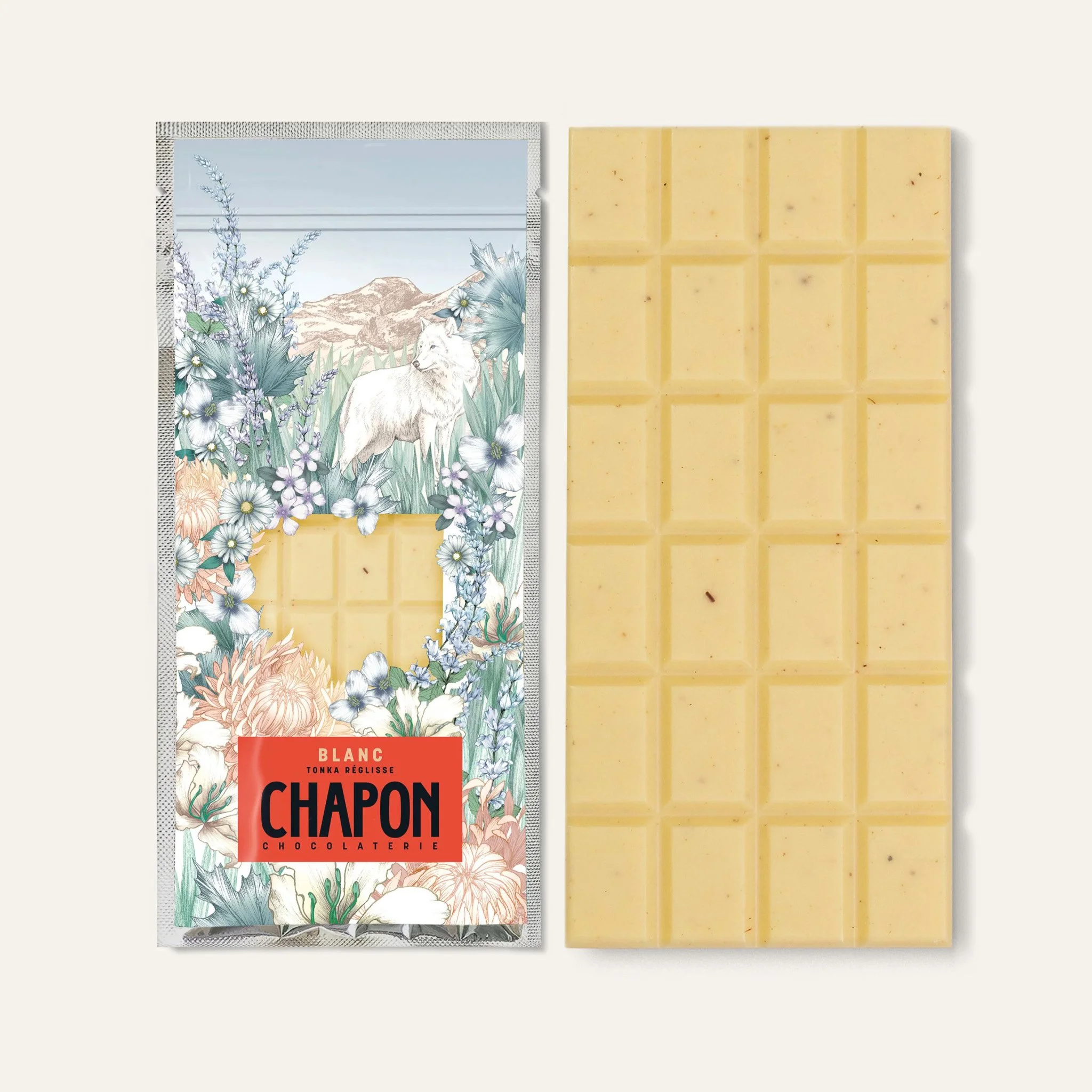

Chapon Tonka Bean and Licorice White Chocolate
This multi award-winning bar uses Chapon's white chocolate as a base for wild-harvested Brazilian tonka beans and dried liquorice root. The result leans on white chocolate's natural sweetness as a backdrop for tonka's vanilla, caramel, almond, and faint tobacco notes, with the liquorice adding a savoury, aniseed edge.
Founder Patrice Chapon's path to chocolate started somewhere unlikely: as an ice cream maker for Buckingham Palace, a stint that gave him a taste for London's chocolate halls before he returned to Paris to start making truffles from his family's basement. By 2010, he'd taken that self-taught approach all the way to bean-to-bar, roasting cacao himself in his workshop in Chelles.