
10 Great Belgian Chocolate Shops
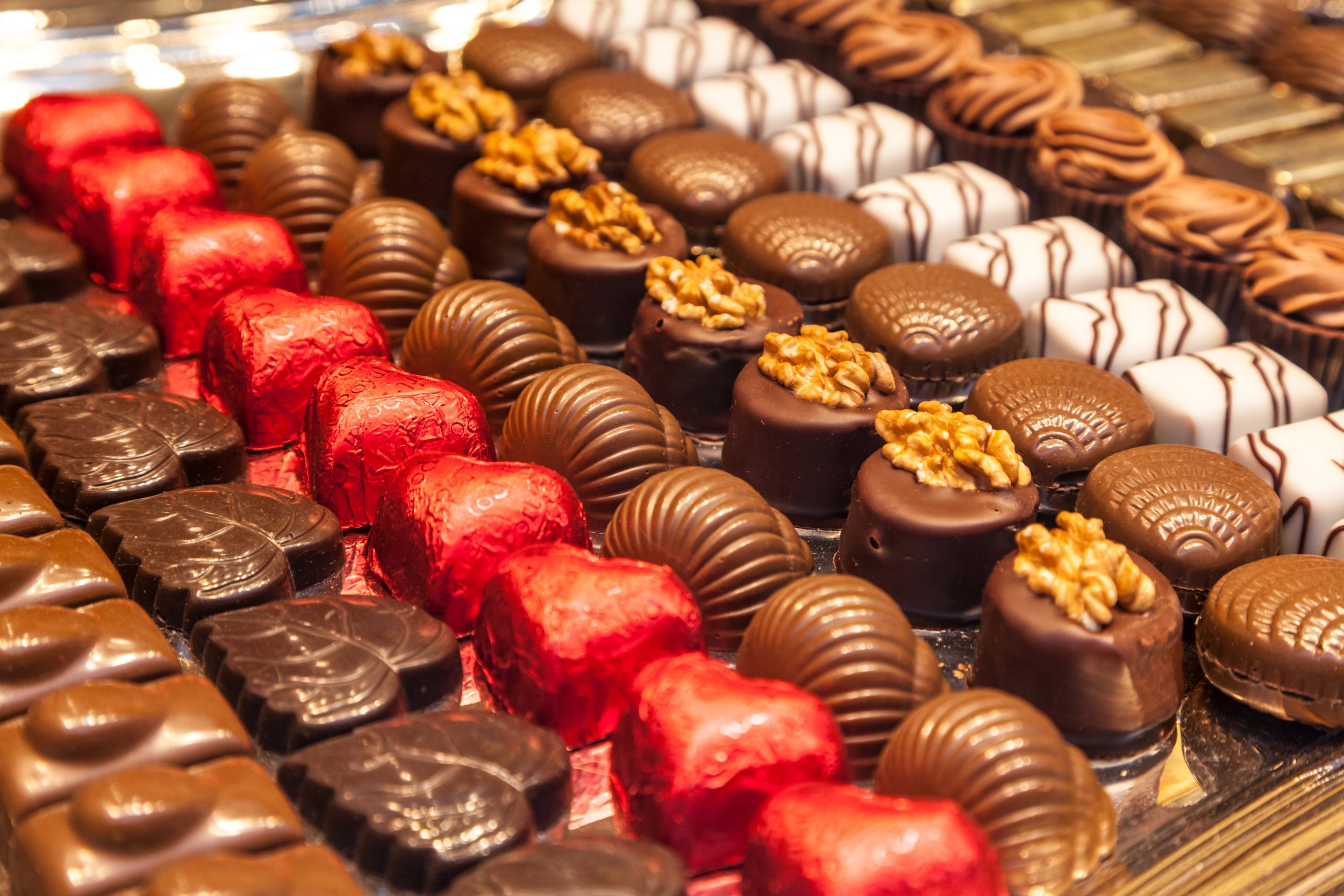
Belgian chocolates photo credit depositphotos
With close to 2,000 chocolatiers packed into a country roughly the size of Massachusetts, Belgium presents a tantalizing problem for the visiting chocolate lover – there's too much choice. Walk any street in central Brussels or Bruges and you'll pass huge window displays, repeated block after block, selling mountains of pralines (aka bonbons) and shiny boxes stamped with familiar names like Godiva, Neuhaus, Leonidas and Côte d'Or. However, it's entirely possible to eat your way through a trip and taste nothing memorable, because decades of consistency have been prized over character, and commercialization over craft. Pierre Marcolini is the one notable exception – a global name still sourcing rare cacao and pushing genuinely innovative flavors – proof that scale and quality aren't always at odds.
The good news is that Belgium's serious chocolate scene is thriving, away from the main tourist strips. For chocolate lovers who already know their Criollo from their Trinitario, or who want to discover the country’s best independent makers, the following ten shops reward the detour – from Brussels roasteries you can watch through glass, to a Ghent workshop on the city's Graffiti Street, to a one-woman operation in Wallonia connecting Belgian craft with Cameroonian roots. This is the Belgium that postcards don't show you – quieter, more surprising, and a lot more memorable than a box of pralines from the airport.
Ariqua Denis
Andenne
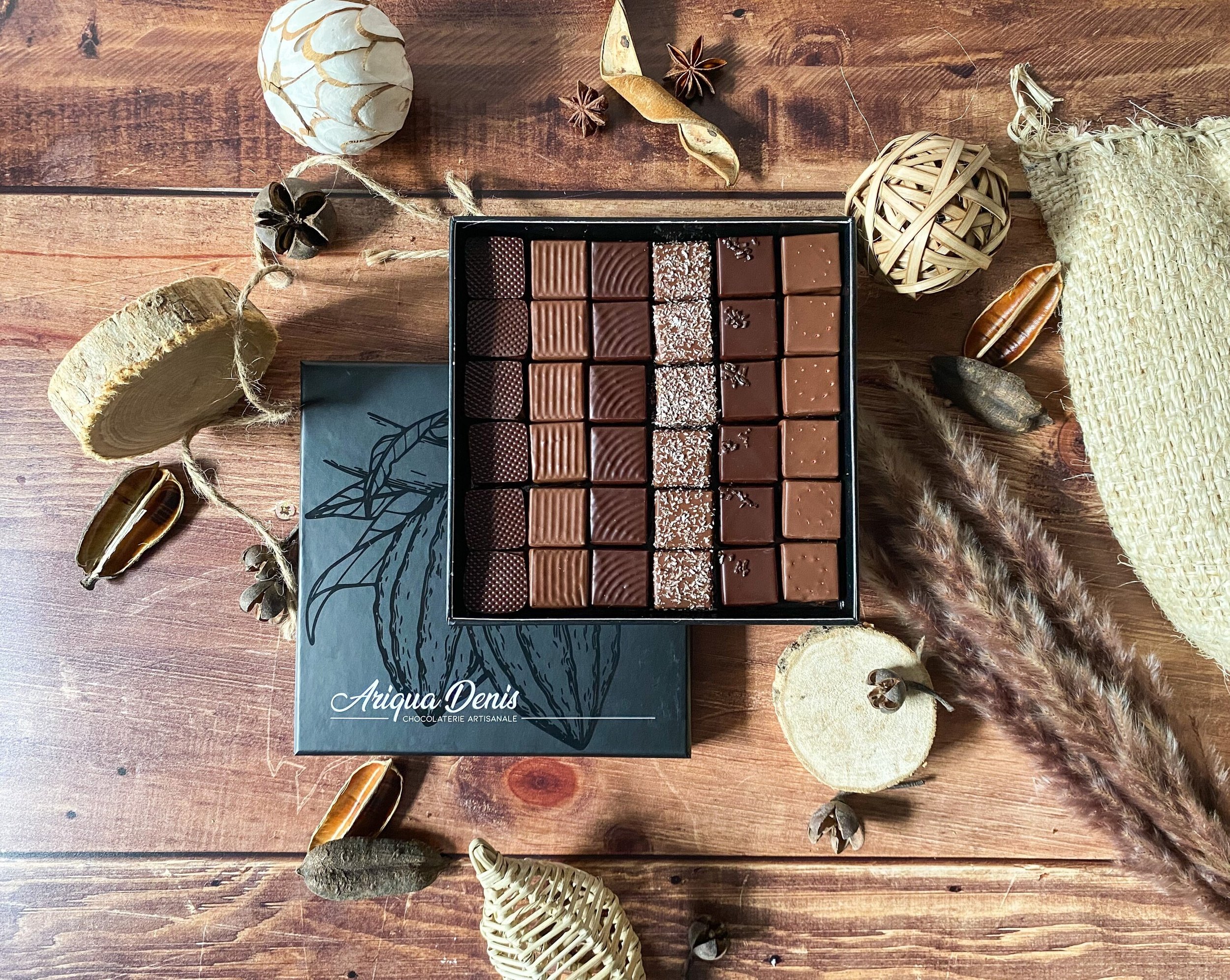
Ariqua Denis photo courtesy of Ariqua Denis
Denis Hariqua's shop is in Andenne, a small town on the Meuse between Namur and Liège – a stop that’s unlikely to feature on many tourist’s itineraries. Hariqua was named Wallonia's Chocolatier of the Year by Gault&Millau in 2020, which is a rare feat for a first-time entry in this prestigious guide.
Ariqua Denis pralines are precise, restrained, and built around clean, well-judged flavour pairings rather than novelty for its own sake. The award-winning ‘ganache noire au thé Earl Grey’ is a must-try. This is a shop worth seeking out if you're anywhere near Wallonia, and a useful reminder that Belgium's best chocolate isn’t all in Brussels or Bruges.
Benoît Nihant
various locations
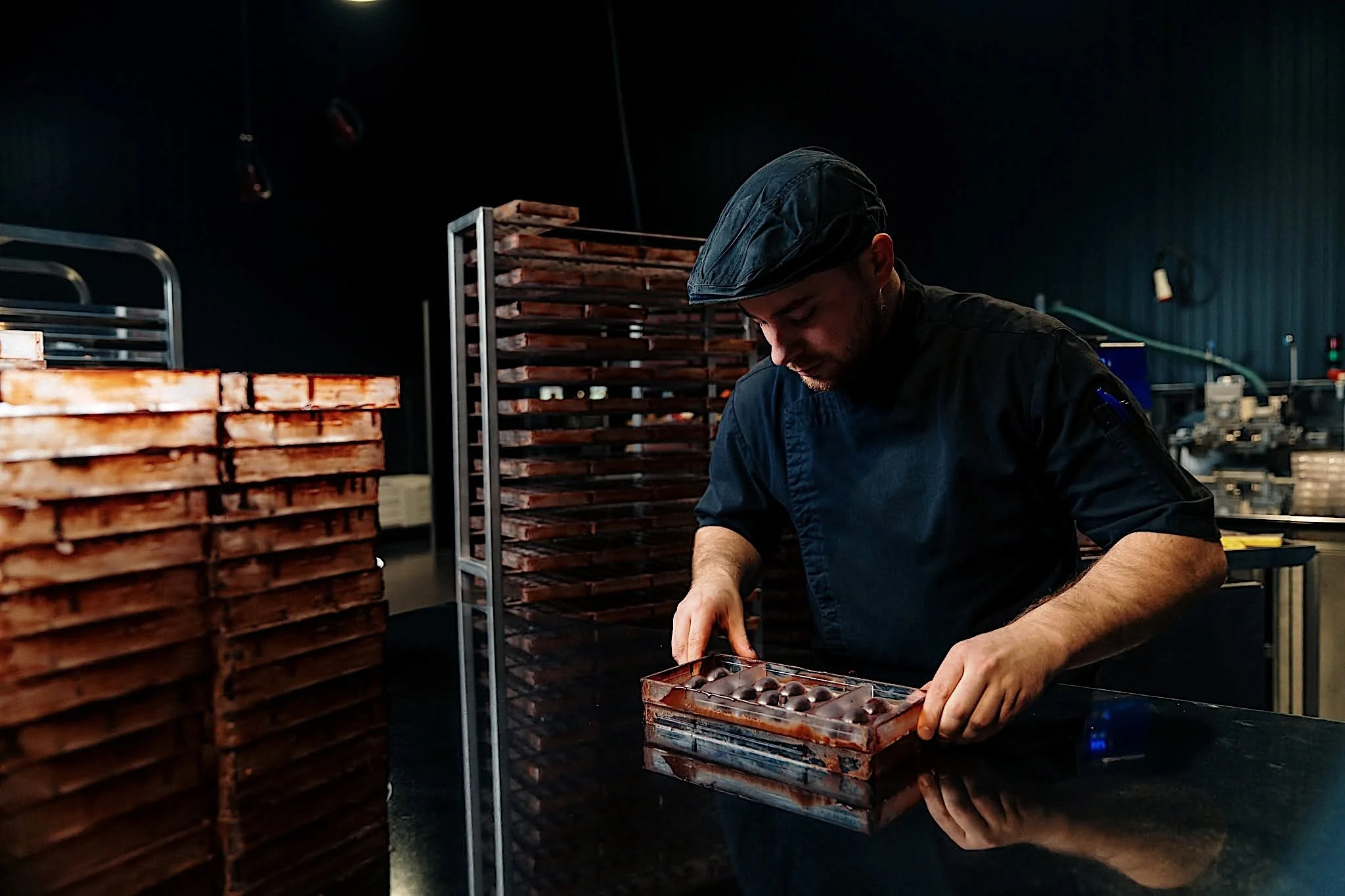
Benoît Nihant workshop photo credit Benoît Nihant
Benoît Nihant calls himself a cacaofévier rather than a chocolatier – someone who works from cacao beans, instead of pre-made couverture. His workshop in Awans, just outside Liège, is where it all happens – roasting, grinding, conching and tempering under one roof, in a converted family garage. Guided tours run regularly and end, sensibly, with a tasting.
Nihant sources cacao from many countries around the world, as well as owning a cacao farm in San José de Sida, Peru, on the edge of the Amazon. There, he's been running a reforestation programme and replanting native trees, in order to rebuild the ecosystem and support the insects that pollinate cacao.
Awans is the best place to see the process, but Nihant now has shops across Wallonia and Brussels – in Liège, Embourg, Ixelles and Uccle. He was named Wallonia's Chocolatier of the Year by Gault&Millau in 2021. Whichever shop you land in, the tablets remain the purest expression of what he does, as the cacao is treated with the kind of attention to origin and vintage that most people reserve for wine.
Bomma Flora
Brussels
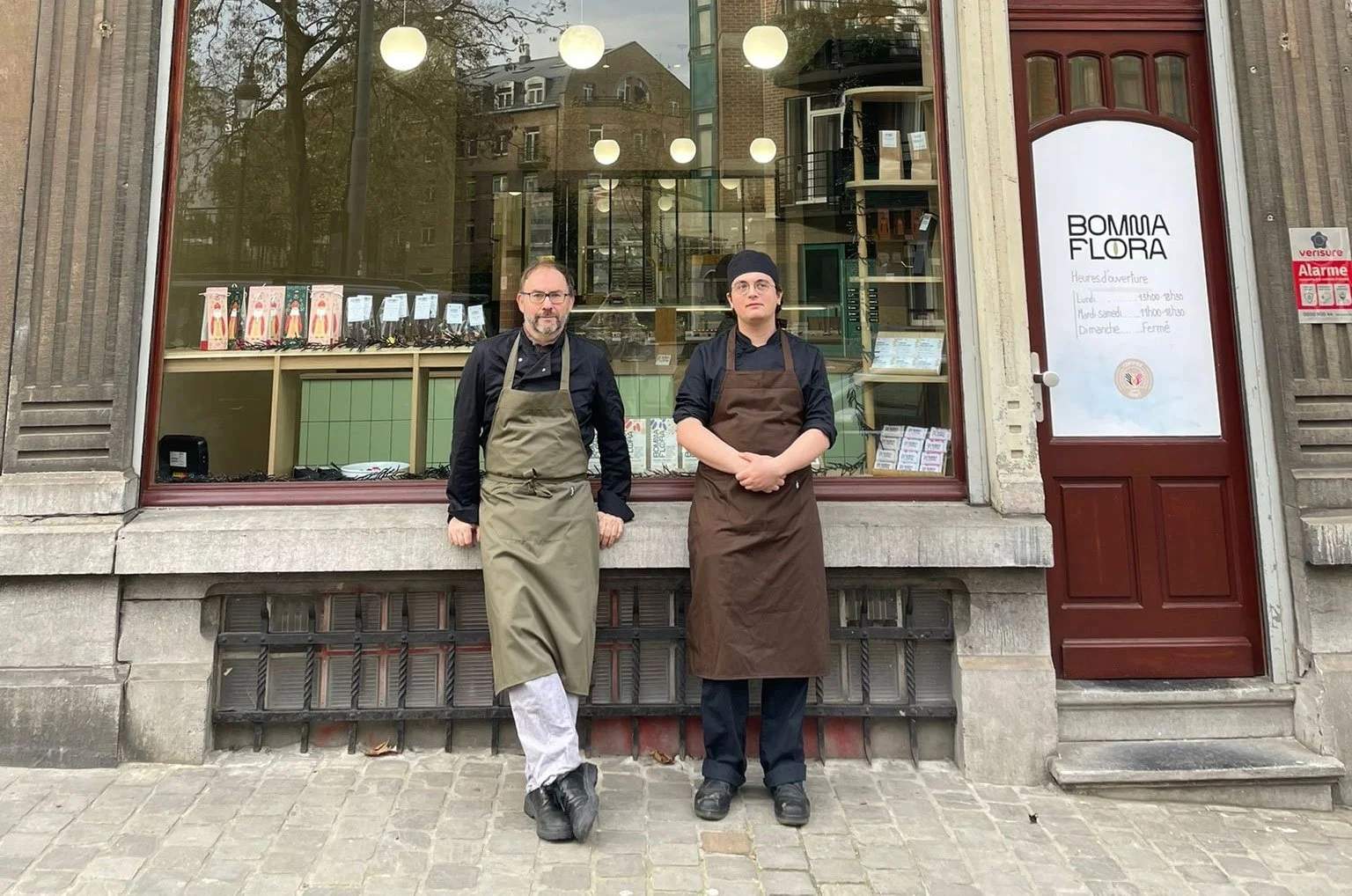
Léo Netter and Alain Coppens of Bomma Flora
Avenue Paul Dejaer sits well outside the usual chocolate-shop crawl through central Brussels, in the residential streets of Saint-Gilles. Inside, the shop feels part confectioner, part apothecary – bars and pralines crafted from a single cacao variety at a time, paired with locally foraged ingredients like meadowsweet, sea buckthorn and wild fennel. Every ingredient is treated with the same care as the cacao itself.
Bomma Flora has an unusual setup, with the two founder brothers split across the Atlantic. One runs the shop in Brussels, while the other works directly with cocoa cooperatives in Nicaragua, which means none of the beans pass through a broker before they reach the roaster.
Their sorbets and ice creams are also worth the visit, with fascinating flavors like rhubarb & angelica, strawberry & verbena, black sesame, and (of course) chocolate.
Chocolatier M
Knokke-Heist
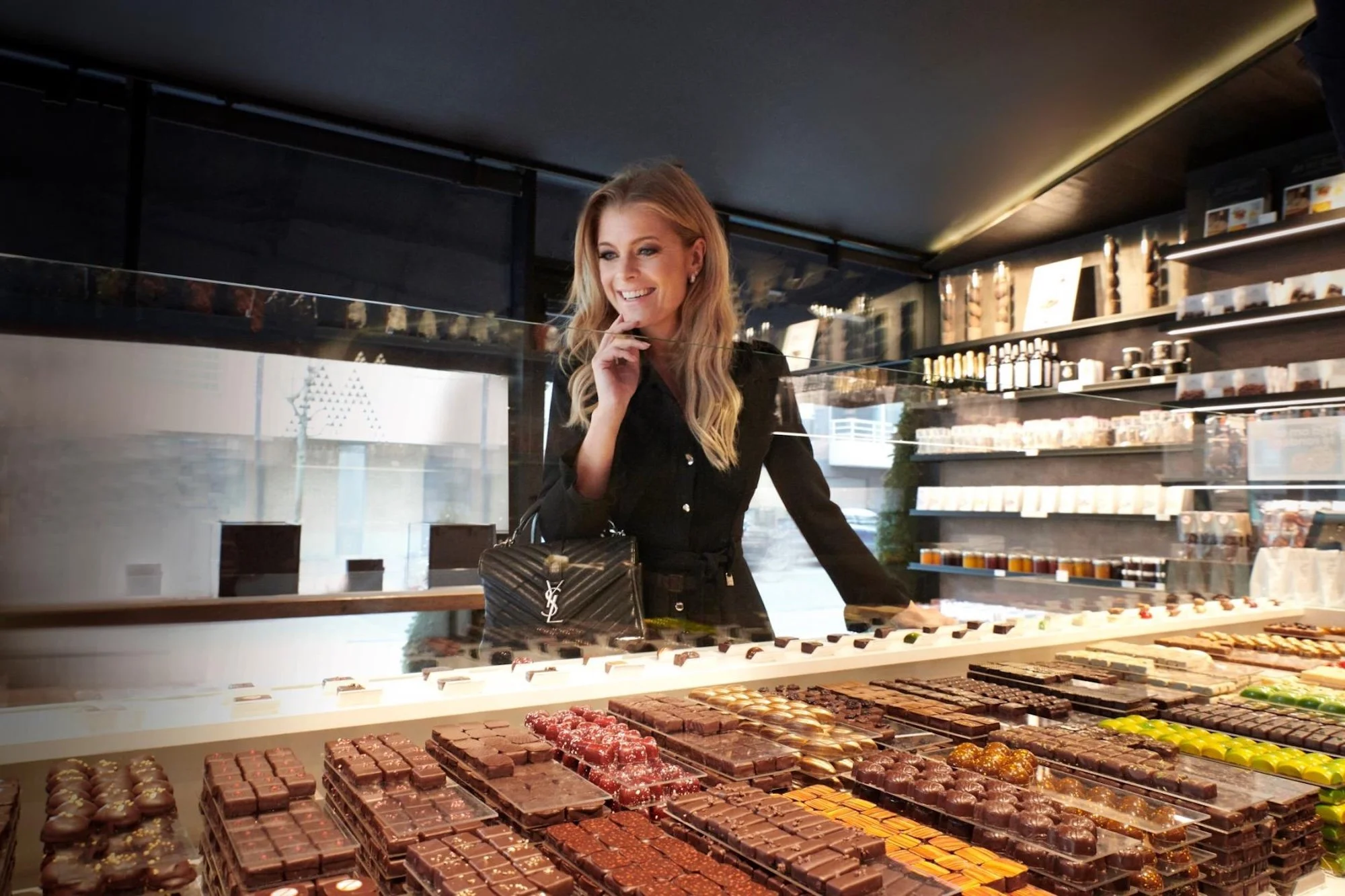
Customer at Chocolatier M. photo courtesy of Chocolate M
David Maenhout came to chocolate the long way round, as a fourth-generation brewer's son who sold the family business in his late twenties and retrained in chocolate. After internships in Paris and Barcelona, he opened his shop with his wife Isabelle Hertsens in 2005, on Sylvain Dupuisstraat in Knokke-Heist. Twenty years on, the shop has become one of the most decorated names on this list. Maenhout was named an Ambassador for Belgian Chocolate by Barry Callebaut early in his career, and has won gold and silver medals at some of the world's biggest chocolate competitions.
Maenhout’s style is playful and precise, with flavours like basil, kir royal, lemongrass, fig & port, jasmine tea and blood orange all showing up across a range of more than fifty pralines. He’s collaborated with Knokke's top restaurants as well as artists and galleries, including a praline made with Panamajumbo coffee and whisky, for the Panamarenko Foundation. It's worth planning a coastal detour to visit. Knokke is Belgium's most upmarket seaside town, and Chocolatier M is one of the best reasons to go.
Frederic Blondeel
Brussels
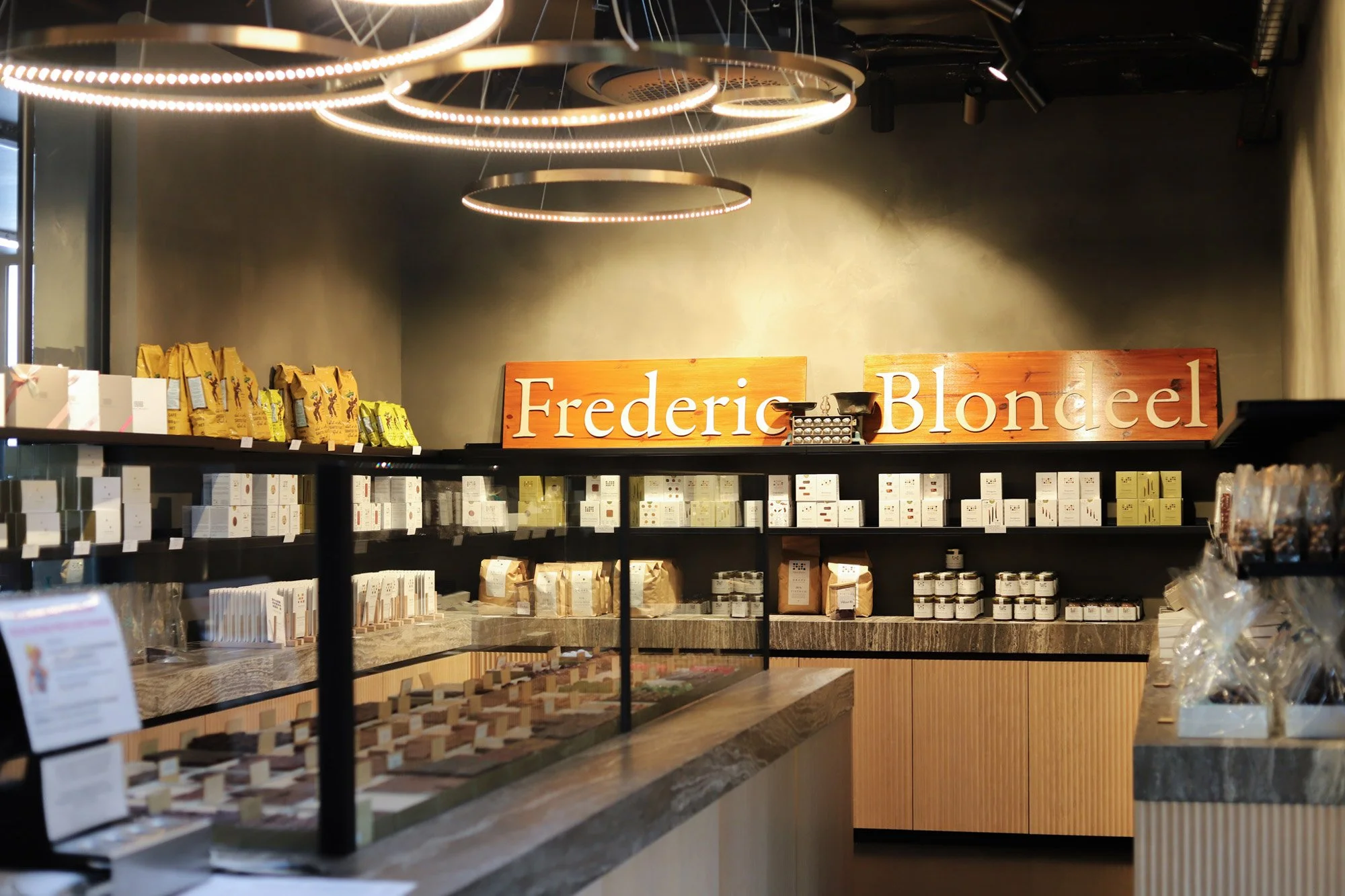
Frederic Blondeel shop
Frederic Blondeel comes from three generations of coffee roasters and his own career started the same way, with twenty years of coffee roasting before he switched to cacao. He trained under Pierre Marcolini before opening his own bean-to-bar operation, and the space in Koekelberg is a converted family garage turned ‘urban roastery’. It combines a working chocolate factory, café and ice cream bar under one roof, with the factory entirely visible through glass. Blondeel still uses a coffee roaster from 1953 that belonged to his grandfather, alongside more modern equipment.
The cacao is sourced from several countries, including Costa Rica, Peru, India and Vietnam. The range features single-origin tablets, pralines with dark ganaches flavoured with cardamom, coffee and cognac, and milk ganaches with orange & fleur de sel, passion fruit, lime and jasmine. He's been named Brussels' best chocolatier by Gault&Millau twice, in 2019 and 2025.
The factory cafe is a short walk from Étangs Noirs metro, and the decadent hot chocolate, made with whatever's just come out of the roaster, is worth the trip on its own.
Laurent Gerbaud
Brussels
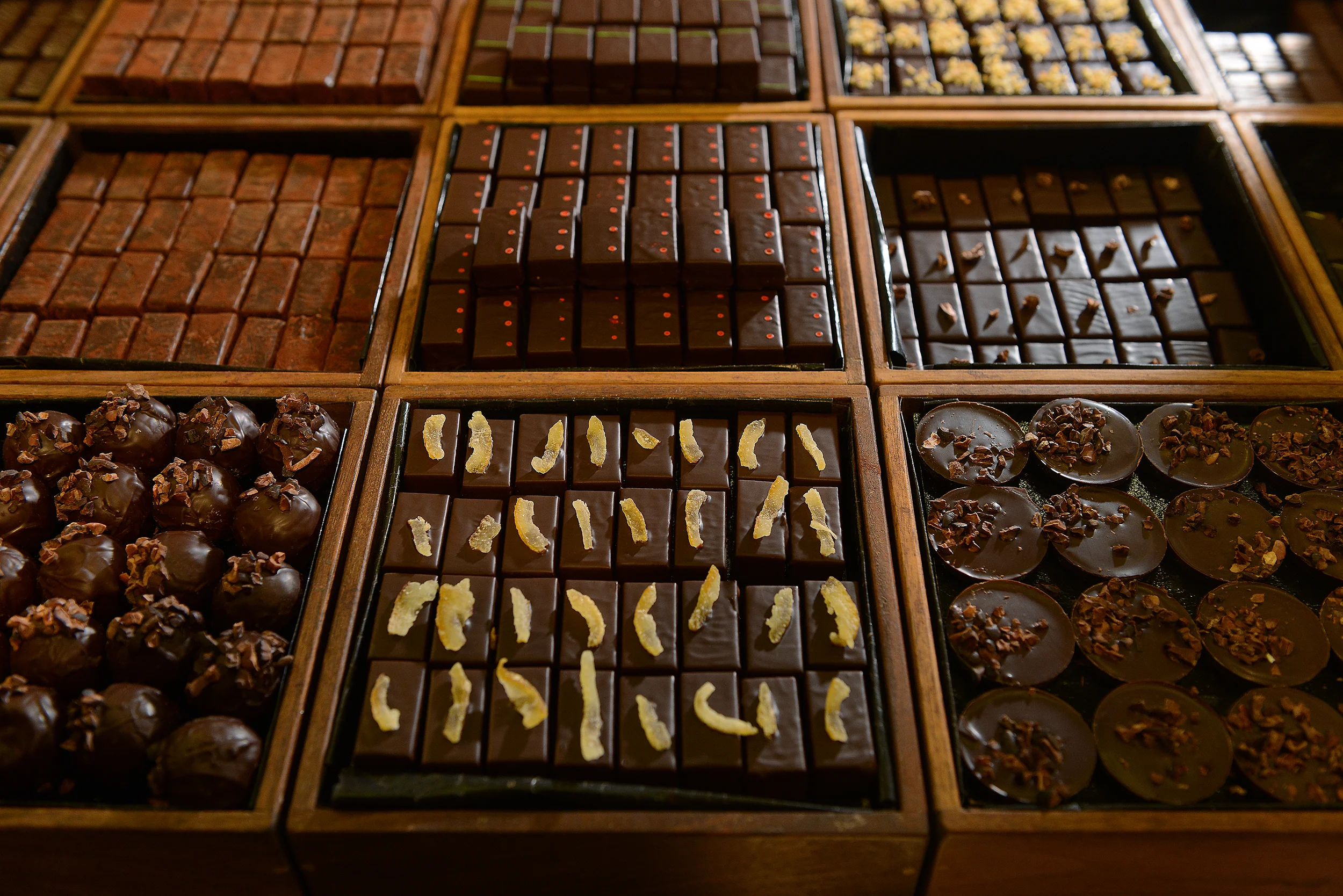
Laurent Gerbaud chocolates photo courtesy of Laurent Gerbaud
Laurent Gerbaud trained as a medieval historian, not a chocolatier – the switch came after evening classes in chocolate-making and a two-year stint in Shanghai, where he set out to export Belgian chocolate to China. That plan didn't quite happen, but the trip changed his palate for good, and he came home determined to make chocolate that leaned on spice, nuts and dried fruit, rather than sugar.
For over fifteen years, Gerbaud’s shop has been on Rue Ravenstein, a few steps from Mont des Arts in central Brussels. His Chinese inspiration continues to this day – Madagascar pepper, Izmir figs, Guilin ginger, black Taggiasca olives, hazelnuts from Piedmont, all worked into pralines and dried-fruit mendiants that use barely any added sugar. Since 2020 he's worked with Danish chocolate-maker Mikkel Friis-Holm on two house recipes made from Nicaliso beans sourced via Nicaragua's Ingemann cooperative – a 70% dark, and an unusually intense, barely-sweet 55% milk chocolate. He also makes his own ice cream on-site, using the same low-sugar philosophy and many of the same ingredients as he uses in pralines.
Legast
Soignies
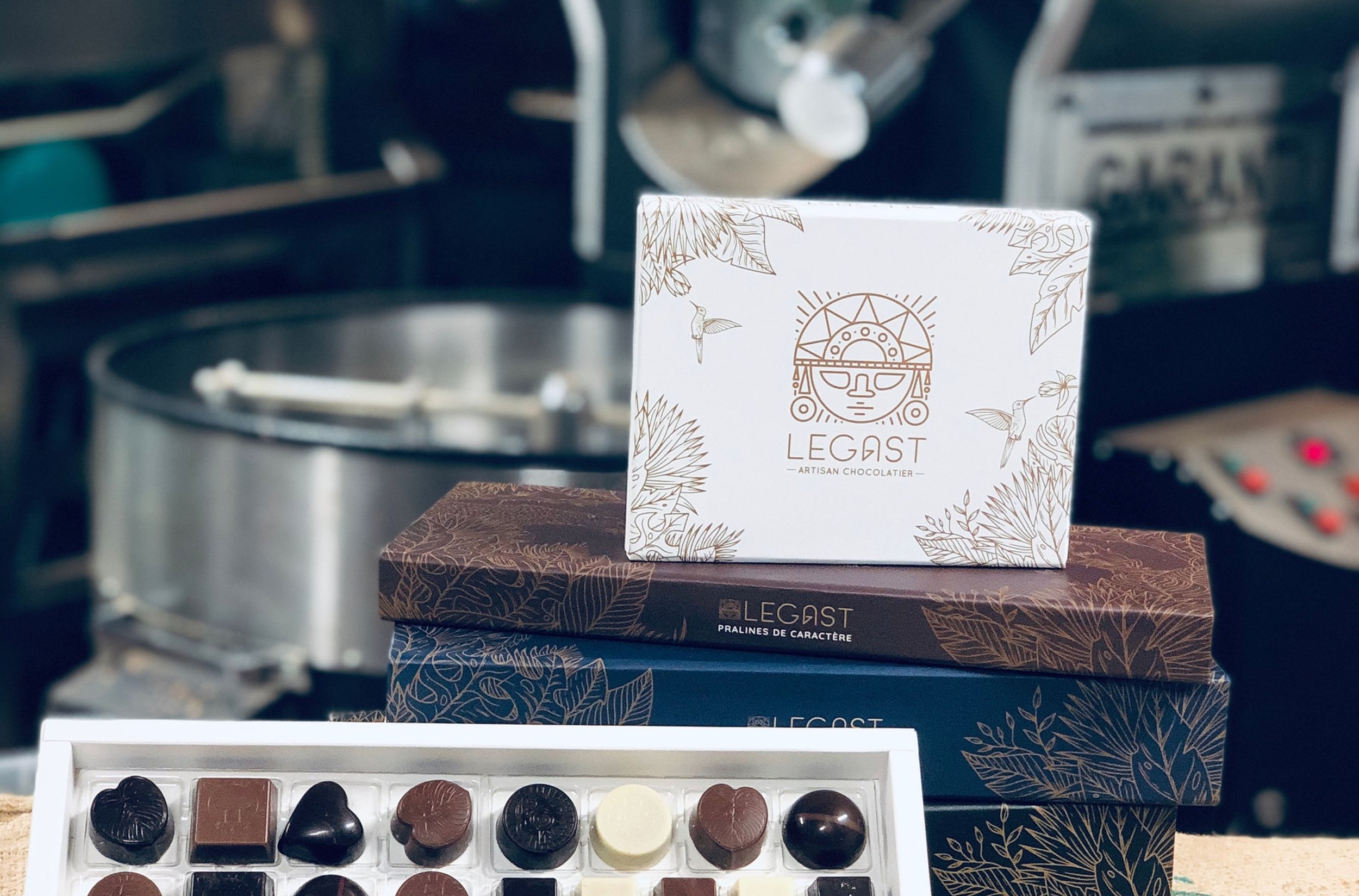
Legast chocolates photo courtesy of Legast Artisan Chocolatier
Legast started life as a family praline shop over fifteen years ago, when Thibaut Legast launched it with his parents in Braine-le-Comte. The business has since expanded to include a dedicated shop and workshop in nearby Soignies, and grown into a fully bean-to-bar operation along the way – picking up gold medals and regional 'Chocolatier of the Year' titles from Gault&Millau – a rare accolade for a small family business that’s up against far larger names.
The cacao is sourced directly via Thibaut's partner Patricia Forero, a Colombian native who works with farmers and fermenters in Santander and Tumaco, as well as in Costa Rica's Maleku region. Those direct relationships define which beans make it into the workshop.
The current range leans on a Colombian blend of Santander and Cordoba beans, alongside origin bars from across Latin America, pralines, spreads and house-made ice cream. Soignies sits about 45 minutes from Brussels by train, and you won’t regret the detour from the capital.
Sigoji
various locations
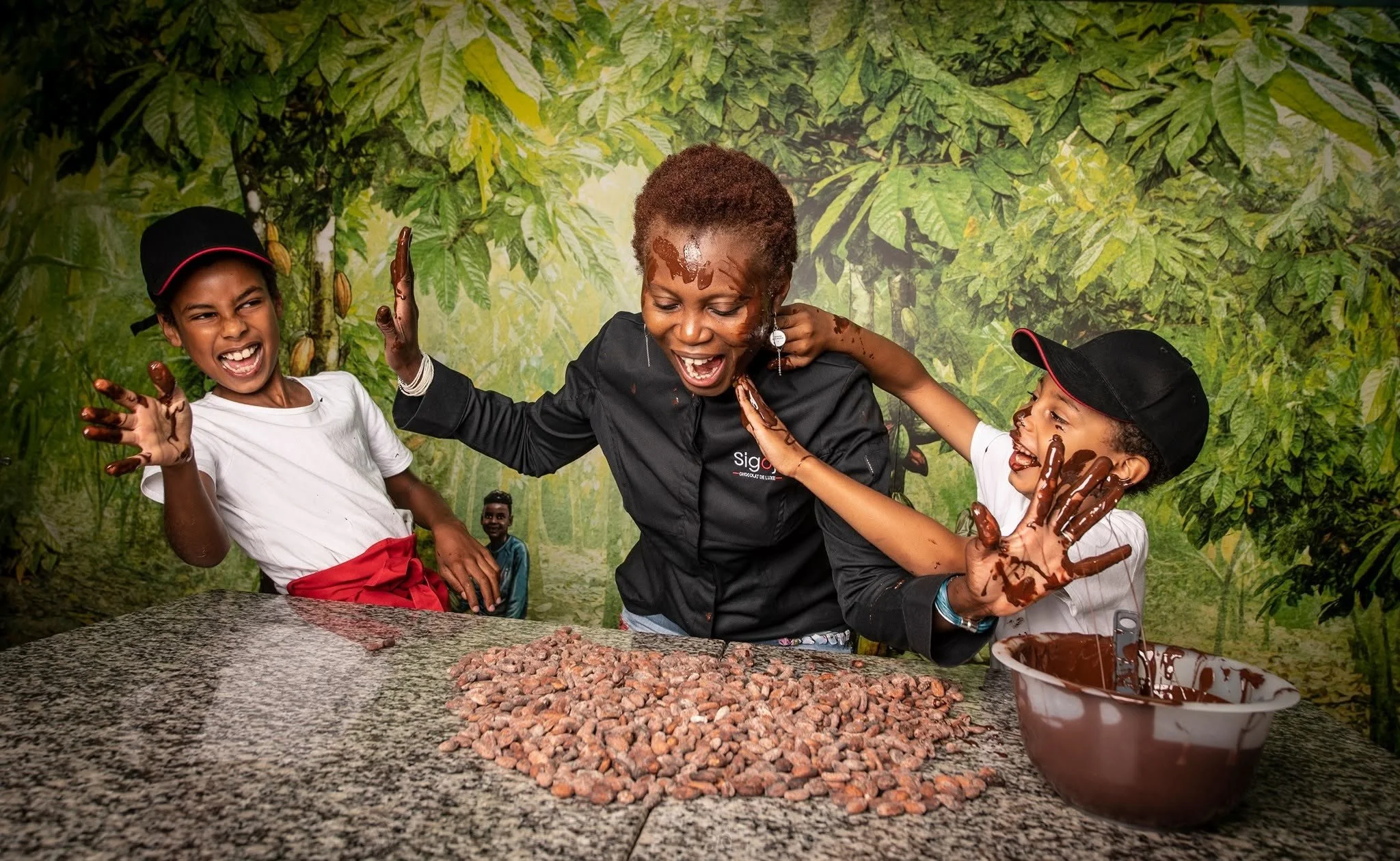
Euphrasie Mbamba, founder of Sigoji photo courtesy of Sigoji
Euphrasie Mbamba was born on her family's cocoa plantation in Cameroon, and now runs a bean-to-bar business in Belgium, sourcing beans from the same communities she grew up alongside. Gault&Millau named her Wallonia's Best Craftswoman in 2017 and Best Chocolate Factory two years later.
What sets Sigoji apart is the direct connection created between Belgium and Cameroon. Cacao arrives through cooperatives that Mbamba works with, and a share of the business’ profits go back into schools, hospitals and orphanages in the growing communities. This is chocolate with a relationship and story behind every bite, not just a supply chain.
There are now three Sigoji locations to choose from – Ciney and Rochefort in Wallonia, and a newer outpost in Uccle, Brussels.
The Chocolate Line
Bruges & Antwerp

The Chocolate Line shop photo courtesy of The Chocolate Line
Dominique Persoone opened his first shop in Bruges's historic centre in 1992, after training in a Michelin-starred Paris kitchen. That culinary influence is obvious – expect chocolates with adventurous flavors like wasabi, oyster, olive oil and hemp, all treated with the same experimental logic a chef might bring to a tasting menu. Persoone is best known for the ‘Chocolate Shooter’, a spring-loaded device for ‘snorting’ cocoa powder mixed with mint and ginger, originally built as a one-off joke for a Rolling Stones birthday party and now sold by the tens of thousands. He also designed edible chocolate paint for artist Spencer Tunick, as well as inventing chocolate lipstick, earning him the nickname ‘the Shock-o-latier.’
The showmanship sits alongside a serious cacao operation, with bars made from Criollo beans grown on Persoone’s own plantation in Yucatán, Mexico. He also co-built a chocolate factory in Virunga National Park in the Congo, creating income for local communities while helping protect the park's wildlife. His son Julius now runs production alongside him, and there are two shops to choose from – the original in Bruges, on Simon Stevinplein, and a second in Antwerp's Palais du Meir.
The Chocolate Maker
Ghent
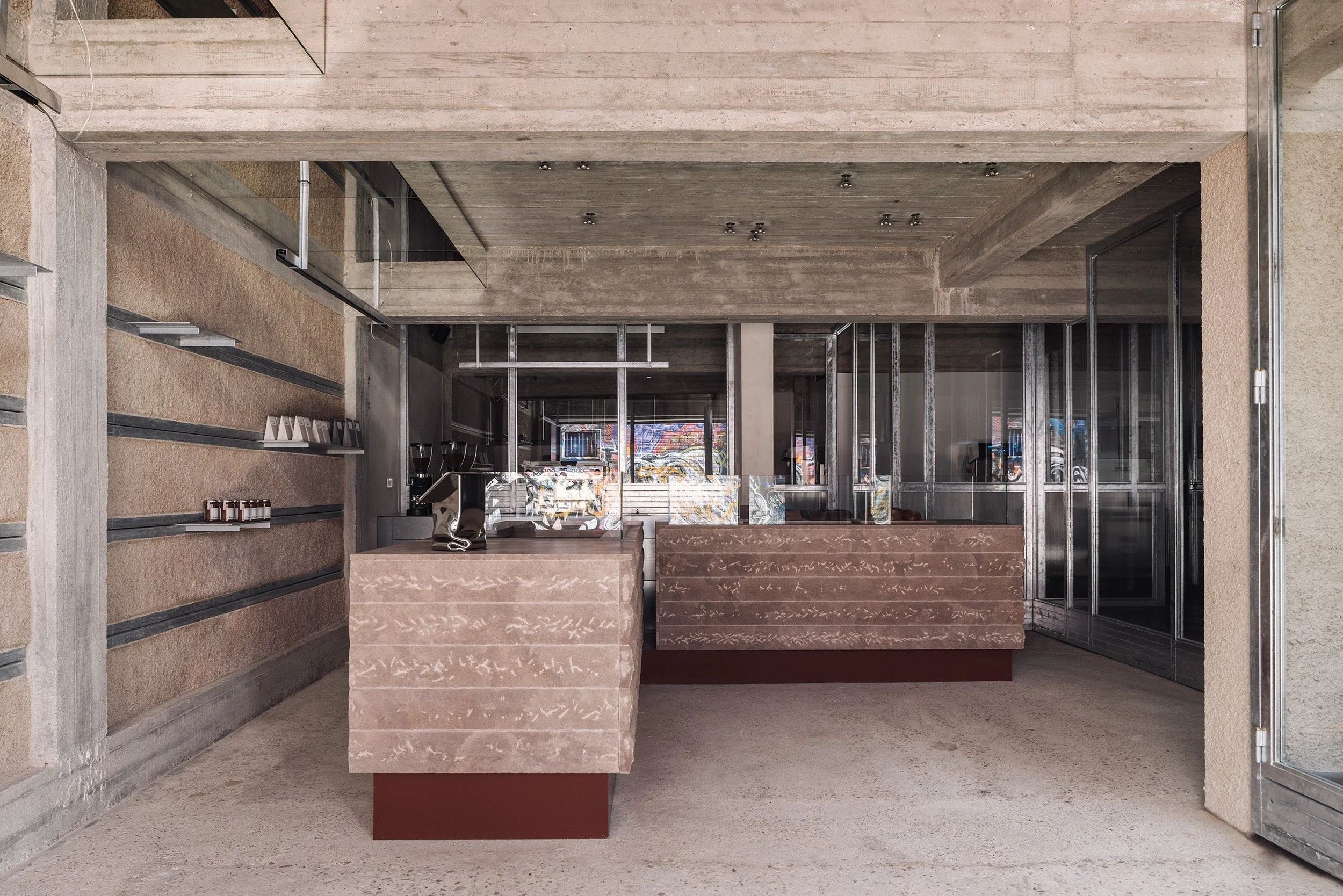
The Chocolate Maker store interior photo courtesy of The Chocolate Maker
Jannes Deduytschaever trained with Chocolatier M in Knokke before opening his own praline shop with partner Karen Van Lysebeth in 2020. The Chocolate Maker is the pair's second venture – a dedicated bean-to-bar shop, tucked into a former artist's studio on Werregarenstraat, better known locally as Graffiti Street. Gault&Millau has named Deduytschaever Flanders' Best Chocolatier twice – in 2022 and 2026.
The premise is refined and minimal – no white chocolate, no cuberdons (Belgium's cone-shaped, syrup-filled raspberry sweets), no seasonal gimmicks, just pure bars and medallions made entirely in-house, with the whole process visible to customers in the open atelier. You’ll find dark chocolate paired with black olives, grapefruit or lemon, alongside single origin mendiants, pastries, and specialty coffee from Brussels-based roaster Wide Awake. It's a small, easy-to-miss address in a laneway once used by a local undertaker to reach his workshop. Most visitors to Ghent will walk within metres of it and never know. Don't be one of them.